
"VR is More Powerful Than DMT, and It's Non-Invasive": Akash Sud, Co-Founder of Higher Prana, on How Virtual Reality Meditation Can Rewire Your Brain, Solve Gun Violence, and Ground Astronauts on Mars


Akash Sud found himself on the receiving end of someone ungrounded and triggered by corporate stress. The attacker wasn't violent by nature. He simply couldn't regulate his emotions well enough to hear information that challenged him. Everyone else in the room understood the message perfectly. One person's ungrounded state created a rupture that cost the company in turnover, trauma, and lost productivity. Sud had seen variations of this scene across 40 merger and acquisition deals in the technology sector. Ego at the top cascading dysfunction downward. Fight-or-flight responses triggering in conference rooms designed for collaboration.
The pattern repeated because the underlying problem remained unaddressed. Corporate wellness programs offered meditation apps that employees ignored. Traditional meditation required years of practice to achieve states that stressed professionals couldn't access in five-minute breaks. The prefrontal cortex, responsible for emotional regulation and executive function, remained locked behind the constant stimulation of modern life. Closing your eyes and focusing on your breath doesn't work when your nervous system is wired for continuous dopamine hits from screens.
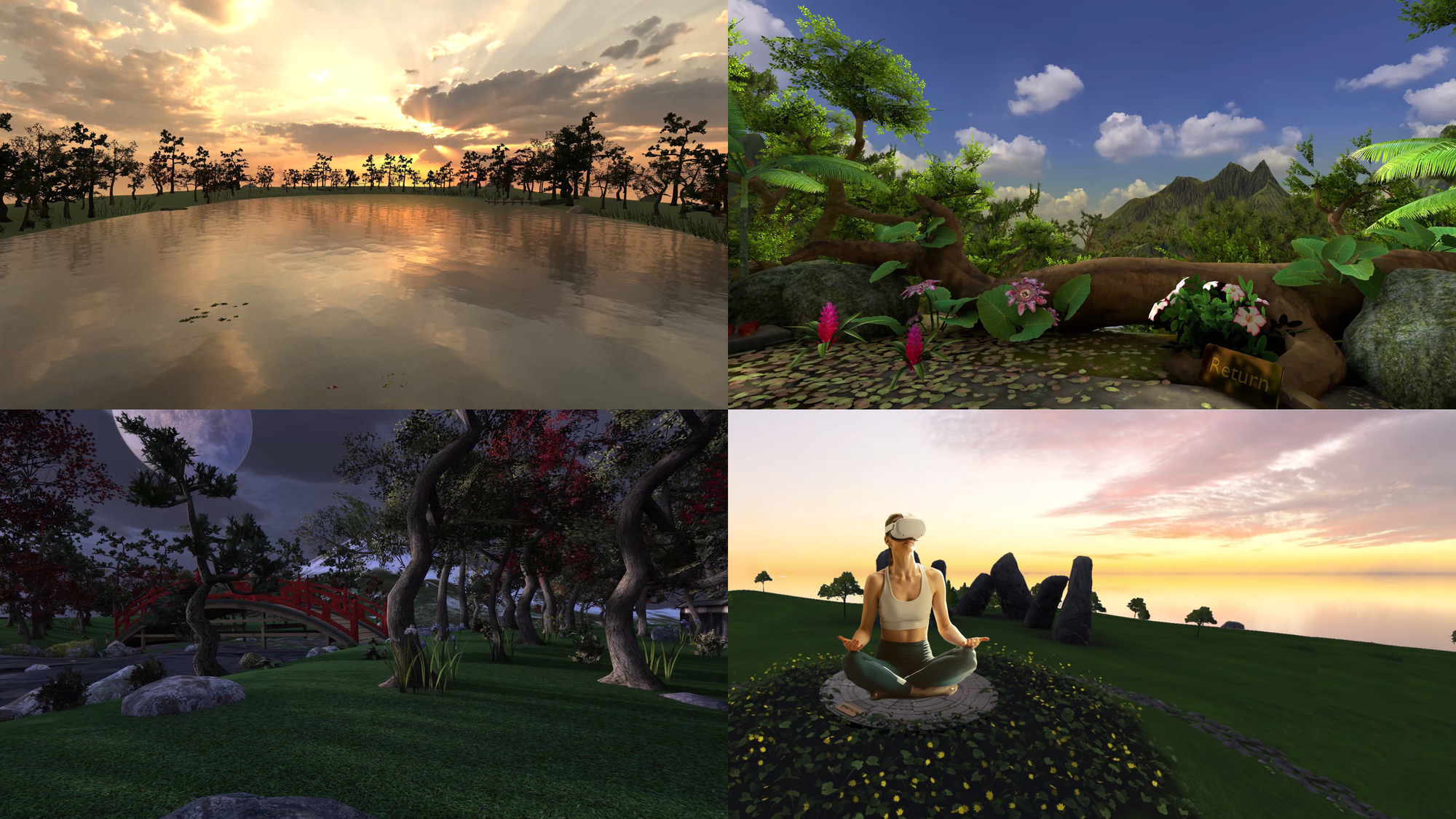
Higher Prana proposes a different approach. By overwhelming the senses through virtual reality, the company claims to force the brain into states that traditional meditation takes decades to achieve. During a presentation to their trauma team, the Veterans Association shared research showing 86% reduction in anxiety, telling Higher Prana they were "preaching to the choir" and that the VA already knew and could see the benefits. Children's hospitals in Los Angeles and Colorado documented pain reduction. Schools in Kentucky reported that special needs students who previously required physical restraint could achieve emotional regulation within minutes. Sud describes the effect as more powerful than DMT, the psychedelic compound that produces profound consciousness alterations, but without introducing foreign substances into the body.
Co-founder Gabe Arrington previously led immersive technology for the U.S. Air Force, where VR training cut costs from $4.5 million per legacy simulator to $1,000 per unit and improved efficiency by nearly 50%. Gabe has saved DOD and USAF more than a billion dollars on pilot training costs with VR and Biometrics. Sud spent two decades as a CFO before recognizing that boardroom dysfunction stemmed from consciousness problems spreadsheets couldn't solve. His YouTube nature therapy channel grew to 60,000 followers, then he realized: people in Manhattan high-rises can't access forests. Virtual reality could bring the forest to the 70th floor.
The implications extend beyond wellness. If VR regulates emotions faster than pharmaceuticals or psychedelics, it becomes relevant to gun violence prevention, PTSD, education, and long-duration space missions. Sud describes conversations with the incoming administration about national implementation. The disruption he envisions isn't incremental. It's the replacement of chemical intervention with perceptual engineering.
How does VR meditation actually work? When someone puts on a headset, what's happening in their brain compared to traditional meditation?
"What happens inside of virtual reality is we are attacking all your senses from so many different angles that your brain is stunned," Sud explains. The stimulation forces the prefrontal cortex to open immediately, bypassing the years of practice that traditional meditation requires. "It's instantly forced to open up the prefrontal cortex part of your brain and help you ground and get you into the moment."
The neuroscience underlying Sud's claims has received growing attention from researchers. A 2008 study published in Frontiers in Human Neuroscience by Baumgartner and colleagues at the University of Zurich found that the dorsolateral prefrontal cortex (DLPFC) serves as a key node in modulating presence experience in virtual environments. Their research showed the prefrontal cortex actively regulates how immersed users feel in VR, with children showing stronger presence responses due to their still-developing prefrontal structures. A 2024 review in the journal Mindfulness corroborated that mindfulness practice produces reduced amygdala activation and increased prefrontal cortex activity, leading to changes in emotion regulation and attentional control.
The challenge with conventional meditation, Sud argues, lies in the modern nervous system's adaptation to constant stimulation. "If you think about anyone with trauma or PTSD, if I ask you to close your eyes, you're going to freak out. And it's hard for a beginner to focus and be grounded." The brain has become dependent on external input. Asking someone accustomed to continuous dopamine from social media to suddenly generate calm through breath awareness creates a mismatch between neurological wiring and the task demanded.
VR exposure therapy has shown particular promise for trauma populations. A 2024 clinical trial at the Providence Veterans Affairs Medical Center, published in JAMA Psychiatry, found that veterans who received transcranial brain stimulation during VR exposure sessions reported significant reduction in PTSD symptom severity. The combination accelerated a process that typically takes 12 weeks to show effects down to just two weeks, with effects continuing to build after treatment ended.
Virtual reality resolves this mismatch by meeting the brain where it already operates. "It is an outward focus, and it's fine to be outwardly focused into the world to ground before you can be inwardly focused." Rather than fighting the brain's learned patterns, VR uses them as a vehicle for state change. Sud describes it as a stepping stone that compresses timelines dramatically. "It cuts short that process to the Zen state from 20 years to literally two years."
The research backing these claims comes from institutional partners. Sud references work with the Veterans Association, where trauma-sensitive teams shared their own studies. "They told me, 'Don't show us the science. We know what we're telling you. Just look out for the next RFP to get your app in.'" The clinical results show anxiety reduction of 86% and pain reduction exceeding 20%. Children's Hospital of Los Angeles and Children's Hospital of Colorado have documented outcomes with pediatric patients. The mechanism appears consistent across populations: sensory immersion triggers parasympathetic activation faster than any technique requiring voluntary attention control.
The VA has been actively expanding VR therapy programs. According to VA Research, the department has implemented VR applications in more than 30 different use cases across VA medical centers in all 50 states and Puerto Rico, helping to improve rehabilitative care, staff training, and treatment of conditions including PTSD and chronic pain.
Many people believe technology and meditation are fundamentally opposed. How do you respond to critics who say VR meditation defeats the purpose of unplugging?
"This is what is happening in the world," Sud responds. "When Apple disrupted the BlackBerry market, everybody was wondering. You have to take the lead. People don't know what's out there. We have to show them the path."
The criticism comes even from practitioners of alternative therapies. Sud describes conversations with psychedelic coaches who questioned why he would use technology when the goal is escaping it. His response inverts the assumption. "What we are doing is turning technology against itself. When people wear these headsets for five to ten minutes, it transforms their prefrontal cortex. You instantly get into a parasympathetic system. You don't feel the need to do doom scrolling."
A 2024 study in Mindfulness found that during flow states achieved through VR mindfulness exercises, researchers observed decreased prefrontal cortex and amygdala activity, which helps decrease stress and anxiety. The research also documented VR's ability to positively influence time perception through its immersive quality, facilitating altered states of consciousness first described by psychologist Mihaly Csikszentmihalyi.
The argument reframes technology as neutral infrastructure capable of producing opposite outcomes depending on design intent. Facebook and Instagram optimize for engagement through anxiety-producing content loops. VR meditation optimizes for nervous system regulation. "Technology should be used for good, for getting you into the state, into the real world. How do we go into communities and be in the real world? Feel the need to really interact with people face to face and ditch the phone."
Sud sees the shift as inevitable regardless of philosophical objections. "Mark Zuckerberg openly said that everything is going to move into the glass in a decade from now." The question becomes whether that transition serves human wellbeing or corporate engagement metrics. "There are companies which are trying to take away your power. We are trying to shift away from corporates which try to control people." The same medium that enables addiction can enable liberation. The determining factor is who designs the experience and toward what end.
Beyond corporate wellness, where else is VR meditation making an impact? What unexpected applications have you discovered?
"The best use case we are solving, a problem we never thought about, which nobody is addressing in the nation: gun violence."
Schools have begun sending testimonials that reframe the technology's potential. Sud describes a Kentucky program working with special needs children. "They had to tie them when they were angry and violent and emotionally unregulated. Our solution is a huge step forward in emotional regulation inside of the school systems. Within minutes, kids can be emotionally regulated and get into a state where they need to be."
The research on VR in pediatric settings has grown substantially. A 2019 systematic review and meta-analysis published in Anesthesia & Analgesia found that VR distraction was significantly more effective than standard care in reducing pain (14 studies) and anxiety (7 studies) in pediatric patients during medical procedures, with large effect sizes. Children's Hospital Los Angeles published research in JAMA Network Open showing VR can decrease pain and anxiety in children undergoing IV catheter placement, with some patients not even realizing their blood is being drawn. A 2023 meta-analysis in Pediatric Anesthesia found statistically significant effects for VR in reducing pain during burn care and venous access procedures, with caregivers and medical professionals both reporting improved outcomes.
The educational implications extend beyond behavior management. Sud references Alpha School in Austin, which uses generative AI for self-directed learning. "Once they are regulated, kids can self-teach themselves. They don't need teachers. If you're an emotionally evolved being, a kid who's grounded, you can do much better at learning and teaching yourself." Teachers become facilitators rather than content delivery systems. The bottleneck isn't information access but nervous system readiness to receive it.
Alpha School's model represents a broader shift in educational design. According to CBS News, the private school uses AI-driven software for academics for just two hours each morning, with adults called "guides" earning six-figure salaries to encourage and motivate rather than deliver content. Students spend afternoons on projects, financial literacy, and public speaking. The approach depends on emotional regulation as a prerequisite: students who can maintain focus without dysregulation can direct their own learning.
Healthcare applications have produced documented outcomes. Pain management shows over 20% improvement. The mechanism parallels what happens with psychedelics but without the risks of chemical intervention. "I have worked with the Psychedelic Church of Colorado, and we've seen how VR can be as effective as psychedelics, maybe even more powerful." Sud works with two neuroscientist PhDs, including Dr. Lana Morrow, whose research on magnetic therapy has shown reversals of autism spectrum symptoms, ADHD, ADD, and dyslexia when patients achieve parasympathetic states.
The longest-horizon application involves space exploration. "Long space missions, this is what's going to ground humans. Our brains are different at 10,000 feet above sea level. VR can reset everything." For missions to Mars lasting years, psychological stability becomes mission-critical infrastructure. The same technology that helps a Kentucky student avoid restraint could help an astronaut avoid psychological breakdown during interplanetary transit.
The psychological challenges of long-duration spaceflight are well-documented. NASA research has found that prolonged isolation and confinement increases risks of behavioral issues and psychiatric disorders, including anxiety and depression. A 2023 study in Translational Psychiatry reported that 22.8% of male and 85.2% of female astronauts have experienced anxiety symptoms, while 34.8% of male and 43.2% of female astronauts have experienced depression symptoms. The study noted that the average annual incidence of severe mental and psychological disorders in long-term spaceflights exceeding 600 days exceeds 60%. Communication delays with Earth of up to 30 minutes each way during Mars missions will make traditional psychological support impractical, creating demand for on-demand intervention systems.
You spent over two decades as a CFO doing M&A deals. What did you observe in corporate boardrooms that convinced you wellness deserved your full attention?
"What I saw in the corporate boardroom is that at the top, there's a lot of ego," Sud reflects. "If the person acting at the top is not grounded and is in an ego state, then you will get people who will comply with you only because they have short-term needs."
The dynamic creates a predictable failure mode. Employees optimize for immediate survival rather than long-term value creation. "You don't get the long-term alignment with humans to stay long term. People are going to just be there short term, meet their short-term goals, and then you're not going to create the value you want to create for your business."
The costs of this dysfunction are quantifiable. According to the American Institute of Stress, job stress costs American companies more than $300 billion annually in health costs, absenteeism, and poor performance. Healthcare expenditures are nearly 50% greater for workers who report high stress. Wellhub's 2025 State of Work-Life Wellness Report found that burnout-driven productivity losses and voluntary turnover cost companies an estimated $322 billion yearly, upwards of 20% of total payroll. Nearly half (47%) of employees identify work stress as the primary cause of deteriorating mental health.
Sud observed the inverse pattern as well. When leaders operate from groundedness rather than ego, the effect cascades through organizations. "Shit always flows from the top. If you are managing your shit at the top, you're going to get amazing results at the bottom." The mechanism involves vulnerability. "One of the ways to do that is to get vulnerable. If you are too much in an ego state, you're not able to get vulnerable about what you are working on."
His prescription contradicts standard executive coaching. "Lead with your weaknesses. Tell people what you're working on, what you're not good at, what you struggle with, and what you're good at. Do it all in any leadership situations with your teams." The approach generates followership that fear-based leadership cannot. "People in my team love to follow me because I'm real. I can go and connect with them as a real human."
VR facilitates this vulnerability by creating physiological conditions for non-reactive communication. "When your prefrontal cortex is open and you're more emotionally regulated and someone is giving you feedback, you can be very grounded in how you react. You will respond versus react." The difference between response and reaction determines whether feedback creates improvement or conflict.
America leads the world in technology but also leads in burnout. Could VR meditation become an area where the U.S. demonstrates global wellness leadership?
"There has to be a shift in consciousness for the burnout and reality to shift," Sud argues. "You cannot shift reality without shifting human consciousness. Your reality is what you perceive, and it's your state of consciousness."
The statement reflects a framework where external conditions follow internal states rather than the reverse. Corporate America's dysfunction isn't primarily structural. It's a collective consciousness problem manifesting as individual pathology. "If you really want to go to space, to preserve this planet, we have to shift our consciousness to get to that next level. Without that, we cannot get to the next level as human beings."
Higher Prana's strategy involves building a platform that aggregates healing modalities beyond the company's own content. "We're going to be a platform company where a lot of powerful healers will come in and create modalities inside of VR and create managed services to take to corporates to shift that consciousness." The vision includes immersive concerts at major venues, transforming entertainment from escapism into elevation.
Sud identifies the core American dysfunction as performative invulnerability. "America is a society where there's too much focus on looking good on the outside and projecting. I have been around people who never, ever show their weakness. And if you're someone who cannot show your weakness to me, I cannot connect with you." The design of corporate environments amplifies this tendency. "Corporate America is designed to make you fight or flight. When you're in fight or flight, you're going to be thinking as an individual. You're not going to be thinking as a collective."
The platform aims to reverse this design. "We are creating grounded environments in VR which transform your brain state." The goal isn't competing with companies like Meta but providing an alternative to their engagement-maximizing architecture. "We don't want America to become a dictatorship society. The kind of direction we are going with companies like Facebook, it's not good. They're trying to control the whole human. You are basically in the Matrix."
Author's Analysis
Imagine a school district in rural Kentucky, 2027. A student who once required physical restraint during meltdowns now puts on a VR headset for five minutes before class. His prefrontal cortex activates, his nervous system settles, and he joins his peers for self-directed learning on a tablet. Down the hall, a teacher who used to spend half her energy on behavior management now facilitates projects. The district saved money on aides and suspensions. Test scores climbed.
Now scale that image. A Fortune 500 company requires ten minutes of VR meditation before executive meetings. A veteran at the VA completes exposure therapy in two weeks instead of twelve. An astronaut on a Mars transit maintains psychological stability through daily sessions, no therapist required across a 30-minute communication delay.
This is the future Akash Sud describes. The institutional validation he cites (VA research showing 86% anxiety reduction, Children's Hospital studies on pain, Air Force training cost savings exceeding a billion dollars) suggests these aren't just aspirations. The VA has expanded VR therapy to all 50 states. Children's Hospital Los Angeles published in JAMA Network Open. The neuroscience on prefrontal cortex activation and parasympathetic response is real.
But the scenario requires assumptions that remain untested at scale. Does the effect persist, or do users need perpetual re-immersion? Can a $300 headset work in an underfunded public school? When Meta integrates meditation features, will they optimize for wellness or engagement? The Alpha School model Sud references faces questions about whether its outcomes transfer beyond wealthy, self-selecting families.
The gun violence application carries the highest stakes and thinnest public evidence. The space mission use case adds mass and complexity to spacecraft. And the philosophical claim underneath it all, that consciousness precedes conditions, that you cannot change reality without first changing brain states, inverts assumptions that policy and medicine have operated on for decades.
What happens if Sud is right?
About Akash Sud
Akash Sud is the Co-Founder of Higher Prana, a VR meditation and wellness platform transforming how individuals and organizations approach emotional regulation and mental performance. With over two decades of experience as a CFO across approximately 40 M&A deals in the technology sector, Sud brings financial discipline and strategic clarity to the emerging field of immersive wellness technology.
Sud's journey to wellness entrepreneurship began through his nature therapy YouTube channel, which grew to over 60,000 subscribers documenting the grounding effects of time spent in natural environments. Recognizing that urban professionals often cannot access nature, he turned to virtual reality as a vehicle for delivering similar neurological benefits to anyone with a headset.
Higher Prana has received recognition including a nomination for South by Southwest's A-List Award in the Digital Media Disruption category. The company's technology has been validated by the Veterans Association, Children's Hospital of Los Angeles, Children's Hospital of Colorado, and has attracted interest from major chip manufacturers for device development partnerships. Co-founder Gabe Arrington previously led the immersive technology division for the United States Air Force, where VR and biometrics contributed to training innovations that saved over a billion dollars compared to legacy simulator costs.
For more information about Higher Prana and their VR meditation technology, visit www.higherprana.com
Get exclusive insights from our network of NASA veterans, DARPA program managers, and space industry pioneers. Weekly. No jargon.