
Sirotin Intelligence Briefing: December 28 – January 3: $25B Microelectronics IDIQ Lands, Satellite Stocks Post Triple-Digit 2025 Gains, China Preps Reusable Long March for 2026


This week's Sirotin Intelligence analysis tracks a holiday period that delivered some of the largest contract awards of the year alongside signals of where the space economy is heading in 2026. The Defense Microelectronics Activity awarded a ten-year, $25.4 billion ceiling IDIQ to address electronics obsolescence across the Department of Defense, while Boeing locked in an $8.6 billion deal to build F-15IA aircraft for Israel and a $4.2 billion extension to sustain the E-4B "Doomsday Plane" fleet. On the commercial side, satellite-exposed equities closed 2025 with triple-digit gains, with Planet Labs up nearly 390% and EchoStar around 377%, as investors priced in sustained demand tied to great-power competition. China moves ahead on reusable launch: the Long March-10 cargo variant targets its first flight in the first half of 2026, while LandSpace's IPO application for $1.1 billion to scale its Zhuque-3 methane rocket was accepted on the Shanghai STAR Market. Meanwhile, a close approach between a Chinese-deployed satellite and a Starlink spacecraft, reportedly without prior coordination, has renewed debate over orbital traffic management as constellation density increases. Our next guest is Lt. Col. Tommy Waller, President and CEO of the Center for Security Policy, on solar storms, Chinese transformers, and why 623 pieces of critical infrastructure may already be compromised.
🛡️ Defense Highlights
- Satellite and defense boom mints triple‑digit winners in 2025: Several satellite‑exposed and defense‑adjacent companies climbed roughly 200–400% over the past year, with names such as Planet Labs near 390%, EchoStar around 377%, ViaSat roughly 315%, Ondas about 251%, and Astronics about 241%, as investors priced in multi‑year demand for secure satellite connectivity, ISR payloads, and avionics tied to great‑power competition.
- Russian ISS segment finally stops chronic leaks after years of concern: After nearly half a decade of slow but accelerating air loss traced to micro‑cracks in the small PrK transfer module between Zvezda and docked Progress vehicles, recent sealing work has stabilized pressure and brought the leak rate back to nominal levels, easing a “high likelihood, high consequence” risk classification and letting operators focus on monitoring for new cracks rather than fighting an ongoing depressurization.
Major Contract Awards This Week:
- Defense Microelectronics Activity – Advanced Technology Support Program: Ten contractors including General Dynamics, Northrop Grumman, Leidos, Raytheon, L3Harris, and Battelle were awarded a multiple-award IDIQ contract with a programmatic ceiling of $25.4 billion over ten years to rapidly field emerging technologies, close capability gaps, and address electronics obsolescence across the Department of Defense.
- Boeing – F-15 Israel Program: Boeing received a ceiling $8.6 billion hybrid contract to design, integrate, test, produce, and deliver 25 new F-15IA aircraft for the Israeli Air Force, with an option for an additional 25 aircraft, with work extending through 2035.
- Boeing – E-4B "Doomsday Plane" sustainment: A $4.2 billion modification extends programmed depot maintenance, base supply management, field support, and obsolescence work for the E-4B National Airborne Operations Center fleet through fiscal 2027.
- Boeing – Apache post-production support: Boeing was awarded a $2.7 billion firm-fixed-price contract for Apache helicopter post-production support services through December 2030.
- Strategic Test Solutions – Eglin Test Complex O&M: Strategic Test Solutions received a $1.9 billion service contract for operations and maintenance of the Eglin Test and Training Complex and Major Ground Test Facilities through March 2036.
- Lockheed Martin – AEGIS combat system sustainment: Two modifications totaling roughly $390 million fund in-service AEGIS sustainment, Baseline 10 integration, and FMS support for Japan, Korea, and Australia through 2026-2027.
- Lockheed Martin – Taiwan IRST pods: A $328.5 million undefinitized contract provides 55 Infrared Search and Track Legion Enhanced Sensor pods and processors to meet an urgent operational need of the Taiwan Air Force.
- Germany facilities and services: Multiple contracts totaling roughly $352 million fund facilities maintenance, custodial services, and real property operations across the Kaiserslautern Military Community and other German installations supporting U.S. forces in Europe.
- Dredging requirements – Great Lakes and waterways: Fourteen small businesses will compete for a $180 million IDIQ covering regular, recurring, and emergency dredging requirements for the U.S. Army Corps of Engineers Detroit District through 2030.
- BL Harbert International – Huntsville data center conversion: A $171.5 million contract funds conversion of existing administrative space into a data center and laboratories at Huntsville, Alabama—home to Army Futures Command, Space Command planning elements, and Missile Defense Agency—with work through April 2028.
- ICF Mercantile – Aerospace-grade rayon fiber: A sole-source $150 million delivery order secures aerospace-grade rayon fiber supporting Army, Navy, Air Force, Marine Corps, and Space Force through 2028.
- Lockheed Martin – THAAD sustainment for UAE: A $142.6 million modification continues maintenance and sustainment for two Terminal High Altitude Area Defense batteries operated by the United Arab Emirates through August 2028.
- LC Industries – Chemiluminescent lights: A $138.4 million contract provides chemiluminescent lights and shield lights for Army, Navy, Air Force, Marines, and Coast Guard through 2030.
- PAE Applied Technologies – Germany real property: A $117 million contract covers operations, maintenance, repair, minor construction, and environmental services for Army facilities in Germany through September 2031.
- Huntington Ingalls – USS Truman RCOH materials: A $97.7 million modification funds additional long-lead-time material for the USS Harry S. Truman (CVN 75) refueling and complex overhaul.
- Honeywell – AGT 1500 turbine engine support: A $58.8 million modification funds program services and systems technical support for the Abrams tank's gas turbine engine platform, bringing cumulative contract value to $2.7 billion.
- Unit Co. – Alaska readiness center: A $47 million contract funds design and construction of a readiness center at Fort Richardson, Alaska, supporting Army National Guard operations in the Arctic.
- Excel Garment – Flame-resistant coveralls: A $47.6 million contract provides improved flame-resistant coveralls for Air Force and Navy personnel through 2029.
- General Electric – Improved Turbine Engine development: A $27 million modification continues engineering and manufacturing development of the improved turbine engine for Army aviation, bringing cumulative contract value to $863 million.
- Sonalysts – Space Force training infrastructure: A $10.1 million modification funds operational test and training infrastructure sustainment and Delta on-site support at Peterson Space Force Base through December 2026.
🌐 Policy, Geopolitical & Legal Developments
- NASA’s Goddard library closure raises archival alarm: A consolidation plan would shutter the main technical library at Goddard Space Flight Center, risking disposal of unique, undigitized engineering reports and mission documentation spanning from Apollo through JWST, prompting staff to warn that losing this institutional memory could force future programs to relearn past design and failure‑analysis lessons.
- Space‑policy calendar opens 2026 with packed hearings and diplomacy events: The next two weeks feature Congress returning from recess to confront unfinished FY2026 appropriations, including the Defense and Commerce‑Justice‑Science bills that fund DoD, NASA and NOAA under a continuing resolution that expires January 30, raising renewed shutdown risk in an election year. At the same time, specialist forums like the NASA Lunar Exploration Analysis Group, ESA’s annual director‑general press briefing and an Atlantic Council event on “Space Diplomacy in an Era of Strategic Competition” will frame early‑2026 debates over Artemis progress, commercial landers and norms for great‑power behavior in orbit and cislunar space.
- Starlink collision‑risk debate underscores need for better coordination: A recent incident in which a satellite deployed from a Chinese Kinet‑1 rocket passed within tens of meters of a long‑operating Starlink spacecraft—without prior coordination, according to Starlink’s engineering chief—has reignited concerns that uneven sharing of precise orbital data and the rapid proliferation of satellites are pushing LEO toward a regime where maintaining safe separation becomes increasingly fragile.
🛰️ Technology & Commercial Developments
- Artemis II, Florida’s first Starship, and triple‑digit launch cadence could make 2026 the Space Coast’s biggest year: Plans call for Artemis II to send Reid Wiseman, Victor Glover, Christina Koch, and Jeremy Hansen on a roughly ten‑day lunar‑orbit mission in early 2026, while the Eastern Range prepares for another year with more than 100 launches and the first Starship flight from Kennedy, backed by pad, road, and comms upgrades and an environmental fight over Blue Origin’s proposed rocket‑wastewater discharge into the Indian River Lagoon.
- Saturn‑mass rogue planet discovered drifting alone through space: Gravitational‑microlensing observations reveal a free‑floating world with roughly Saturn’s mass and radius, unbound to any star, reinforcing models in which dynamical chaos in young systems ejects full‑size gas giants into the galactic field and implying the Milky Way may contain vast numbers of such dark planets detectable only during rare lensing events.
- Silicon Valley money chases Mars terraforming experiments: A wave of research framed as “applied astrobiology” explores how to carve out habitable zones on Mars, from Robin Wordsworth’s proposal to blanket ice‑rich regions with insulating aerogel that blocks UV, traps heat and melts subsurface ice, to Edwin Kite’s idea of injecting around 2 million tons per year of iron or carbon nanorods into the lower atmosphere to form a floating infrared‑trapping “greenhouse layer” that could raise surface temperatures by tens of degrees and unlock water. Billionaires including Elon Musk and Jed McCaleb are backing these concepts through ventures such as SpaceX, Best Space, Asterra Institute and projects like the planned Haven‑1 commercial station, arguing that cheaper reusable launchers make long‑shot Mars‑habitation work worth funding.
- Indonesia accelerates space‑tech independence as part of national sovereignty push: The head of Indonesia’s National Research and Innovation Agency used a visit to the M. Ibnoe Subroto Science Area to stress that upcoming milestones like the A4 satellite launch and a planned national spaceport must be matched by clearer governance, integrated roles and better research incentives so the country can reduce reliance on foreign systems and meet targets in its 2017–2040 National Space Master Plan, which is now being updated to more “adaptive and realistic” goals.
- China prepares debut of reusable Long March‑10 variant for 2026 cargo missions: A cargo‑optimized, partially reusable version of China’s new crew launcher—derived from Long March 10—is slated for its first flight in the first half of 2026, testing recovery of the first stage and targeting eventual support for the China Space Station and future lunar infrastructure, signaling Beijing’s intent to compete directly in the heavy‑lift, reuse‑driven launch market
- LandSpace targets $1 billion for reusable rockets as IPO application accepted: Chinese launch startup LandSpace has had its listing bid approved for Shanghai’s STAR Market and is seeking roughly 7.5 billion yuan (~$1.1 billion) to scale manufacturing of its Zhuque‑3reusable methane launcher, following earlier successes with Zhuque‑2 and a recent booster‑recovery test that made it the first Chinese firm, and only the third company worldwide, to fly a reusable rocket stage.
- Eartheye Space reveals contract with Asia‑Pacific customer: Earth‑observation company Eartheye Space has disclosed a new deal with an undisclosed Asia‑Pacific client for access to its high‑revisit imaging and analytics services, highlighting growing regional demand for commercial data to support applications such as infrastructure monitoring, disaster response and environmental compliance.
- Starlink to lower satellites after close‑approach and debris concerns: After reporting an anomaly that created a small debris cloud and disrupted communications with one spacecraft, Starlink plans during 2026 to lower all satellites currently flying near 550 km down to about 480 km, aiming to reduce conjunction risks and speed atmospheric reentry in case of failures, amid broader
- Largest apparent sun of 2026 rises at Earth’s perihelion: On January 3 at 12:15 p.m. EST (1715 GMT), Earth reaches perihelion, passing about 91.5 million miles (147.3 million km) from the sun, making the solar disk subtly larger—around 32′ 31″ of arc versus about 31′ 27″ at aphelion—though the roughly 3% distance change barely affects climate compared to the dominant role of Earth’s axial tilt in driving the seasons.
💭 A Word From Christophe Bosquillon
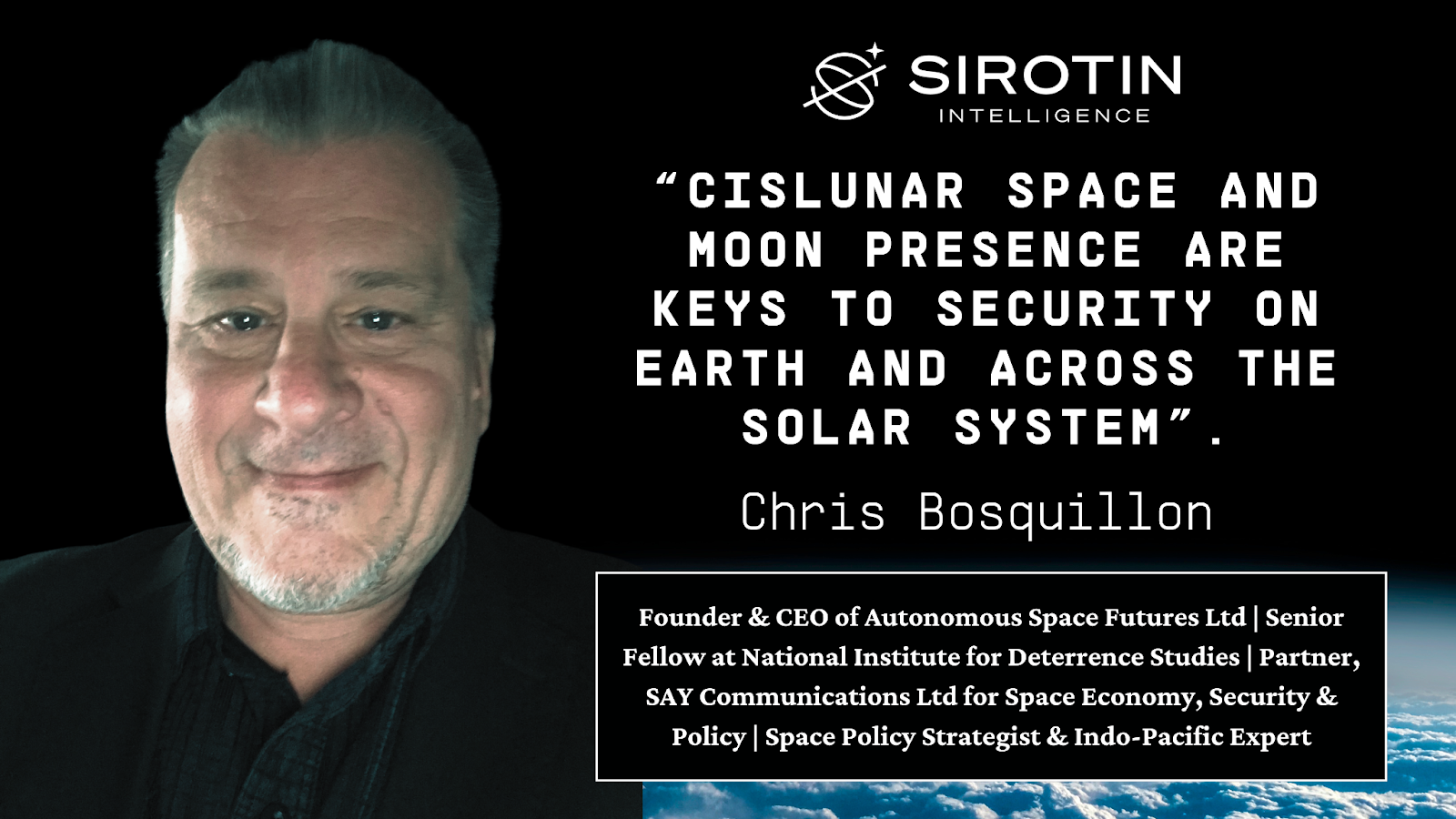
Technically sound space and defense programs fail unless stakeholders muster clarity to persuade funders, policymakers, operators, or the public why they matter. ‘Strategic Communications for Space: 101’ is a masterful blueprint in pitching clarity, language concision, visual persuasion.
Misunderstood technology can’t be defended. Angelica Sirotin’s Magnum Opus shows how to translate technical complexity into narratives that secure funding, political support, adoption, and long-term program survival. Why follow such guidance? Programs treating Strategic Communications (SCs) as design-stage requirement -not post-hoc feature- outperform technically similar competitors.
SCs are a program-critical function, not a cosmetic afterthought. As a core operational capability, SCs must be integrated much earlier than in space programs’ later-stage marketing campaigns.
To operationalize SCs through a repeatable framework that aligns directly with how realistically decisions are made in defense, space, and public-sector environments, means that engineers and program managers will need translation literacy. The ability to explain “why it matters” across audiences will increasingly be a core leadership competency in space and defense organizations.The common assumption that superior technology naturally prevails is still very much alive. To emphasise first what it does – "effects-based" disclosure - is how to build a coherent narrative. How well translations are tailored to specific audiences will determine whether advanced capabilities under the hood are funded, deployed, or cancelled. That also helps to cloak classified programs.
As procurement cycles accelerate, the environment becomes more competitive and politicized. Highly technical or classified programs must cultivate public constituencies deliberately, for they seek ways to build legitimacy and protection through narrative awareness rather than silence. SCs competence becomes a condition for survival with strategic leverage comparable to cost control or performance margins.
Clear outcome-driven SCs reduce friction, accelerate understanding, and lower perceived risk, making decisions easier to defend: language concision and visual clarity will be treated as signal, not polish. That’s why high-quality decks and one-pagers increasingly function as maturity and credibility filters in billion-dollar procurement and investment decisions.
Organizations that master Strategic Communications don’t just explain their technologies better. They shape which capabilities survive and scale- defining who wins in the next era of space and defense.
So here’s a New Year resolution for you and all of us: with your own things in mind, do read the full ‘Strategic Communications for Space: 101’(all you need is just under 4 hours of peace and quiet), start applying it to yourself now (did it – it works) and you will enjoy a great 2026 Space Year ahead!
🎤 Our Next Guest: Tommy Waller
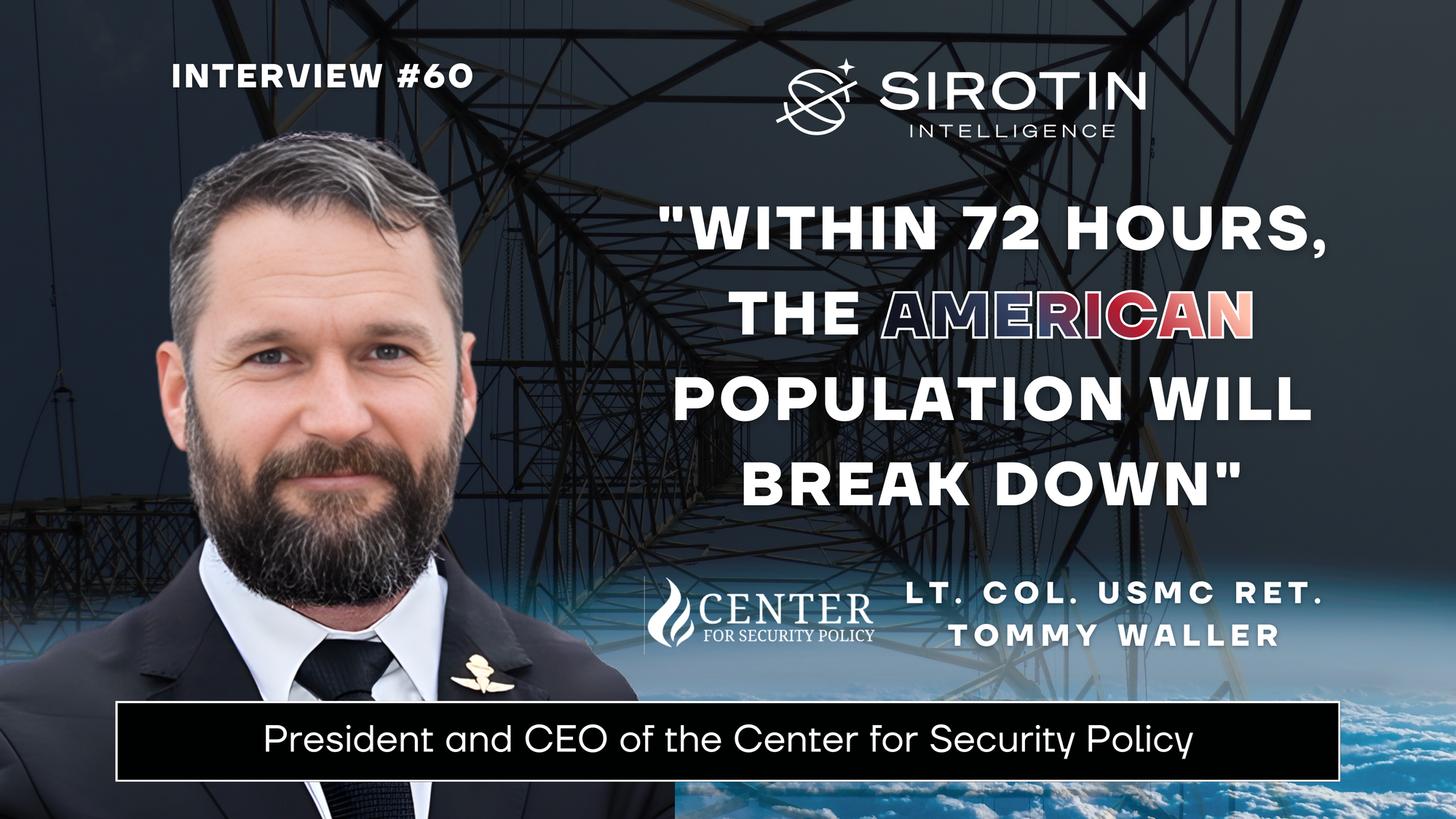
Tommy Waller spent two decades in the Marine Corps, including combat deployments to Afghanistan and Iraq and command of 3d Force Reconnaissance Company. He now runs the Center for Security Policy and its Secure the Grid Coalition, tracking threats to American electrical infrastructure from solar weather, electromagnetic pulse, cyberattack, and supply chain compromise.
In 1859, the Carrington Event turned telegraph wires into fire starters. Today the U.S. grid depends on extra-high-voltage transformers that take four to six years to manufacture overseas. Federal investigators have found hardware backdoors in at least one Chinese-built unit already installed here. There are 623 more like it operating across the country with no inspection requirement. A Carrington-class storm missed Earth by nine days in July 2012. The next one is a matter of when, not if.
Key topics:
- Why current federal standards protect against storms roughly one-tenth the intensity of documented historical events
- The $3-4 billion fix that national laboratories have validated, sitting unused while foreign countries place orders
- What happened in November 2025 when a moderate solar storm nearly forced shutdown of an unprotected transformer, while a hardened unit on the same grid operated normally
Watch Tommy’s YouTube preview Tuesday, January 6th on the Sirotin Intelligence YouTube channel. Full interview drops January 8th.
Sources:
https://www.bbc.com/news/articles/c62vx0pgyrgo
https://www.bbc.com/news/articles/c62vx0pgyrgo
https://scitechdaily.com/a-saturn-sized-planet-is-drifting-through-space-alone/
https://futurism.com/space/nasa-library-trash
https://www.chosun.com/english/industry-en/2026/01/02/RZ5W2OTJNFH67CKYZQ3YVD7EPE/
https://spacepolicyonline.com/news/whats-happening-in-space-policy-december-28-2025-january-10-2026/
https://spacenews.com/china-to-debut-reusable-long-march-10-derived-rocket-in-first-half-of-2026/
https://spacenews.com/landspace-targets-1-billion-for-reusable-rockets-as-ipo-application-accepted/
https://spacenews.com/eartheye-space-reveals-contract-with-asia-pacific-customer/
https://www.war.gov/News/Contracts/Contract/Article/4370290/
https://www.war.gov/News/Contracts/Contract/Article/4369702/
https://www.war.gov/News/Contracts/Contract/Article/4368891/
https://www.war.gov/News/Contracts/Contract/Article/4368246/
Get exclusive insights from our network of NASA veterans, DARPA program managers, and space industry pioneers. Weekly. No jargon.