
Sirotin Intelligence Briefing: February 15–21: Golden Dome Pulls SpaceX and Blue Origin Moonward, Pentagon Hunts GEO Spy Satellites, NASA Slams Starliner Culture Failures


This week's Sirotin Intelligence analysis tracks how the Pentagon's Golden Dome missile-defense push is pulling SpaceX and Blue Origin hard toward lunar development, with SpaceX reportedly in line for a $2 billion tracking-constellation contract and Blue Origin pausing New Shepard tourism to focus on maneuvering platforms and landers that could host sensors on the strategic high ground. The Defense Innovation Unit's "Ghost Recon" solicitation seeks low-cost commercial satellites to conduct persistent inspections of other spacecraft in GEO, signaling a new era of space-to-space ISR. NASA's 300-page Starliner investigation classified Boeing's 2024 crewed flight test as a Type A mishap — the agency's most serious category — blasting a culture of schedule pressure, filtered dissent, and "limited-touch" oversight that left engineers unable to confidently certify the vehicle. The European Commission unveiled its European Space Shield Action Plan to harden space assets and integrate dual-use capabilities by 2030, while Boeing scaled missile-warning sensor production to feed the Space Force's MWT MEO constellation and the Space Force activated SPACENORTH as its homeland-defense component under NORTHCOM. SpaceX rolled out "Stargaze," repurposing 30,000 Starlink star trackers into a de facto space-traffic safety layer — with policy strings attached. Artemis II locked in March 6 as its target launch date for the first crewed Moon-vicinity mission in over 50 years. Our next guest is Erik Mudrinich, Interim Director of the Space, Cyber, and National Security Law Program at the University of Nebraska College of Law, on why the boundaries between space law, cyber law, and national security are dissolving faster than institutions have recognized — and what practitioners do in the gap.
🛡️ Defense Highlights
- EU’s “European Space Shield” aims to harden space assets and integrate dual‑use capabilities by 2030: The European Commission’s European Space Shield Action Plan, part of the Defence Readiness Roadmap 2030, seeks to build a coherent, EU‑wide system of space capabilities for defence—integrating national and commercial assets with Galileo‑enabled PNT, space‑domain awareness, jamming/spoofing mitigation, and in‑orbit services. The plan envisions Council endorsement as a flagship by late 2025 and formal launch in Q2 2026, with funding aligned across IRIS², EDF and the European Defence Industrial Programme, and a “Defence Space Shield” constellation to monitor debris, detect ASAT launches, and keep secure links alive under attack.
- Karman Space & Defense builds “maritime defense systems” pillar with Seemann and MSC acquisitions: Karman Space & Defense has closed its acquisition of Seemann Composites (Gulfport, MS) and MSC LLC (Horsham, PA), combining them with its existing maritime programs to form a fourth end‑market focused on maritime defense systems alongside hypersonics/strategic missile defense, tactical missiles/integrated defense, and space/launch. The deal strengthens Karman’s vertically integrated platform in advanced composites and hydrodynamic systems for U.S. Navy and other defence customers, with integration expected to complete by end‑2026 and Seemann/MSC leadership joining Karman’s senior team.
- Boeing scales missile‑warning sensor production to feed Space Force’s Golden‑Dome‑aligned MWT MEO constellation: Boeing has opened a new 9,000‑square‑foot production line in El Segundo to build electro‑optical/infrared missile‑tracking sensors for military satellites, supporting Millennium Space Systems’ contract to deliver 12 Resilient Missile Warning and Tracking (MWT) MEO spacecraft in 2027. The expansion, which helps Boeing more than double its annual satellite output, is framed as part of putting industry on “wartime footing” and will underpin space‑based missile warning architectures expected to feed into the U.S. Golden Domemissile‑defence effort.
- Tory Bruno says Blue Origin role is about “urgent” national‑security space projects and dynamic space operations: Former ULA CEO Tory Bruno, now leading a National Security Group at Blue Origin, says he joined to tackle an “urgent need” for more agile, dynamic space operations as orbits grow more contested and the U.S. seeks resilient architectures. His remit centers on leveraging New Glenn and related platforms for national‑security missions, including maneuverable vehicles and on‑orbit capabilities that can support missile warning, SDA, and other defence roles beyond traditional launch.
- Golden Dome ambitions pull SpaceX and Blue Origin hard toward the Moon: A Defense News analysis argues that SpaceX and Blue Origin’s sudden emphasis on lunar development is tightly coupled to the Pentagon’s accelerated “Golden Dome” next‑generation missile‑defense push, including a 2025 executive order calling for a prototype shield and lunar return by 2028. SpaceX is reportedly in line for a $2 billion contract to build a 600‑satellite Golden Dome tracking constellation, while Blue Origin has paused New Shepard tourism to focus on Blue Ring maneuvering platforms and Blue Moon landers that could host sensors and infrastructure on or near the Moon as strategic missile‑warning “high ground.”
- NORAD escorts mixed Russian bomber, fighter, and AEW package through Alaskan ADIZ: NORAD detected two Tu‑95 bombers, two Su‑35 fighters, and one A‑50 AEW aircraft operating in the Alaskan Air Defense Identification Zone (ADIZ) on February 19 and launched two F‑16s, two F‑35s, one E‑3, and four KC‑135s to intercept and escort them until they departed. The Russian aircraft remained in international airspace and did not enter U.S. or Canadian sovereign airspace; NORAD characterizes such ADIZ activity as routine and not a direct threat, underscoring its layered defense network of satellites, radars, and fighters for North American homeland defense.
- Defense‑AI market forecast to 10x, spotlighting five dual‑use aerospace players: A PRNewswire brief cites a forecast that AI in defense and aerospace will grow from $4.2 billion to $42.8 billion by 2036, driven by autonomous systems and real‑time intelligence. It highlights Starfighters Space, Archer Aviation, AeroVironment, Redwire, and V2X as examples of firms leveraging AI for applications ranging from eVTOL autonomy and predictive maintenance to bio‑inspired materials, agent‑based simulations, and lifecycle extension of legacy defense systems.
- Vulcan delivers USSF‑87 payloads despite repeat SRB underperformance: ULA’s Vulcan placed USSF‑87’s U.S. Space Force payloads into their intended geosynchronous orbits, but one of four Northrop Grumman GEM 63XL solid rocket boosters again showed a “significant performance anomaly” during ascent—its second SRB issue in just four missions. Space Systems Command, ULA, and Northrop have launched a joint investigation into the motor/insulator behavior, and future high‑priority NSSL missions will depend on closing root cause and implementing fixes without eroding confidence in Vulcan as a non‑SpaceX heavy‑lift option.
- Pentagon’s “Ghost Recon” push seeks low‑cost commercial GEO inspectors for space‑to‑space ISR: Through the Defense Innovation Unit, DoD has released the Geosynchronous High‑Resolution Optical Space‑Based Tactical Reconnaissance (“Ghost Recon”) solicitation, aiming to buy commercial satellites that can provide persistent, high‑resolution imaging of other spacecraft in GEO. The effort calls for relatively inexpensive, refuelable platforms capable of long‑duration GEO operations, routine rendezvous and proximity operations, frequent “drive‑by” inspections, and high‑fidelity characterization of resident space objects to bolster GEO custody, battle‑damage assessment, and combat identification—initially fielded and operated by industry, then transferred to government control within about three years.
- Boeing moves Defense, Space & Security HQ back to St. Louis to reconnect leadership with production base: Boeing has redesignated its long‑standing St. Louis site as the headquarters of Boeing Defense, Space & Security (BDS), shifting the business‑unit HQ from Arlington, Virginia, back to Missouri where it was based from 1997–2017. The company frames the move as part of a multi‑year, multi‑billion‑dollar investment in advanced combat‑aircraft and space‑systems production, aiming to put senior leaders “side‑by‑side” with more than 18,000 local employees and signal a deepened commitment to the St. Louis defense‑industrial cluster.
- Space Force stands up U.S. Space Forces Northern as NORTHCOM component for homeland‑defense space ops: The U.S. Space Force has activated U.S. Space Forces Northern (SPACENORTH) as its service component to U.S. Northern Command, tasked with bringing space capabilities directly into the homeland‑defense mission set. The new component will provide regionally tailored effects such as enhanced space‑domain awareness, missile warning and tracking, PNT, SATCOM and orbital/electromagnetic warfare support, reflecting the 2026 National Defense Strategy’s emphasis on defending North America against increasingly sophisticated air‑ and missile‑threats.
- Paras Defence creates “Paras Avionics” subsidiary to deepen avionics work for defence and aerospace platforms: India’s Paras Defence and Space Technologies has incorporated Paras Avionics Private Limited as a new aerospace and defence subsidiary, with Paras holding a 60% equity stake via a ₹0.60 lakh cash investment. The new entity will focus on systems and solutions for avionic applications, including manufacturing, testing, repair and overhaul of mission‑critical avionics for defence and aerospace platforms, consolidating Paras’ ambitions across military and dual‑use airborne systems.
Major Contract Awards This Week:
- Northrop Grumman Systems Corp. – Deep Space Advanced Radar Capability (DARC) Site 2 long-lead hardware:A $76.7 million modification for long-lead transmitters, antennas, and receivers for the DARC Site 2 radar, bringing total contract value to $279.4 million, through February 2030.
- Lockheed Martin Missiles and Fire Control – PATRIOT Advanced Capability-3 product assurance and launcher recapitalization: A $43.5 million modification bringing total contract value to $223 million, through February 2027.
- DCS Corp. – Multi-domain mission-level sensor modeling and analysis: A $94.7 million cost-plus-fixed-fee contract for comprehensive tools to model, analyze, and predict mission-level effects across air, ground, space, and cyber domains for the Air Force Research Laboratory, through February 2031.
- Lockheed Martin Rotary and Mission Systems – AN/SQQ-89A(V)15 undersea warfare combat system development: A $78.4 million cost-plus-incentive-fee contract for engineering, integration, and certification of surface ship undersea warfare combat system baselines supporting the Navy, Japan, and Australia (FMS), with options to $479.9 million, through February 2031.
- Rolls-Royce Solutions America Inc. – Merkava Power Pack Less Transmission kits (FMS Israel): A $73.5 million firm-fixed-price contract for power pack kits, containers, and engineering technical services, bringing cumulative contract value to $462.9 million, through December 2032.
- Exyte US Inc. – CH-53K aircraft bed-down construction (FMS Israel): A $96.2 million firm-fixed-price contract for CH-53K facility construction in Israel, through March 2029.
- Gray Analytics Inc. – Missile Defense Agency model-based systems engineering digitization: A $59.5 million ceiling IDIQ contract for model-centric data-driven systems engineering, MBSE, DevSecOps, and machine learning technologies supporting MDA, through February 2031.
- Boeing Distribution Services Defense – Corpus Christi Army Depot industrial product support: A $270 million fixed-price IDIQ contract for industrial product support at CCAD, through July 2031.
- Lockheed Martin Missiles and Fire Control – Lower Tier Air and Missile Defense Sensor PAC-3 ground and flight test: A $33.8 million cost-plus-incentive-fee contract for PAC-3 system test support, through March 2027.
- Liquid Robotics Inc. – Commercial unmanned surface vehicles (FMS Japan): A $25 million contract for 20 commercial USVs including control software, payloads, and launch/recovery equipment, through February 2028.
- Lockheed Martin Missiles and Fire Control – JASSM Increased Inventory tooling and test equipment: A $10.3 million modification bringing total contract value to $409.8 million, through August 2029.
- InDyne Inc. – Perimeter Acquisition Radar Attack Characterization System (PARCS) support: An $11.8 million modification exercising Option Year Three for PARCS support at Cavalier Space Force Station, through February 2027.
- Raytheon Co. – SMART-T satellite communications systems maintenance and support: A $22.8 million contract for comprehensive maintenance and support services for SMART-T SATCOM systems, through August 2031.
- Boeing Co. – C-17 large aircraft infrared countermeasures upgrade (FMS Canada/Australia): A $13.2 million firm-fixed-price contract to upgrade Block 10 to Block 30 LAIRCM configuration on eight RAAF and five RCAF C-17 aircraft, through July 2030.
- Oshkosh Defense LLC – Remotely Operated Ground Unit for Expeditionary Fires (ROGUE Fires) carriers: A $16.9 million modification for procurement of ROGUE Fires carriers supporting the Navy and Marine Expeditionary Ship Interdiction System, through December 2026.
🌐 Policy, Geopolitical & Legal Developments
- Cape Canaveral weighs grants and hardening as Starship‑class launches raise risk to nearby homes and infrastructure: Cape Canaveral’s city council has begun discussing infrastructure‑resiliency grants and other funding options to protect local homes, utilities, and coastal infrastructure from possible damage caused by future large‑rocket launches, including SpaceX’s Starship operations from KSC. Officials emphasize the need to “shore up” both above‑ and below‑ground infrastructure ahead of dozens of planned Starship launches and landings per year, looking to Texas for lessons and warning that shrinking tax bases could force the city to compete aggressively for state and federal resiliency funds.
- NASA locks in 6 March as target for first crewed Moon‑vicinity mission in 50+ years: NASA has confirmed March 6 as its target to launch Artemis II, sending four astronauts around the Moon for the first time since Apollo, after a successful wet dress rehearsal and fueling test of the Space Launch System. The date remains contingent on final flight‑readiness reviews and pad prep, but crews are preparing to enter quarantine and SpacePolicyOnline frames the window as the opening opportunity following resolution of earlier technical delays.
- Week of Feb. 15–21 features SSA, commercial‑industrial base, and Artemis prep on the D.C. calendar: SpacePolicyOnline’s weekly agenda spotlights the 12th IAA Space Traffic Management Conference in Austin, multiple NASA leadership appearances on commercial‑spaceflight and exploration topics, and a slate of think‑tank events on space‑industrial‑base resilience and kill‑chain “collapse” concepts. The newsletter notes continued attention to a planned second Artemis II wet dress rehearsal and positions these gatherings as part of the broader policy build‑up around sustained cislunar operations and orbital‑traffic governance
- ESA’s first Phi‑Lab Ireland anchors national space‑tech platform at Mullingar’s Irish Manufacturing Research: The European Space Agency has launched ESA Phi‑Lab Ireland at Irish Manufacturing Research (IMR) in Mullingar, backed by the Irish government’s €170 million ESA commitment over five years to strengthen its role in Europe’s space sector. ESA and IMR describe the lab as a national platform for space‑technology development, intended to boost industrial competitiveness, help Ireland’s roughly 120 ESA‑active space companies scale commercially, and ensure space‑driven innovation spills over into wider manufacturing and deep‑tech industries.
- Scientists warn commercial space boom is an unregulated climate and atmospheric risk multiplier: Reporting on a new peer‑reviewed study, Inside Climate News highlights how rapidly growing rocket launches and satellite reentries inject soot, alumina and metal particles into the upper atmosphere, with little regulation or monitoring compared to aviation or shipping. Researchers and advocates argue that megaconstellations, booming launch cadence and debris burn‑ups could damage ozone, warm the climate and harm biodiversity near coastal spaceports, and they call for treating space activity as a significant source of planetary‑health risk rather than a negligible niche.
- Starliner mishap probe slams NASA’s “hands‑off” oversight and culture of schedule pressure: NASA has classified Boeing’s troubled 2024 Starliner Crew Flight Test as a Type A mishap, its most serious category, after a 300‑page investigation found that a “limited‑touch” acquisition posture left NASA without enough system insight to confidently certify the crew vehicle. The report cites Boeing’s propulsion design allowing thrusters to operate outside qualification limits, incomplete fixes from OFT‑1, and a CCP culture where staff believed they could “only succeed if Starliner launched,” leading to inadequate flight rationale, unprofessional disputes over crew return options, and an initial decision not to declare a mishap out of concern for the program’s reputation.
- Musk pivots near‑term vision to a “self‑growing” Moon city for AI satellite production: In a February 8 post amplified by SpacePolicyOnline, Elon Musk said SpaceX has “shifted focus to building a self‑growing city on the Moon” that can be achieved in under 10 years, while Mars settlement is now pushed to “about 5 to 7 years” from first flights and full build‑out 20+ years away. He frames the Moon base as a manufacturing hub for AI satellites and a mass driver to fling hardware into deep space, arguing that rapid launch windows and two‑day trip times make lunar iteration far faster than Mars, even as Starship remains NASA’s contracted Human Landing System for Artemis.
- Week of Feb. 8–14 space‑policy agenda dominated by Crew‑12, DISC, and cislunar PNT: SpacePolicyOnline’s calendar highlights the Crew‑12 launch and docking, the Defense & Intelligence Space Conference (DISC) in Reston, continued meetings of the UNCOPUOS Scientific and Technical Subcommittee in Vienna, and a Cislunar PNT Workshop focused on navigation architectures beyond GEO. Additional events include ESPI’s webinar on the future of European access to space, the 2026 SmallSat Symposium, and a CSIS session marking one year of the Golden Dome missile‑defense initiative—underscoring how human spaceflight, cislunar navigation, industrial‑base resilience, and missile defense are converging in this week’s policy conversation.
- NASA leadership labels Boeing Starliner crewed test a historic “Type A” mishap and blasts culture failures: An independent review of the 2024 Starliner crewed flight, released by NASA, concluded the mission met the criteria for a potentially life‑threatening Type A mishap, citing cascading thruster failures, loss of full attitude control and the decision to leave Butch Wilmore and Suni Williams on ISS for months before returning them on Crew Dragon. New administrator Jared Isaacman and senior officials say NASA let the programmatic goal of having two commercial crew providers override engineering judgment, creating a culture where dissent was filtered out, meetings turned “emotionally charged,” and no one was held accountable until nearly a year after the flight, prompting 61 corrective‑action recommendations across technical, organizational, and cultural domains.
- UK introduces long‑awaited cap on launch operator liability to boost domestic spaceport ambitions: A statutory cap on third‑party liability for UK launch operators came into force on 18 February, replacing effectively unlimited exposure with defined ceilings that depend on mission risk and underwriting assumptions. Ministers and industry argue this finally makes UK‑based orbital and suborbital launches insurable at competitive rates versus rival jurisdictions, giving breathing room for sites like SaxaVord and future horizontal‑launch spaceports as they work to attract first customers after multiple delays.
🛰️ Technology & Commercial Developments
- NASA’s award‑winning SAFS camera turns “invisible” airflow into a rapid, low‑cost diagnostic tool: NASA engineers have developed the Self‑Aligned Focusing Schlieren (SAFS) system, an award‑winning camera that visualizes airflow around aircraft and rockets using a single polarization grid and commercial‑off‑the‑shelf camera hardware, slashing setup time from weeks to minutes versus traditional focused‑schlieren rigs. SAFS, now used in multiple countries, filters out irrelevant shocks and boundary layers to highlight critical flow structures, giving designers a simpler, cheaper way to refine aerodynamics and improve flight safety for future aerospace vehicles.
- Aalto selects Australia as key base for stratospheric HAPS connectivity and sensing services: High‑altitude pseudo‑satellite (HAPS) provider Aalto is planning a major operations base in Australia to support its future stratospheric platform services, citing the country’s favorable airspace, regulatory environment, and geographic position for wide‑area connectivity and Earth‑observation missions. The planned base is intended to anchor global HAPS operations offering quasi‑satellite services—persistent ISR, telecom, and environmental monitoring—at lower cost and with more maneuverability than traditional satellites.
- Orient Star leans into “space‑age” aesthetics with meteor‑inspired 75th‑anniversary skeleton watch: For its 75th anniversary, Orient Star has released the limited M34 F8 Skeleton Hand Winding (430 pieces), featuring a laser‑engraved meteorite‑pattern movement inspired by the Perseid meteor shower, a blacked‑out case and bracelet, and an open‑worked dial that exposes its high‑end cal. F8B65 manual movement. The watch incorporates Seiko Epson silicon‑escape‑wheel tech, delivers a 70‑hour power reserve with power‑reserve indicator, and is pitched as a “space‑age” technical showpiece aimed at collectors who appreciate both astronomical design cues and advanced mechanical engineering.
- “Space‑age” soft‑exosuit research for astronauts points toward next‑gen mobility aids on Earth: A WDEF TechByte segment highlights UK‑led work on soft robotic “space pants” that use inflatable artificial muscles to assist astronauts’ knee extension and ankle mobility inside heavy spacesuits, helping reduce fatigue and preserve muscle mass on long missions. Researchers say the same compressed‑air exosuit concepts could translate into civilian mobility aids and rehab tools, sitting alongside powered‑exoskeleton projects from Stanford and KAIST’s WalkON suit F1 as emerging technologies that let people with impaired or no leg function walk or exercise more easily.
- China’s iSpace lands record $729M to chase Falcon‑class reusability: Beijing‑based launcher iSpace has raised a record $729 million “D++” round from a syndicate including state‑linked investors to fund development of its reusable Hyperbola rockets and expand manufacturing for first‑stage recovery and reuse. U.S. intelligence officials quoted in coverage say the raise underscores concern that China is “close to mastering” fully reusable launch with on‑orbit refueling, narrowing the gap with SpaceX and boosting capacity for both civil and military payloads.
- China’s next‑gen crew capsule and lunar rocket clear a major abort/landing test: China has completed a high‑profile test in which its Mengzhou next‑generation crew capsule executed a successful in‑flight abort and splashdown while a modified Long March 10first stage performed a controlled descent and ocean landing, simulating future reuse. The demo, hailed by Chinese state media as a key step toward a crewed lunar landing around 2030, validates core safety and reusability elements for the new lunar stack that will ultimately replace today’s Shenzhou/Long March‑2F system.
- Crew‑12 launches for eight‑month ISS rotation after first‑ever NASA medical evacuation: Crew‑12 lifted off Feb. 12 on Crew Dragon Freedom from KSC’s pad 40, carrying NASA’s Jessica Meir and Jack Hathaway, ESA astronaut Sophie Adenot, and Roscosmos cosmonaut Andrey Fedyaev for an approximately eight‑month ISS mission. Following a Crew‑11 astronaut’s undisclosed medical issue and early return, NASA re‑certified Dragon from 210 days to eight months to allow longer but fewer rotations, keeping a seven‑person crew aboard while managing tight FY26 budgets.
- SpaceX rolls out “Stargaze” traffic service using Starlink sensors, with strings attached for users: SpaceX has introduced “Stargaze,” a space‑traffic coordination / SSA service that repurposes some 30,000 Starlink star trackers to log about 30 million object transits per day, generating near‑real‑time conjunction alerts and high‑cadence Conjunction Data Messages for LEO operators. The system promises minute‑scale screening latency and free access to collision warnings for any operator that shares its ephemeris, but it is attracting policy attention because participants must accept SpaceX’s terms on data sharing and coordination—effectively positioning Starlink as a de facto safety infrastructure layer in crowded orbits.
- JWST maps Uranus’ auroras in 3D, revealing bizarre upper‑atmosphere energy flows: Using JWST’s NIRSpec instrument, an international team has produced the first 3D map of Uranus’ upper atmosphere and auroral regions, tracking how temperature and charged particles vary with height as the ice giant rotates. Researchers say this vertical view shows how energy is transported by Uranus’ highly tilted, offset magnetosphere, refining models of ice‑giant atmospheres and offering a template for interpreting auroral physics on exoplanets.
- Japan’s ispace delays next‑gen lander as engine plan shifts, keeping option to change suppliers: Japanese lunar startup ispace has warned that development of a new main engine for its future lunar landers is running behind schedule, forcing slips to its next missions and prompting a reassessment of propulsion strategy. The company has moved away from its original engine choice after schedule concerns, is co‑developing a simpler engine architecture that uses far fewer parts, and has cut revenue forecasts for the fiscal year by around 40% as milestone payments for Missions 3 and 4 slide to later years—while explicitly leaving open the possibility of switching engine providers if risk grows.
- Simera Sense scales from CubeSat imagers to sub‑meter cameras with onboard autonomy for larger EO buses: Belgium‑based Simera Sense, whose xScape100/200optical payloads have flown more than 50 times on 6U–16U cubesats, is developing standardized, higher‑resolution camera packages for larger satellites that can deliver sub‑1‑meter ground sample distance. The new line will pair bigger apertures with enhanced onboard processing and autonomy, enabling operators to push more tasking, screening, and compression into the satellite to cut downlink volume and shorten the time from image collection to usable intelligence products.
- Voyager pitches stepwise “three‑domain” playbook to actually create new orbital‑economy demand: In a SpaceNews “Space Minds” conversation, Voyager Technologies president Matt Kuta argues that real orbital‑economy growth hinges on new demand creation, not just cheaper launch, by using LEO as a proving ground for IP‑rich services like pharma R&D and advanced manufacturing, then migrating capabilities to lunar and eventually deep‑space domains. He frames Voyager’s strategy as building commercially viable LEO businesses now (e.g., Starlab and logistics), maturing technologies applicable to a future lunar economy, and only then extending to cislunar and Mars‑adjacent markets once customers—not just governments—are ready to pay for services.
- Sateliot and PLD Space sign fully private Spanish smallsat launch mission with reusable Miura 5: Spanish 5G‑IoT operator Sateliot has signed the first commercial contract for a dedicated Miura 5 launch with fellow Spanish firm PLD Space, covering two 160‑kg Tritó direct‑to‑device 5G satellites to LEO on a 2027 mission. The deal is billed as the first fully private Spanish space mission, showcasing a vertically integrated national value chain from manufacturing through launch and operations, and positioning reusable Miura 5 as a tailored smallsat launcher that avoids rideshare constraints and supports European space‑transport autonomy.
- China’s Space Epoch secures Series B to push toward 2026 orbital launch and sea recovery: Chinese launch startup Space Epoch has closed a Series B round (amount undisclosed) to move into “large‑scale development” and target its first orbital launch and maritime recovery attempt in late 2026. The firm is positioning itself as another domestic reusable‑launch contender alongside iSpace, with planned sea landings to increase trajectory flexibility and responsive mission options, further deepening China’s commercial reusability bench.
- Local “Save Our Space” campaign underscores terrestrial value of community venues branded as ‘space’: Delaware’s Milton Theatre has launched a “30 Days to Save Our Space” fundraiser to buy its Quayside waterfront lot for $150,000, well below an estimated $400,000 market value, after the current owner offered a one‑month purchase window. The outdoor venue, created during the pandemic and now used year‑round for concerts and community events, faces loss to private development if the theater cannot raise funds by March 20, highlighting how “space” as a civic place is being defended with the same urgency communities reserve for cultural infrastructure.
💭 A Word From Christophe Bosquillon
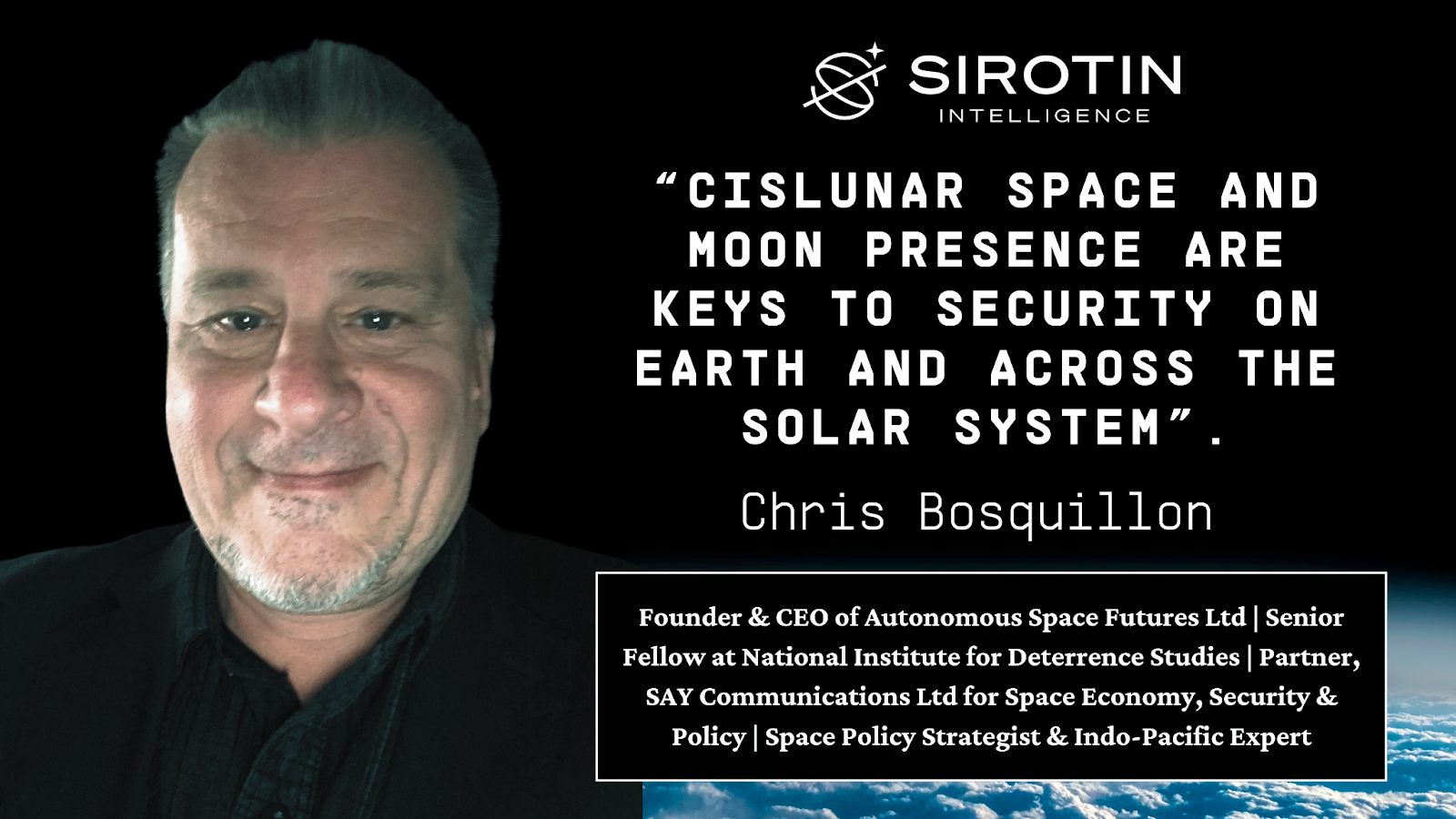
At the opening of the Munich Security Conference (MSC2026), SecState Marco Rubio diplomatic reassurances received a standing ovation. However, Rubio's fundamentals didn't susbtantively deviate from VP JD Vance statements a year ago, that had left the European audience stung, siderated, and outraged. Under Secretary of War Elbridge Colby piled on, outlining the administration’s security strategy aka “NATO 3.0,” defined by burden shifting to allies, prioritization of the Indo-Pacific, defense industrial mobilization, and a “common sense/America First” foreign policy framework.
NATO 3.0 means a return to a military alliance focused on practical defense outcomes rather than abstract rules-based order rhetoric. Europe should take primary responsibility for its conventional defense, backed by higher defense spending (3.5%+), rebalancing the alliance ownership. The U.S. is not retreating from but shifting toward a sustainable alliance structure with clearer burden sharing.On Article 5 scenarios, Colby avoided hypotheticals but stressed a credible deterrence through readiness and willingness to use force when necessary, citing decisive past actions under POTUS. The administration emphasizes results over rhetoric, criticizing prior administrations for “overpromising and underdelivering.” A major pillar is rebuilding the U.S. defense industrial base, including a proposed $1.5 trillion defense budget and national-level mobilization for production capacity.In the Indo-Pacific, the U.S. prioritizes Homeland and Western Hemisphere security first with stability in the first island chain. China is to be deterred through strength, not confrontation, while allies should take greater conventional defense responsibility. Colby's strategy rejects a one-theater globalist model and instead aligns U.S. commitments with where interests are most threatened and where U.S. power makes the greatest difference, with a stronger emphasis on industrial capability.
European governments need to accelerate conventional armament reindustrialization, with reduced U.S. conventional presence but continued nuclear deterrence. Indo-Pacific allies must invest in denial capabilities, increasing interoperability and independent readiness, while rebuilding greater regional deterrence and first response.Previous years Munich Security Conferences never tackled issues of space, even in relation to defence and security, because that wasn't politically correct in Europe. This year, space emerged as a topic, first for governance, then announcing new European and German moves in the space security field.
Have a great Space Week ahead!
🎤 Our Next Guest: Erik Mudrinich
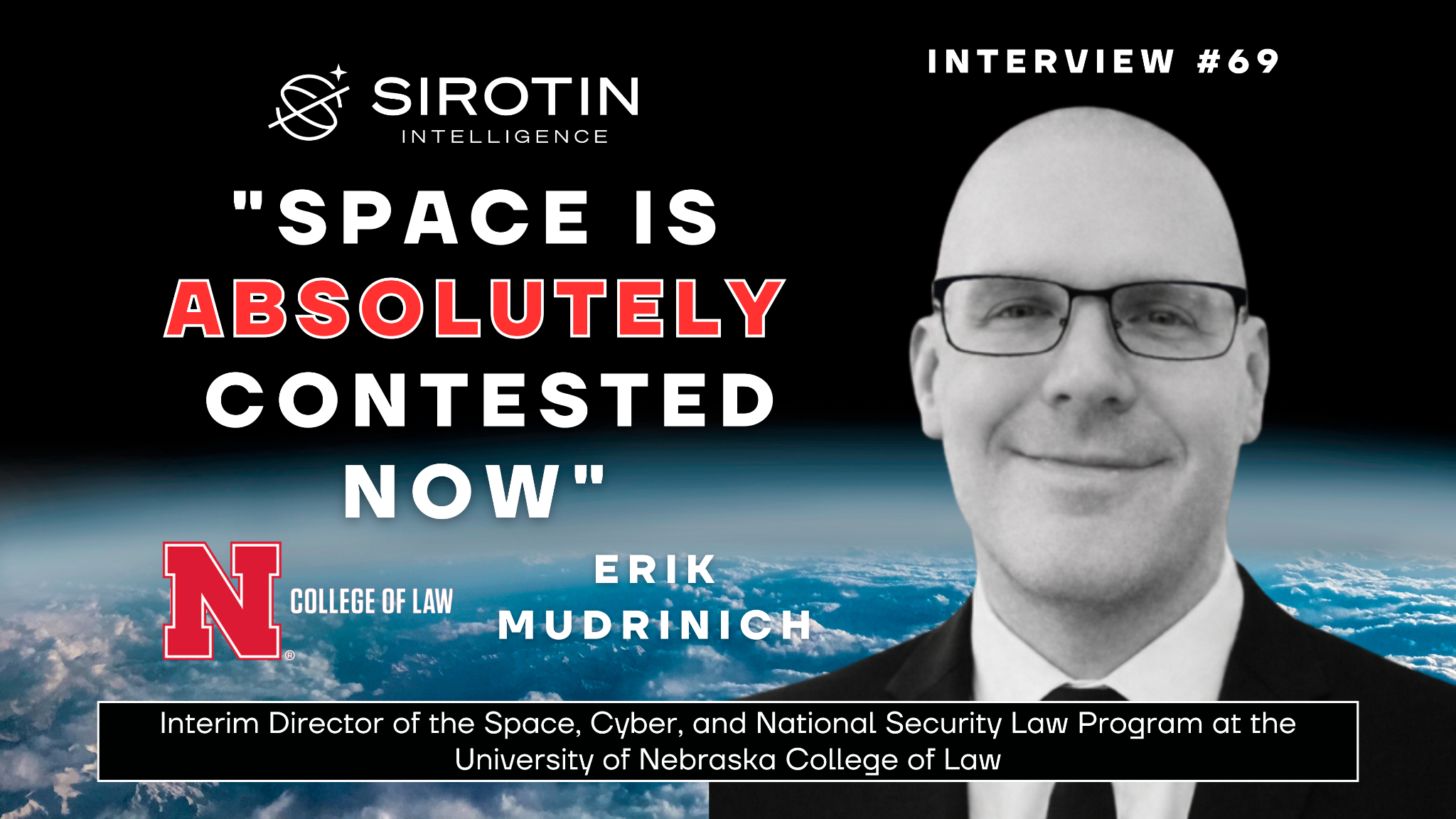
Erik M. Mudrinich spent 23 years as a judge advocate in the U.S. Air Force and Space Force, serving in senior legal positions at U.S. Cyber Command, U.S. Strategic Command, and U.S. Space Command — including Deputy General Counsel at Space Command and Chief of Cyber Operations Law at Cyber Command/NSA. He now serves as Interim Director of the Space, Cyber, and National Security Law Program at the University of Nebraska College of Law, one of the only academic programs teaching space, cyber, and national security law as a unified field, and founded Swede Space Solutions, a consultancy advising commercial space companies and defense organizations on regulatory compliance, export controls, and operational space law.
Key topics:
- Why space law and cybercrime law share the same structural problem — frameworks written for technologies their authors couldn't anticipate — and what practitioners do in the gap
- The convergence of space, cyber, and national security law: why attorneys who only understand one piece give incomplete counsel
- Attribution in the gray zone: how spoofing, jamming, and proximity operations exploit the space between "harmful interference" and armed attack
- Where commercial space companies get caught off guard — export controls, dual-use proximity tech, and the moment a "purely commercial" capability crosses into national security territory
- What Zen Buddhism's beginner's mind and Stoic philosophy bring to legal practice in contested domains
- The five-year outlook: ISAM, asteroid mining, and why cross-domain legal competence will define the next generation of space lawyers
Watch Erik's YouTube preview Tuesday on the Sirotin Intelligence YouTube channel. Full interview drops this week.
Sources:
https://spacenews.com/starliner-investigation-identifies-flawed-nasa-decision-making/
https://spacenews.com/spacexs-unveils-space-traffic-management-system/
https://spacenews.com/japans-ispace-warns-of-delays-in-new-lunar-lander-engine/
https://spacenews.com/pentagon-seeks-commercially-built-geo-spy-satellites/
https://spacenews.com/simera-sense-to-offer-larger-cameras-and-enhanced-autonomy/
https://spacenews.com/uk-caps-launch-liability-in-timely-boost-for-nascent-domestic-market/
https://www.bbc.com/news/articles/c86y1g6wde3o
https://www.skyatnightmagazine.com/news/nasa-report-boeing-crew-test-flight
https://insideclimatenews.org/news/19022026/commercial-space-travel-environmental-threat/
https://spacenews.com/creating-new-demand-in-the-nascent-orbital-economy/
https://spacenews.com/sateliot-to-launch-satellites-with-pld-space/
https://www.siliconrepublic.com/innovation/esa-phi-lab-mullingars-imr-ireland-space-tech-ambitions
https://www.wdef.com/techbyte-space-ace-tech-could-bring-new-mobility-aids/
https://spacepolicyonline.com/news/nasa-confirms-march-6-as-target-date-for-astronaut-moon-mission/
https://watchesbysjx.com/2026/02/orient-star-m34-f8-skeleton-hand-winding-75th-anniversary.html
https://spacepolicyonline.com/news/whats-happening-in-space-policy-february-15-21-2026/
https://spacenews.com/bruno-says-he-joined-blue-origin-to-work-on-urgent-national-security-projects/
Get exclusive insights from our network of NASA veterans, DARPA program managers, and space industry pioneers. Weekly. No jargon.