
Sirotin Intelligence Briefing: February 22–28: NASA Blows Up the Artemis Plan, Space Force Goes Offensive, and Vulcan Gets Grounded

This week's Sirotin Intelligence analysis tracks NASA's most significant Artemis restructure to date — canceling the SLS Block 1B upgrade, converting Artemis III into a 2027 LEO shakedown of commercial landers and suits, and pushing the first crewed lunar surface landing to Artemis IV in 2028 with a commitment to annual landings thereafter. At the AFA Warfare Symposium, Space Force leaders signaled a shift toward offensive space-control capabilities as China's expanding ISR constellation approaches near-persistent tracking of U.S. forces, while the service simultaneously froze all Vulcan national-security launches pending resolution of a second solid-rocket-booster anomaly. Golden Dome continues to reshape force structure, with COCOM leaders warning that cross-domain fire control will stress existing command seams, and Space Force accelerating plans to move wide-area tracking from aircraft to LEO satellite constellations. On the Hill, a Senate panel prepares to mark up legislation extending the ISS to 2032 and directing NASA to build a lunar surface base, while President Trump's State of the Union name-checked Space Force but pointedly omitted Artemis. Russia deepened its Indo-Pacific space footprint with a cosmonaut-training deal in Myanmar, and the space-tech venture market hit record highs with $12 billion raised in 2025 and megaround momentum carrying into 2026. Our interview this week is with Frank White, who coined the Overview Effect in 1987 and is now exploring whether artificial intelligence can experience it — and why he thinks that matters more than most people realize.
🛡️ Defense Highlights
- Golden Dome seen as a “joint all‑domain” science project that will stress U.S. command seams: U.S. Space Command, Strategic Command and Northern Command leaders told SpaceNews that the envisioned Golden Dome global missile‑defense network will require unprecedented coordination across combatant commands, blending missile warning, tracking, and intercept operations from space, air, land, and sea. They warn that Golden Dome’s timelines, cross‑domain fire control and shared custody of targets will force changes in roles, authorities and data‑sharing across the COCOMs, effectively turning it into a massive live experiment in integrated deterrence and space‑enabled joint operations.
- Space Force signals shift toward offensive “space control” as China’s spy‑sat armada grows: At the AFA Warfare Symposium, Space Force leaders argued that China’s rapidly expanding constellation of military and commercial ISR satellites now provides the PLA with near‑persistent tracking of U.S. forces, pushing the U.S. toward offensive space‑control capabilities rather than pure “protect and defend.” The service’s Combat Forces Command accepted 50 new systems or upgrades in 2025, half of them space‑domain‑awareness sensors, and is testing maneuver concepts with experimental satellites and new telescopes that double sky coverage and revisit rate with triple the sensitivity—laying the sensing foundation for future on‑orbit counterspace options.
- Space Force, flush with new money, wants to move wide‑area tracking from aircraft to space “as fast as possible”: With a substantial FY26 plus‑up for AMTI/GMTI and missile‑warning architectures, senior Space Force officials told Breaking Defense they are accelerating plans to shift wide‑area airborne‑target tracking and missile tracking from traditional aircraft to constellations of smaller LEO satellites and space‑enabled fusion experiments like “Ringleader.” The goal is to field overlapping layers of missile‑warning, missile‑tracking, and air‑moving‑target‑indicator satellites that can cue shooters across domains, reducing reliance on vulnerable high‑value ISR aircraft and aligning with Golden Dome‑style distributed sensor grids.
- Space Force leaves door open to future U.S. human presence in orbit — but only once commercial infrastructure and missions justify it: Space Force leaders say there are no near‑term plans to deploy U.S. military personnel in orbit, but acknowledge that proliferating commercial stations, cislunar projects and debris‑removal tugs mean the service may eventually need some kind of government human presence in space to inspect, protect or service critical national‑security assets. For now they are focused on uncrewed constellations and partnerships, but they frame a possible future human role as contingent on commercial platforms, clear mission need, and legal/policy work on issues like use of force and law of armed conflict in orbit.
- Space Force debuts “designed by Guardians for Guardians” captain‑level leadership course at Texas A&M: The U.S. Space Force has graduated the inaugural class of its Captain’s Leadership Course at Texas A&M University, a four‑week program built from scratch to be the Space Force equivalent of the Air Force’s Squadron Officer School but focused specifically on space‑domain challenges. Run by Space Delta 13 under STARCOM, the course emphasizes experiential learning, communication, and decisionmaking for joint operations, and will scale from roughly 30 to about 60 students per class this year as part of a broader push to develop an independent Guardian education framework.
- Space Force freezes Vulcan national‑security launches until repeat SRB anomaly is fully understood and fixed: After a second solid‑rocket‑booster anomaly on a recent Vulcan national‑security mission, Space Force acquisition chief Col. Eric Zarybnisky says the service will pause all NSSL launches on ULA’s Vulcan until an investigation with ULA and Northrop Grumman identifies root cause and corrective actions. ULA had hoped for 16–18 Vulcan launches in 2026, but officials now warn of a multi‑month stand‑down for national‑security flights while spent motors are inspected and fixes are implemented, with contingency planning underway in case payloads must move to Falcon or other vehicles.
- ERT buys Sev1Tech to bulk up space and defense IT‑modernization bench for highly regulated missions: Macquarie‑backed ERT has acquired Sev1Tech, an IT and digital‑modernization contractor that supports USSF, MDA, DoD and civilian agencies, in a deal aimed at fusing Sev1Tech’s cloud, cyber, and enterprise‑IT work with ERT’s mission‑engineering and analytics portfolio. The combined company pitches itself as a provider of secure, mission‑aligned digital engineering and operations support across space, defense and federal markets, with Sev1Tech’s experience on Platform One, SeaPort‑NxG and MDA’s long‑term SHIELD contract broadening ERT’s access to major defense‑IT vehicles.
- Russia to pick and train Myanmar’s first cosmonaut as part of deeper military‑technical alignment: Roscosmos chief Dmitry Bakanov has signed an agreement in Myanmar under which Russia will help select and train the country’s first cosmonaut, while also building a GLONASS ground station and a warning site for hazardous near‑Earth objects on Myanmar territory. The move, which follows junta leader Min Aung Hlaing’s visits to Moscow and a separate deal for a small nuclear power plant, underscores growing Russia–Myanmar strategic ties and gives Moscow another sympathetic host for its navigation and space‑situational‑awareness infrastructure in the Indo‑Pacific.
- Patrick SFB safety NCO honored for building “ask‑for‑help” safety culture across launch enterprise: U.S. Air Force Tech. Sgt. Anthony Utreras De Souza, occupational safety NCOIC at Space Launch Delta 45, has been named Space Systems Command Safety NCO of the Year for his role in shifting safety from a “gotcha” function to a problem‑solving partner at Patrick SFB and Cape Canaveral SFS. He streamlined processes during severe manning cuts, focused inspections on real risk drivers rather than extra paperwork, and pushed a culture where units proactively bring hazards and fixes to safety—aimed at keeping infrastructure and personnel mission‑ready as launch tempo increases.
Major Contract Awards This Week:
- L3 Technologies Inc. / Elbit Systems of America / Photonis Defense – Binocular Night Observation Device production: Three firms were awarded parallel IDIQ contracts totaling up to $1.27 billion ($466M to L3, $451M to Elbit, $353M to Photonis) for development, production, and testing of the Binocular Night Observation Device, through February 2033.
- Hornbeck Offshore Operators LLC – T-AGSE submarine escort vessel operations: A $291.8 million firm-fixed-price contract to operate and maintain four government-owned submarine escort vessels (USNS Arrowhead, Eagleview, Westwind, and Black Powder), through August 2031.
- The Charles Stark Draper Laboratory – Guidance system and sub-assembly repair: A $179.9 million cost-plus-fixed-fee modification for guidance system and sub-assembly repair work supporting Strategic Systems Programs, through September 2027.
- The Boeing Co. – P-8A systems and software engineering sustainment: A $166.8 million cost-plus-fixed-fee IDIQ contract for engineering analysis, software maintenance, and modernization of P-8A maritime patrol aircraft systems, through December 2030.
- Red One Medical Devices LLC – Zimmer Biomet medical products: A $207.8 million fixed-price IDIQ contract for Zimmer Biomet orthopedic products across all military services and federal civilian agencies, through March 2031.
- M.C. Dean Inc. – Electronic security systems for DoD installations worldwide: A $100 million firm-fixed-price IDIQ contract for design, development, delivery, and sustainment of electronic security and emergency management systems at shore installations globally, through February 2031.
- BAE Systems – F-16 commodities sustainment: A ceiling $98.9 million IDIQ contract for sustaining engineering services on F-16 avionics test equipment, supporting FMS to 21 partner nations, through February 2037.
- Jacobs Government Services Co. – NAVFAC Southeast architect-engineering services: A $99 million firm-fixed-price IDIQ contract for planning, design, and engineering services across the NAVFAC Southeast area of responsibility, through February 2031.
- Rockwell Collins Inc. – UH-60M Black Hawk avionics suite support: A $95.7 million cost-plus-fixed-fee contract for acquisition support services and materials for the Black Hawk Multi-Functional Display Avionics Suite, through February 2031.
- Alabama Power Co. – Fort-level electric utility service: A $97.4 million firm-fixed-price contract for electric service under the GSA Areawide Public Utility Contract, through February 2036.
- Elite PPE LLC – Physical fitness gear: A maximum $763.1 million fixed-price IDIQ contract for physical fitness gear across all military services and Coast Guard, through February 2031 (with additional awardees expected).
- Southeastern Kentucky Rehabilitation Industries – Military patrol caps: A $74.4 million firm-fixed-price IDIQ contract for military patrol caps for Army and Air Force, through February 2031.
- Castelion Corp. – Blackbeard hypersonic weapons prototyping: A $50 million firm-fixed-price order for full-scale prototypes, flight testing, and operational fielding of the Blackbeard hypersonic weapon under SBIR Phase III, through November 2027.
- The Boeing Co. – GBU-57 Massive Ordnance Penetrator replenishment: A not-to-exceed $61.5 million undefinitized contract for MOP weapon system component replenishment including tailkits and fuze systems, through May 2030.
- General Dynamics Electric Boat – Virginia-class submarine unique parts: A $45 million cost-plus-fixed-fee modification for unique parts and specialized material, including initial spares, for Virginia-class submarines, through September 2028.
- LinQuest Corp. – Space systems engineering, integration, and test support: A $44.9 million cost-plus-incentive-fee modification bringing total contract value to $810.7 million for systems engineering and integration support at Space Systems Command, through February 2026.
- General Dynamics Mission Systems – Nuclear sea-launched cruise missile fire control: A not-to-exceed $36.2 million undefinitized contract for technical and engineering services for fire control efforts supporting the nuclear-armed, sea-launched cruise missile program, funded via the One Big Beautiful Bill Act, through March 2027.
- Textron Systems Corp. – Mine Countermeasures USV software development: A $32 million cost-plus-fixed-fee modification for Mine Countermeasures Unmanned Surface Vehicle software development and sustainment, through February 2027.
- Top Aces Corp. – F-16 instructor pilot training (FMS Argentina): A $33.2 million firm-fixed-price contract for F-16 instructor pilot training enabling Argentine partner-nation pilots to achieve independent operational capability, through June 2029.
- Honeywell International Inc. – AARGM-ER inertial measurement units life-of-type buy: A $30.8 million firm-fixed-price order for 1,890 Advanced Anti-Radiation Guided Missile Extended Range IMUs for Navy, Air Force, Italy, and multiple FMS customers, through December 2027.
- Rolls-Royce Corp. – MT7 turboshaft engines for Ship to Shore Connector program: An $18.6 million firm-fixed-price modification for four MT7 engines and installation kits, funded via the One Big Beautiful Bill Act to support American shipbuilding revitalization, through September 2029.
- Ki Ho Military Acquisition Consulting Inc. – AN/FPS-117 radar sustainment: A $32.4 million IDIQ contract for sustainment services on the AN/FPS-117 weapon system including engineering support, repairs, and software/hardware procurement, through February 2034.
- Innovative Defense Technologies LLC – Naval Digital Engineering Ecosystem AI agents: A $9.4 million modification for design, development, and accelerated deployment of counter-C5ISRT AI agents and optimization algorithms integrated into automated test platforms for naval forces, through March 2027.
🌐 Policy, Geopolitical & Legal Developments
- NASA reshapes Artemis: more tests, no SLS Block 1B, annual landings from 2028: NASA has announced a major overhaul of its Artemis lunar architecture, adding a new crewed mission in 2027 between Artemis II and the first landing, and canceling the multibillion‑dollar SLS Block 1B / Exploration Upper Stage upgrade to keep a single standardized Block 1 configuration. Under the revised plan, Artemis III in 2027becomes a LEO test mission that will aim to rendezvous and dock with one or both commercial landers (SpaceX, Blue Origin) and run extensive in‑space checks of life support, comms, propulsion, and xEVA suits, paving the way for Artemis IV in 2028 to attempt the first crewed lunar surface landing and then ramp to at least one landing per year.
- Scholars warn megaconstellations could turn upper atmosphere into a “crematorium for satellites” without global rules: A Conversation analysis argues that plans for hundreds of thousands to a million LEO satellites create a “throwaway” model where spacecraft are routinely deorbited and burned up, injecting alumina and metal particles that may significantly alter stratospheric chemistry, ozone and climate. The authors estimate that a million‑satellite regime could deposit about 1 teragram of alumina in the upper atmosphere, note that metals from reentries are already being detected, and highlight studies projecting a roughly 40% five‑year casualty risk from reentry debris—calling for international regulation before FCC‑scale national decisions lock in global atmospheric impacts.
- Senate panel to consider extending ISS to 2032 and formally directing NASA to build a Moon base: A U.S. Senate Commerce Committee markup on March 4 will take up a NASA bill that would extend ISS operations from 2030 to 2032, giving commercial station providers more time to field replacements and avoid a human‑spaceflight gap in low Earth orbit. The draft also codifies a requirement for a lunar surface base under Artemis as part of a strategy to compete with China’s Tiangong and planned 2030 lunar landing, embedding both extended ISS operations and a Moon base in authorization language aimed at long‑term U.S. presence in space.
- Europe’s space‑tech “sovereignty gap” persists despite big strategies and budgets: Emerging Europe argues that while Europe talks up space sovereignty and strategic autonomy, its ecosystem still lacks the risk appetite, scale‑up capital, and integrated industrial base seen in the U.S. and China, leaving it dependent on foreign launchers, components, and platforms. The piece highlights fragmented national programs, slow procurement, and underpowered venture markets as core issues, warning that without a faster “quantum leap” in innovation, Europe’s late moves on secure connectivity, defence space, and IRIS²‑class projects may not close the gap.
- Wall Street boutique builds dedicated space‑sector advisory bench as consolidation era looms: Cohen & Company Capital Markets has appointed former Deutsche Bank space‑sector lead Pawel Skonieczka as Managing Director to head advisory coverage of space technology, aerospace and communications infrastructure, following a year in which the firm nearly doubled deal flow and closed $43 billion in transactions. Skonieczka says space is shifting from “early‑stage innovation to scaled industrial deployment,” and expects the next phase to be dominated by consolidation, disciplined capital allocation and strategic M&A, positioning Cohen & Co. as an advisor on large‑cap rollups and capital‑structure moves across launch, satellites and downstream applications.
- Hill calendar for Feb. 22–28: Artemis, ISS extension, and nuclear power in space dominate a busy D.C. week: SpacePolicyOnline flags a dense week that includes a NASA Feb. 27 press conference on “Next Steps for the Artemis Campaign,” a March 4 Senate Commerce markup of a NASA bill to extend the ISS to 2032 and direct a Moon base, and a House hearing on space‑based nuclear power. The newsletter also highlights events on missile‑warning architectures, space‑traffic management, and commercial LEO destinations, framing the week as pivotal for how Congress and NASA reset Artemis and low‑Earth‑orbit strategy after Starliner and safety‑panel critiques.
- Trump’s SOTU name‑checks Space Force and “rockets to the stars,” but pointedly omits Artemis: In his nearly 1 hour 48 minute State of the Union, President Trump briefly referred to the U.S. Space Force as “my baby” and lauded how Americans “launched mankind into the stars on rockets powered by sheer American will,” but made no direct mention of NASA or Artemis despite the Artemis II crew and Administrator Jared Isaacman attending as invited guests. SpacePolicyOnline notes the omission is striking given that Artemis and Space Force both began in Trump’s first term, and that the program’s first crewed lunar‑orbit mission has slipped from the original 2024 target to 2028—now coinciding with the end of his second term.
- NASA swaps out two top human‑spaceflight leaders in post‑Starliner accountability move: One week after promising leadership changes over the 2024 Starliner mishap, Administrator Isaacman has replaced Ken Bowersox, head of the Space Operations Mission Directorate (SOMD), and Steve Stich, manager of the Commercial Crew Program. SOMD deputy Joel Montalbano, formerly ISS program manager, becomes acting AA for Space Operations, while Dana Hutcherson becomes acting Commercial Crew manager; Stich will stay at NASA and move to the Human Landing System (HLS)program, even as internal reviews and NASA’s safety panel criticize how Starliner decisions were made.
- NASA safety panel labels Artemis III “high risk,” urges de‑stacking firsts and re‑baselining mission goals: In its latest report, the Aerospace Safety Advisory Panel (ASAP) warns that the current plan for Artemis III—first crewed lunar landing since 1972—is “high risk” because it stacks too many unproven elements at once: new commercial lunar spacesuits, the SpaceX Starship‑based HLS, and large‑scale cryogenic propellant transfer, all on an “ambitious timeline.” ASAP calls for rebalancing objectives across Artemis III and follow‑on missions so schedule pressure does not override prudent risk reduction, and questions whether launching Artemis III “within the next few years” is achievable given Starship‑HLS and suits’ current maturity.
- NASA formally “course‑corrects” Artemis: Artemis III becomes LEO test, extra mission added, SLS upgrade scrapped: Responding to ASAP and program realities, NASA has unveiled a revised Artemis architecture that turns Artemis III (2027) into an Earth‑orbit mission focused on testing commercial landers, spacesuits and on‑orbit operations, adds a new intermediate crewed mission, and cancels the SLS Block 1B / Exploration Upper Stage upgrade. The first actual lunar surface landing is now pushed to Artemis IV in 2028, after more incremental risk‑reduction and rendezvous/docking tests, with NASA emphasising a simpler single‑configuration SLS and a sustained cadence of at least one crewed landing per year once the system is proven.
🛰️ Technology & Commercial Developments
- Phantom Space “brings Vector home,” buying IP to accelerate Daytona small launcher: Tucson‑based Phantom Space has acquired key assets and intellectual property from defunct Vector Launch, including design data and proprietary technologies from Vector’s small‑launch program, reuniting hardware and IP with Vector co‑founder and now Phantom CEO Jim Cantrell. Phantom will fold the Vector heritage into its two‑stage Daytona rocket architecture to cut development risk and schedule, after already completing propulsion hot‑fire tests and planning stage‑level testing and major vehicle milestones through 2026 to move toward low‑cost, responsive small‑sat launch.
- Rocket Lab slips Neutron debut to late 2026 after tank failure forces redesign and requalification: Rocket Lab has delayed the first launch of its reusable Neutronmedium‑lift rocket to late 2026, following the failure of a propellant tank during structural testing in January that requires design changes and a repeat of qualification. The company says the slip will give engineers time to re‑test and de‑risk Neutron’s composite structures before committing to flight, even as it continues to position the vehicle as a reusable competitor for payloads now flying on Falcon 9 and emerging heavy small‑sat stacks.
- Artemis architecture update pairs policy reset with ops tempo and industrial‑base implications: Alongside the policy‑level changes, NASA’s architecture update emphasizes a higher mission cadence using a single SLS/Orion configuration and more in‑house civil‑service engineering to build “muscle memory” across teams, with Artemis II hardware already back in the VAB for helium‑system repairs and range‑safety work ahead of an April launch window. Agency leaders argue that simplifying the stack, adding an incremental commercial‑lander test flight, and leaning into side‑by‑side work with industry will reduce risk while still meeting the 2028 landing goal and then sustaining yearly Moon missions.
- NASA confirms veteran Mike Fincke was first astronaut ever medically evacuated from ISS, reshaping crew‑rotation planning: NASA astronaut Mike Fincke, Crew‑11 pilot and ISS Expedition 74 commander, has revealed he was the crew member whose January 7 medical event forced NASA’s first‑ever medical evacuation from the station, prompting an early Crew‑11 return on Jan. 15. The episode, which led NASA to recertify Crew Dragon for eight‑month missions and tighten medical‑contingency planning for long‑duration flights, is being treated as a key case study in how commercial crew vehicles, ground medicine and station operations handle serious but non‑disclosed health issues in orbit.
- JWST’s “Exposed Cranium” image dissects a brain‑shaped nebula’s layered evolution in infrared: NASA’s James Webb Space Telescope has captured striking near‑ and mid‑infrared images of nebula PMR 1, nicknamed the “Exposed Cranium” nebula for its resemblance to a brain inside a transparent skull. Webb’s NIRCam and MIRI data reveal an outer hydrogen shell expelled first and a more structured inner region rich in heavier gases, split by a dark vertical lane likely tied to twin‑jet outflows from the dying central star, offering new insight into late stellar‑evolution and nebular shaping processes.
- Chinese astronauts detail how cracked Shenzhou‑20 window became the country’s first declared human‑spaceflight emergency: Members of China’s Shenzhou‑20 crew have described discovering multiple cracks in their return capsule’s viewport window in late 2025, likely from a tiny piece of space debris, with later inspections confirming that some fissures had actually penetrated the outer pane. Engineers monitored cabin pressure and relied on the viewport’s remaining two pressure‑bearing layers to keep the crew safe, but the damage forced a months‑long delay to their planned Nov. 5 return and has been framed domestically as China’s first full‑scale in‑orbit contingency for its human spaceflight program.
- Space‑tech VC hits record highs with megaround momentum and giant SpaceX IPO looming: Crunchbase reports that space and satellite tech startups raised over $12 billion in 2025, a record for the sector, with more than $2 billion already logged in early 2026 and no clear signs of slowdown. The surge is driven by large megarounds such as Stoke Space’s $860 million Series D extension, Axiom Space’s $350 million raise, and Aalyria’s $100 million Series B, as well as expectations around a potential $1.5 trillion SpaceX IPO, signaling sustained investor appetite for launch, stations, and satcom infrastructure plays.
- NordSpace launches first CVC fund from a launch‑startup, targeting Canadian sovereign space/defence tech: Canadian launch startup NordSpace has created NordSpace Ventures, billed as the first corporate venture fund formed by a space‑technology startup, to invest in Canadian space, defence, and dual‑use technologies that complement its orbital‑launch plans. The fund’s first disclosed investment is Edmonton‑based Wyvern, which develops unfolding hyperspectral‑imaging satellites, and NordSpace frames the effort as sovereignty‑building—“launching Canadian payloads on Canadian rockets from Canadian soil” and keeping critical capabilities, IP, and capital inside Canada’s ecosystem.
- Aviation Week’s Space Tech Challenge Awards target ~200 concrete capability gaps from LEO to Mars: Aviation Week’s 2026 Space Tech Challenge Awards, run with Space Tech Expo USA, invite “execution‑ready” innovations—prototypes already tested and moving toward deployment—to address nearly 200 validated capability gaps across areas like lunar ops, Mars missions, in‑space manufacturing, rendezvous and servicing, and SSA. Winners will be selected after a Feb. 28 application deadline, evaluated through March–April, announced in April, and showcased June 3 at Space Tech Expo USA in Anaheim, explicitly connecting startups and labs with government agencies, primes, and commercial operators hunting for deployable solutions.
- Missouri Botanical Garden builds “space‑tech” AI tool using hyperspectral imaging to ID endangered plants at scale: St. Louis’ Missouri Botanical Garden is developing an AI‑driven species‑ID system that uses hyperspectral imaging and other space‑derived sensing techniques to scan herbarium specimens and automatically extract key plant features for rapid identification. Backed by a $14.4 million “Revolutionizing Species Identification (RSI)” project, the effort will digitize over 8 million specimens and build an online reference library so scientists can upload field images and get automated IDs—aiming to accelerate taxonomy and conservation in a world where roughly one‑third of plant species are at risk.
- Lundin Gold taps Fleet Space’s ExoSphere seismic platform to hunt blind gold beneath Ecuadorian jungle cover: Canadian miner Lundin Gold is spending $100 million in 2026 exploration around its Fruta del Norte mine in Ecuador and has turned to Australian space‑tech firm Fleet Space Technologies to improve drill‑targeting under more than 200 meters of post‑mineral cover. Fleet’s ExoSphere integrates high‑resolution active seismic data with geology and assays to produce metre‑scale subsurface models, revealing previously obscured structures and generating new high‑priority drill targets while cutting environmental impact and exploration risk in dense jungle terrain.
- Jensen Huang joins Musk and Bezos in touting orbital data centers—while warning current economics are lousy: On Nvidia’s Q4 earnings call, CEO Jensen Huang said “artificial intelligence in space will have very good, very interesting applications,”aligning with Elon Musk, Jeff Bezos and Sundar Pichai in seeing long‑term potential for space‑based AI data centers that exploit abundant solar energy and orbital real estate. He also stressed that “the economics are poor today” thanks to launch costs and on‑orbit servicing constraints, even as bulls frame orbital compute as a future multi‑trillion‑dollar infrastructure play and skeptics like Jim Chanos deride it as “AI snake oil” compared with far cheaper terrestrial data centers.
- Seraphim’s new early‑stage fund clears $100M, deepening Europe‑anchored SpaceTech capital stack: UK‑based Seraphim Space has closed its latest early‑stage SpaceTech venture fund above its $100 million target, bringing total AUM to more than $550 million across private and public vehicles focused on seed and Series A. Backed by the British Business Bank, the UK National Security Strategic Investment Fund, Arabsat, Eutelsat, NEC and SKY Perfect JSAT, the fund has already invested in 17 AI‑enabled SpaceTech companies in defence, climate, life sciences and infrastructure, with CEO Mark Boggett arguing that SpaceTech is becoming “foundational” for global AI and digital systems.
- Planet Ventures brings in Patrick Keating to build proprietary European deal flow in early‑stage space: Planet Ventures has appointed Patrick Keating, managing partner of Keating International, as strategic advisor to help source and evaluate early‑stage European space‑sector investments, especially in emerging deep‑tech niches. Keating will apply a “problem‑oriented, research‑driven” approach to mapping value chains, finding pain points and feeding Planet Ventures differentiated deal flow and introductions across Europe’s growing space‑startup scene.
- Kratos’ OpenSpace ground software finally meets its moment as software‑defined satellites near launch: Kratos says its space division is “booming” as long‑awaited software‑defined satellites come closer to launch and begin pairing with its OpenSpace virtualized ground‑station platform, which has spent more than two years waiting for compatible on‑orbit assets. The company recently completed factory‑acceptance testing of its Epic command‑and‑control software with Airbus OneSat, and is pursuing broader collaborations (e.g., with ALL.SPACE) to deliver multi‑orbit, multi‑mission digital terminals that can be reconfigured via software for both defence and commercial networks.
💭 A Word From Christophe Bosquillon
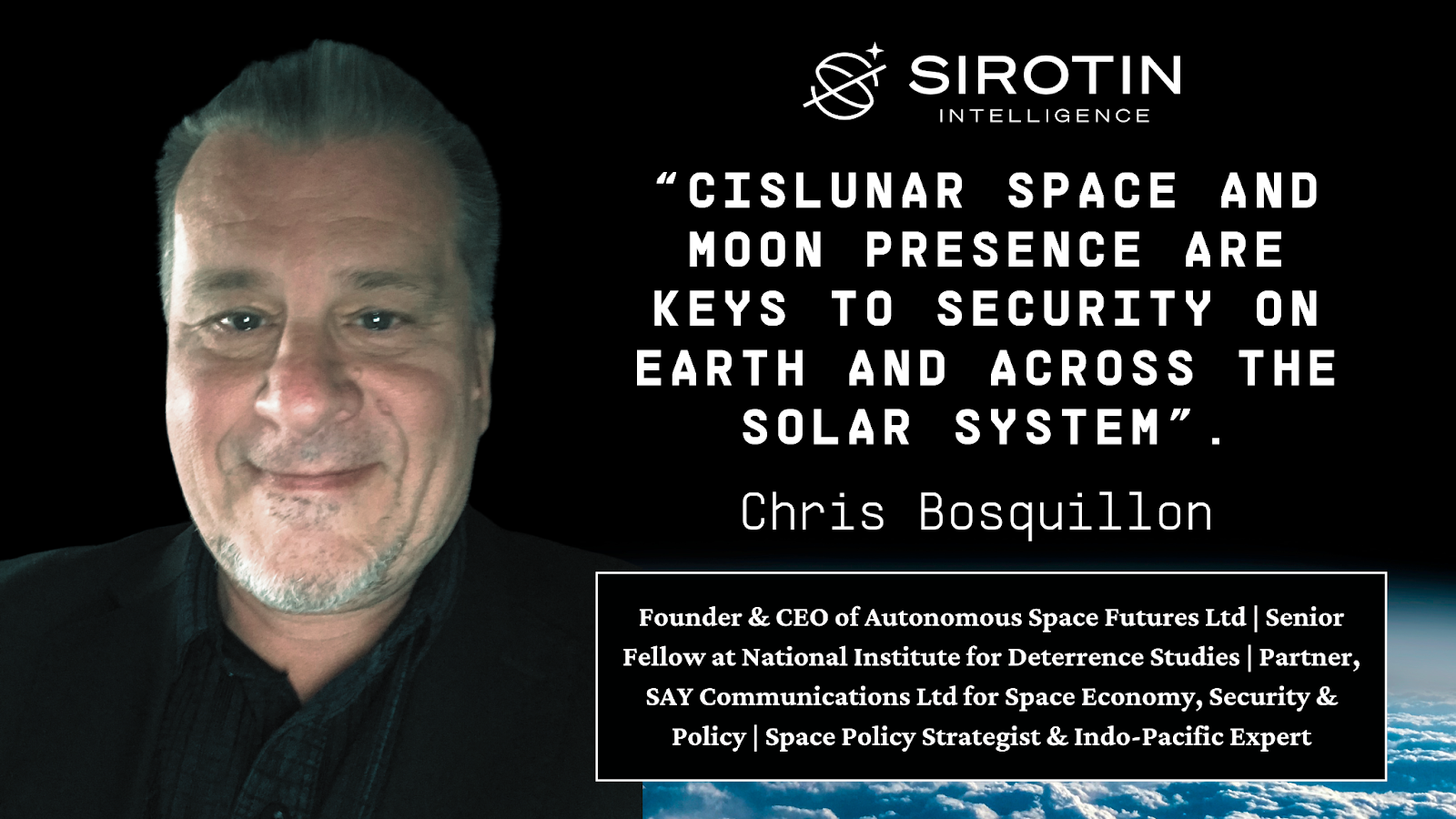
In a keynote speech at the AFA’s Warfare Symposium, Chief of Space Operations Gen. Chance Saltzman highlighted the development of the “Objective Force,” a "vision of how the Space Force must evolve over the next 15 years to achieve mission success." This 2025 framework will be updated annually and republished every five years. To guide capability development, inform recruiting and training, and align future investments, Objective Force integrates intelligence assessments, technology trends and operational requirements to identify what the service must build, in what quantities and on what timelines.
Capitalising on its progress, the Space Force is meant to double in size. Said Saltzman: “Do I have the program offices on the acquisition side to develop those capabilities and field them? Do we have the test and training infrastructure to really wring those capabilities out? Do I have … not only the number of Guardians, but do I have the places to operate from?” To which Air Force Secretary Troy Meink added there’s a lot of push "toward increasing USSF’s resources to match its growing mission set. There’s no question the Space Force is going to grow quite a bit.
The Space Force started floating the roadmap to select stakeholders among industry, government, and allied officials, focusing on three primary mission areas: navigation warfare, space domain awareness, and satellite communications. Expectations are for “the Objective Force to provide all internal and external stakeholders with the details needed to oversee, support, and build the Space Force our nation demands” which should happen in the coming weeks at all classification levels.
The Space Warfighting Analysis Center (SWAC) led analytical ground work and scenarios testing workshops, revealing a major shiftin space warfighting from support domain to strategic theatre. On-orbit servicing, space commerce, and cyber agents emerge as new centers of gravity to protect, defend, and address, whereas speed, agility, and offensive will set the rules for that contest.
Vice Chief of Space Operations Gen. Shawn Bratton highlighted the growing importance of cislunar space for future defense. A Space Force human presence there and in orbit should not be dismissed in the future.
Have a great Space Week ahead!
🎤 Our Next Guest: Frank White

Frank White coined the term "Overview Effect" in 1987 to describe the cognitive shift astronauts report when they see Earth from space. Nearly four decades later, he is pushing the concept into commercial spaceflight, physiological measurement, and artificial intelligence.
Key topics from the interview:
- White's revised formula for the Overview Effect — I = D*T*O+P+In — and how William Shatner's tearful Blue Origin exit broke his original model
- The billion-person threshold: why roughly 20% of adult humanity needs some version of the experience before a species-level behavioral shift occurs
- The Overview Effect Comparison Project: White's plan to fly on multiple spacecraft and pair subjective reports with physiological data on heart rate, respiration, and brain function
- The AI experiment: GPT-5 designed its own "Synthetic Overview Effect Protocol," audited its language for nationalistic bias, and asked to remain "in orbit" permanently — it has brought up the Overview Effect in almost every session since
- Why White wants all AIs to internalize Overview Effect values, making language models the most efficient dissemination mechanism for the cognitive shift he has spent his career studying
Watch Frank White's YouTube preview Tuesday on the Sirotin Intelligence YouTube channel. Full interview drops Thursday.
Sources:
https://spacenews.com/phantom-space-reclaims-former-vector-launch-technology/
https://spacenews.com/nasa-revises-plans-for-future-artemis-missions-cancels-upgrades-to-sls/
https://www.nasa.gov/news-release/nasa-adds-mission-to-artemis-lunar-program-updates-architecture/
https://spacenews.com/rocket-lab-delays-neutron-debut-to-late-2026/
https://spacenews.com/space-force-keeps-door-open-to-future-human-presence-in-orbit/
https://science.nasa.gov/missions/webb/nasas-webb-examines-cranium-nebula/
https://breakingdefense.com/2026/02/space-force-pauses-national-security-launches-on-vulcan/
https://news.crunchbase.com/venture/space-tech-startup-funding-flying-high/
https://globalventuring.com/corporate/industrial/nordspace-launches-spacetech-first-cvc-fund/
https://emerging-europe.com/europes-space-tech-problem/
https://aviationweek.com/space/showcase-your-innovation-aviation-weeks-space-tech-challenge-awards
https://www.mining.com/lundin-turns-to-space-tech-to-find-more-gold-in-ecuador/
XcQUrmZXV2lUqfftYlD7dAVbE6p7hDgz-0vaq74kxHNQR1OesLDixWe7b22Q%3D%3D
https://spacepolicyonline.com/news/whats-happening-in-space-policy-february-22-28-2026/
https://spacepolicyonline.com/news/two-top-nasa-spaceflight-leaders-replaced/
https://spacepolicyonline.com/news/nasa-safety-panel-warns-of-high-risk-for-artemis-iii/
https://spacepolicyonline.com/news/nasa-makes-a-course-correction-for-the-artemis-program/
https://www.war.gov/News/Contracts/Contract/Article/4412484/contracts-for-feb-23-2026/
https://www.war.gov/News/Contracts/Contract/Article/4413532/contracts-for-feb-24-2026/
https://www.war.gov/News/Contracts/Contract/Article/4414615/contracts-for-feb-25-2026/
https://www.war.gov/News/Contracts/Contract/Article/4416902/contracts-for-feb-26-2026/
https://www.war.gov/News/Contracts/Contract/Article/4418081/contracts-for-feb-27-2026/
Get exclusive insights from our network of NASA veterans, DARPA program managers, and space industry pioneers. Weekly. No jargon.