
Sirotin Intelligence Briefing: January 4–10: $15B Construction IDIQ Lands, Space Force Eyes Vandenberg Super-Heavy Pad, House Rejects NASA Cuts with $24.4B Budget


This week's Sirotin Intelligence analysis tracks a series of moves that will shape space and defense architecture through the decade. The Air Force awarded a ceiling $15 billion multiple-award IDIQ for global construction services, while General Electric locked in $1.42 billion to produce 277 turboshaft engines for Marine Corps CH-53K helicopters and InDyne secured a $1.1 billion contract for 24/7 missile warning and space domain awareness operations across six installations from Cape Cod to Greenland. Space Launch Delta 30 issued an RFI seeking commercial partners to develop Vandenberg's first dedicated super-heavy launch site, aiming to boost national-security constellation resilience with polar-orbit heavy-lift capability independent of Florida. On Capitol Hill, the House passed a three-bill minibus setting NASA's top line at roughly $24.4 billion, nearly restoring science funding the White House sought to cut by up to 47 percent and sustaining Artemis at $7.8 billion. Meanwhile, NASA and SpaceX are targeting January 15 for Crew-11's medical evacuation splashdown off California, with agency officials stressing the controlled return will not affect the early-February Artemis II launch campaign. Our next guest is Robert Carriere, inventor of the Kinetic Resistance Apparatus, on passive exoskeletons, EVA tool management, and why a six-pound device with no power source may outperform hundred-million-dollar powered systems.
🛡️ Defense Highlights
- Rocket Lab cast as centerpiece of the “arsenal of freedom” tour: Secretary of War Pete Hegseth visited Rocket Lab’s Long Beach factory, praising workers as “front and center” in building an arsenal of freedom after the company’s recent $805 million award to build 18 SDA Tranche 3 tracking satellites and ahead of the first Neutron medium‑lift launch planned for early 2026. The tour, part of a wider push to favor fast‑moving commercial firms in the revamped procurement policy, underscores Rocket Lab’s evolution from small‑launch newcomer to a core national‑security space supplier alongside traditional primes.
- Space Force vows to buy and plug in systems faster in 2026: Leadership highlights a shift from slow, bespoke programs to a portfolio of proliferated constellations and commercial services, leaning on the new Commercial Space Office and its Commercial Augmentation Space Reserve to lock in at least 20 MILSATCOM contracts and experiment with working‑capital‑fund models that pay for connectivity more like a utility. Plans for 2026 include accelerating Resilient GPS, Protected Tactical SATCOM and missile‑warning architectures, plus using “try‑before‑you‑buy” demos and on‑orbit experimentation to cut years off traditional acquisition timelines.
- Rhea Space Activity brings AutoNav‑style optical navigation to rendezvous missions: Under a $1.9 million SpaceWERX Vanguard contract, Rhea Space Activity is adapting NASA’s deep‑space AutoNav technology into a military system that lets small satellites autonomously determine their position and relative motion using just cameras and onboard processing, without GPS or continuous ground contact. The goal is to support future rendezvous and proximity operations for inspection, servicing or defensive maneuvers, giving operators more resilient options in contested or GPS‑denied orbits.
- Space Force seeks West Coast super‑heavy launch pad: Space Launch Delta 30 has issued an RFI to commercial providers about leasing and developing Space Launch Complex‑14 at Vandenberg into the base’s first dedicated heavy/super‑heavy vertical launch site, capable of lofting more than 20–50+ metric tons to low Earth orbit. The service argues that adding true heavy‑lift from California would boost resilience, enable larger and faster‑reconstituted national‑security constellations in polar and sun‑synchronous orbits, and diversify away from East‑Coast‑only options that are more vulnerable to weather, range conflicts or hostile action.
- Space Force seeks West Coast super‑heavy launch pad: Space Launch Delta 30 has issued an RFI to commercial providers about leasing and developing Space Launch Complex‑14 at Vandenberg into the base’s first dedicated heavy/super‑heavy vertical launch site, capable of lofting more than 20–50+ metric tons to low Earth orbit. The service argues that adding true heavy‑lift from California would boost resilience, enable larger and faster‑reconstituted national‑security constellations in polar and sun‑synchronous orbits, and diversify away from East‑Coast‑only options that are more vulnerable to weather, range conflicts or hostile action.
Major Contract Awards This Week:
- Insight Pacific LLC – Air Force Civil Engineering Center construction services: A ceiling $15 billion firm-fixed-price, multiple-award IDIQ contract for Design-Build and Design-Bid-Build construction services including sustainment, repair, restoration, modernization, minor construction, MILCON, and demolition at locations worldwide through July 2035.
- General Electric Aerospace – CH-53K turboshaft engines: A $1.42 billion modification definitizes Lots 9-10 and adds Lots 11-13 for 277 T408-GE-400 turboshaft engines supporting Marine Corps CH-53K full-rate production aircraft through September 2032.
- InDyne Inc. – Missile warning and space domain awareness: A ceiling $1.1 billion IDIQ contract for 24/7 mission-essential services supporting missile warning, missile defense, and space domain awareness at Cape Cod Space Force Station, Beale AFB, Cheyenne Mountain, Pituffik Space Base (Greenland), Clear Space Force Station (Alaska), and RAF Fylingdales (England).
- US Foods Raleigh – Full-line food and beverage: A $198.3 million firm-fixed-price contract for food and beverage items supporting Army, Navy, Air Force, Marine Corps, and Coast Guard through April 2027.
- NAVFAC Southwest – Multiple-award construction contract modification: A combined $149 million modification brings the total contract value to $2.94 billion for new construction, renovation, and repair of commercial and institutional facilities across the NAVFAC Southwest area of operations through November 2026.
- Freeman Holdings and others – Pacific region fuel support: Nine contracts totaling approximately $355.7 million for fuel support across Hawaii, California, Washington, and Oregon through March 2029.
- M1 Support Services LP – Army and Air Force aviation maintenance: A $68.8 million modification brings cumulative contract value to $5.52 billion for aviation maintenance at Fort Rucker, Alabama, through January 2027.
- ShadowObjects LLC – NAVAIR Contracts eBusiness Systems: A $50 million firm-fixed-price IDIQ contract for lifecycle coordination of Naval Air Systems Command contract writing and enterprise resource planning systems through December 2030.
- Raytheon – SM-6 production capacity expansion: A $29.2 million cost-plus-fixed-fee modification for procurement and development of special tooling and test equipment to increase STANDARD Missile 6 production capacity through September 2028.
- Hamilton Construction LLC – Alaska levee repair: A $22.8 million firm-fixed-price contract for levee repair in Skagway, Alaska, through May 2027.
- Lockheed Martin – AN/SLQ-32(V)6 Design Agent Engineering: A $22.6 million cost-plus-fixed-fee modification for electronic warfare system engineering support, including Foreign Military Sales to Canada, through January 2029.
- AAR Government Services – C-40A logistics support: A $21.5 million modification for continued contractor logistics support including depot-level maintenance and supply support for Navy C-40A aircraft through June 2026.
- Rockwell Collins – E-6B transmit set modernization: A $20.3 million modification for production and delivery of three E-6B high power transmit set modernization kits through June 2027.
- Raytheon – SM-2 Autopilot Test Station: A $16.9 million cost-plus-fixed-fee modification for the MK698 Autopilot Test Station supporting STANDARD Missile 2 All-Up Round through June 2029.
- Alabama Shipyard LLC – USNS John Ericsson deactivation: A $16.8 million firm-fixed-price contract for the 98-day shipyard availability to deactivate the Military Sealift Command fleet oiler through June 2026.
- Chandler Construction Services – Charleston water main: A $16.5 million firm-fixed-price contract for water main pipe installation in Charleston, South Carolina, through December 2026.
- Bell Textron – AH-1Z/UH-1Y helicopter support: A $14.1 million modification for program management, engineering, and logistics services supporting Marine Corps Viper and Venom helicopters and FMS customers through December 2026.
- Innovative Professional Solutions – Minesweeping winches for Korea: A $13.6 million firm-fixed-price contract for fabrication and installation of minesweeping winches for the Republic of Korea through June 2030.
- Virginia Pilot Association – Hampton Roads pilot services: A $13.1 million firm-fixed-price IDIQ contract for ship navigation pilot services in the Chesapeake Bay and Hampton Roads area through December 2030.
- Lake Union Drydock – YTT-10 service life extension: A $12.7 million firm-fixed-price contract for maintenance, repair, and preservation of the torpedo trials craft through March 2027.
- General Dynamics Information Technology – MK-41 Vertical Launch System repair: A $12.6 million firm-fixed-price IDIQ contract for repair and refurbishment of VLS systems on Navy vessels through December 2026.
🌐 Policy, Geopolitical & Legal Developments
- Saudi Vision 2030 ties space ambitions to tourism and soft power: Saudi Arabia’s push into space technology and a national space agency is explicitly linked with Vision 2030’s goal of attracting 100 million visitors a year, with satellite programs, proposed spaceports and “space‑themed” attractions marketed alongside heritage sites and Red Sea resorts as part of a broader repositioning of the kingdom as a futuristic tourism hub. Government‑backed projects and giga‑developments are catalyzing major foreign investment and giving Riyadh a narrative of technological modernity that complements its bids for global events and broader geopolitical influence.
- House advances FY2026 NASA funding well above White House request: The House has passed a three‑bill FY2026 “minibus” that sets NASA’s top line at roughly $24.4 billion, almost completely rejecting a proposed ~25–47% cut to science and instead sustaining Earth science, planetary missions, and STEM engagement while providing about $7.8 billion for Artemis lunar exploration. The package reflects a bicameral compromise and now moves to the Senate; if enacted before the end‑January deadline it would end NASA’s reliance on stopgap CR funding and give the agency clearer runway on major projects such as Mars Sample Return, NEO Surveyor and lunar landers.
- Appropriators signal strong, targeted support for NASA science: A companion report on the House–Senate agreement notes that lawmakers not only maintain NASA’s science top line near $7.3 billion, but explicitly restore or protect missions the administration sought to curtail, including line items for JWST, Roman, Chandra, Dragonfly, NEO Surveyor, OSIRIS‑APEX, Juno, Parker Solar Probe and next‑generation ground observatories like LIGO and CMB‑S4. The report frames this as a conscious rejection of “draconian” cuts and a commitment to keep near‑term launches on track while hewing to decadal‑survey priorities in astrophysics, heliophysics, planetary science and Earth observation
- ISS medical evacuation and the Artemis II timeline: NASA leaders are stressing that the early return of Crew‑11 is operationally compartmentalized from Artemis II, with station flight control and medical teams separate from the lunar‑mission directorate, so the evacuation should not delay the planned 2026 crewed lunar‑orbit flight. The agency has experience absorbing short‑staffed periods on ISS while keeping launch‑campaign work on track, though officials acknowledge that multiple simultaneous contingencies—such as a Dragon or SLS issue emerging on top of the medical situation—could strain resources. The episode is likely to feed into broader policy discussions about medical standards, disclosure rules, and contingency planning as missions stretch beyond low Earth orbit, where rapid return to Earth is impossible.
- ISS Crew‑11 medical evacuation timeline firming up: Live coverage notes that NASA and SpaceX now target Jan. 14 for Crew‑11’s Dragon undocking and Jan. 15, 3:40 a.m. ESTsplashdown off California, following suit tests and packing aboard ISS and clarifying that the underlying medical issue is a non‑injury condition linked to long‑duration microgravity exposure. Agency officials and former astronauts stress that prioritizing a “controlled medical evacuation” may leave the station with a leaner crew temporarily but does not change the early‑February Artemis II launch campaign, which runs on separate teams and infrastructure.
🛰️ Technology & Commercial Developments
- Roman Space Telescope tracks toward earliest September launch window: NASA now expects the Nancy Grace Roman Space Telescope—a 2.4‑meter wide‑field infrared observatory that recently completed integration and a “spin test”—to be ready to launch on Falcon Heavy no earlier than September 2026, keeping it on cost and within the agency’s commitment to a mid‑decade flagship. Roman will map dark energy via weak lensing and supernova surveys, perform a wide census of exoplanets through microlensing, and provide high‑resolution imaging over areas hundreds of times larger than Hubble’s field of view, making schedule discipline on this mission a bellwether for future flagships.
- SpaceX IPO seen as moment when space investing stops being niche: Market analysts argue that taking SpaceX public—likely at a valuation well above $1 trillion—would move space from a specialist corner of venture and private markets into the mainstream equity universe, letting broad‑based mutual funds, pensions and retail investors get direct exposure to launch, Starlink broadband and emerging in‑space infrastructure. The piece notes that while an IPO won’t erase technical risk or cyclicality, it would set a new reference point for valuing other space firms and could catalyze more listings and M&A across launch, satellite, data‑analytics and on‑orbit‑services segments.
- ESA and Playmobil launch Mars‑mission toy line to turn real exploration concepts into play: A new ESA Space Range by Playmobil translates European Mars‑mission architectures into four modular sets—the Mars Research Rocket with sample‑handling crane, a Mars Exploration Rover modeled on ExoMars Rosalind Franklin’s drills and sensors, a Space Glider scout craft, and an Astronaut with Robot pairing that highlights human‑robot teaming on hazardous terrain. ESA frames the collaboration as part of Strategy 2040, using scientifically grounded toys and brand licensing to deepen public engagement, inspire children across Europe, Mexico and the U.S., and build long‑term support for Europe’s role as a leading space power
- Hotel majors and airlines ride Saudi space‑tourism halo: Vision 2030’s infrastructure and tourism surge is translating into concrete numbers for hospitality and aviation: international brands such as Marriott and Hilton are planning or building dozens of new properties with Saudi hotel‑room counts up more than 20% in 2024, while carriers including Saudia, Emirates and Qatar Airways are adding routes and capacity to capture rising inbound traffic. The article notes that long‑term plans for spaceports and space‑tourism experiences are already being woven into marketing, positioning Saudi Arabia as a place where visitors can pair luxury travel and heritage with proximity to a budding space ecosystem.
- Space, AI and crypto firms headline the 2026 U.S. IPO watchlist: Market analysts expect a rebound in U.S. IPO volume from last year’s roughly $47.6 billion tally, pointing to capital‑hungry space companies and mega‑valued AI players as likely candidates, with a potential SpaceX listing—floated around a $1.5 trillion target valuation—seen as the blockbuster that could define the cycle. Speculation also centers on OpenAI and Anthropic, whose massive private valuations and compute‑hungry business models may push them toward public markets, while second‑tier space companies hope to ride the same investor appetite for growth stories around launch, satellite networks and space‑based data centers.
- Billionaire‑backed group outlines plans for a Hubble‑class+ private space telescope: A philanthropic organization is funding a new observatory system that includes a space telescope larger than Hubble, building on recent announcements of the Eric and Wendy Schmidt Observatory System with the 3‑meter Lazuli (Laz) telescope in highly elliptical Earth orbit and three complementary ground facilities. The concept leans on commercialized launch and AI‑era detectors to get on‑sky within a few years, promising wide‑field imaging, spectroscopy and coronagraphic exoplanet studies that would operate alongside, but outside the formal governance of, government‑run great observatories.
- JWST clinches case for a runaway supermassive black hole: New analyses of JWST mid‑infrared data show a clear bow‑shock “wave” and shocked gas at the tip of a 200,000‑light‑year‑long trail of newborn stars, confirming that a supermassive black hole at least 10 million solar masses is racing out of its host galaxy at about 2.2 million mph (1,000 km/s). The work, led by Pieter van Dokkum, ties together Hubble and Keck imaging with JWST’s unprecedented sensitivity to show the black hole plowing through intergalactic gas like a ship through water, turning five decades of runaway‑black‑hole theory into what researchers call the first robust observational confirmation and motivating wide‑field surveys (Euclid, Roman) to hunt for more.
- China’s co‑orbiting space telescope aims at dark matter and exoplanets: China’s upcoming Chinese Space Station Telescope (CSST/Xuntian), built around a roughly 2‑meter aperture and a huge wide‑field camera, is moving toward launch after teams completed a detailed end‑to‑end simulation showing the observatory can deliver Hubble‑like resolution over a field about 350 times larger. Operating in the same orbit as the Tiangong space station and able to dock periodically for refueling, upgrades and repairs, the telescope is designed to map billions of galaxies, hunt for weak‑lensing signatures of dark matter, trace the expansion history linked to dark energy, and perform exoplanet microlensing surveys. Chinese scientists frame the mission as a national flagship that will both complement and compete with Western observatories, signaling Beijing’s intent to be a long‑term peer in cutting‑edge space astronomy.
- Eric Schmidt bankrolls a four‑telescope “cosmic search engine” network: Former Google CEO Eric Schmidt and his wife Wendy, through Schmidt Sciences, are personally funding a suite of three ground facilities plus a Hubble‑class space telescope named Laz (or Lazuli) intended to act as an integrated “search engine for the sky.” The ground instruments will include an optical survey array taking rapid, wide‑field images every few minutes, a radio facility sensitive to fast radio bursts, and a spectroscopic system capable of snapping quick spectra of transients flagged by the imagers. In orbit, Laz would provide high‑resolution targeted follow‑up and deep imaging; by exploiting mass‑produced AI‑era chips, aggressive software automation and a lean governance model, Schmidt aims to have all four instruments operating within about four years, offering open data to complement NASA and NSF observatories rather than waiting decades for traditional flagship timelines.
- Shuttle heritage preserved as Saturn‑V test towers head for demolition: Coverage notes that space shuttle Discovery remains a centerpiece in the Smithsonian’s collection, with curators preserving its thermal‑protection system, flight deck and payload bay as reference artifacts for future engineers and the public. At the same time, NASA plans to demolish aging steel test towers at Marshall Space Flight Center that were once used to load and vibrate Saturn V and Space Shuttle structural test articles, arguing that corrosion, modern safety standards and high maintenance costs make it impractical to keep them standing. Preservation advocates counter that the towers are irreplaceable pieces of Cold War and Apollo‑era infrastructure, but the agency is leaning toward detailed documentation and selective artifact salvage rather than full physical conservation, illustrating hard trade‑offs in managing its aging ground‑test estate.
💭 A Word From Christophe Bosquillon
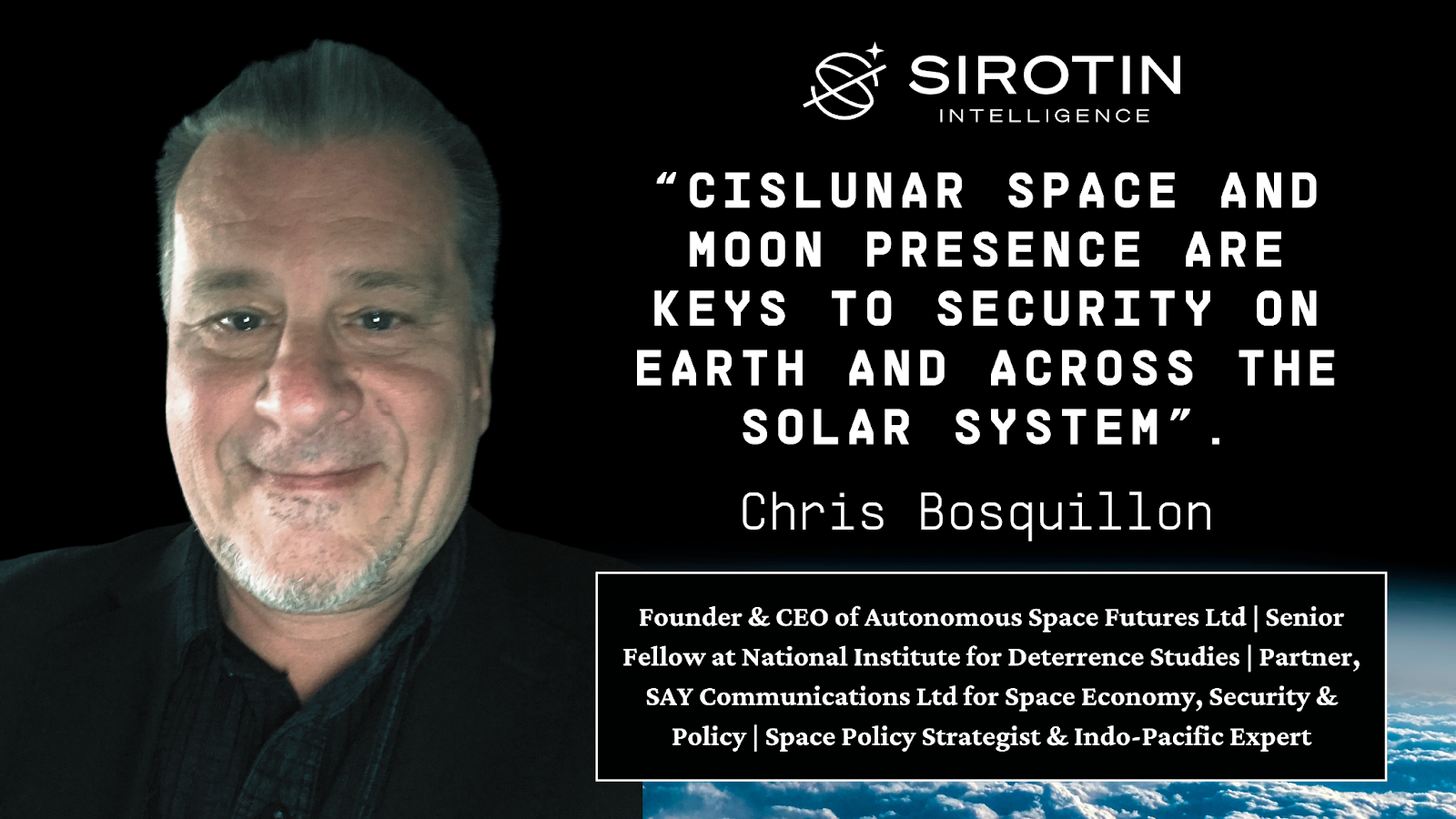
"It was dark. The lights of Caracas were largely turned off due to a certain expertise that we have. It was dark, and it was deadly." President Trump, January 3rd, 2026. Operation "Absolute Resolve," unfolded precisely from unprecedented planning and execution to strategic communication and mulit-layered geopolitical repercussions. More than 150 aircraft, jets, bombers, drones, and airborne command-and-control assets, launched from land and sea. Together with the Navy and Air Force, U.S. Space Command and Cyber Command provided joint-domain support to Delta Force. During the planning phase, CIA had got Maduro covered, while NSA proved instrumental in switching off the lights in Caracas.
Delta Force then enabled the FBI Hostage Rescue Team to execute the rendition of Maduro, alive. U.S. military forces demonstrated highly effective mission SEAD (Suppression of Enemy Air Defenses) in the opening minutes of the operation, knocking out both the extensive Russian air defense missile systems and the Chinese JY-27A radar system. Beijing had sold the JY-27A to Venezuela as capable of detecting stealth jets and bombers such as F-35, F-22, B-2 and future B-21. In Venezuela, these systems failed, like they did over Syria and Iran. Worse, Venezuela patrons Russia and China failed to “protect” Maduro, eventhough he had met with a Chinese delegation merely hours before the operation. Buyer's remorse, anyone?!
Operation Absolute Resolve bases its legitimacy on the narcotic and weapons case against Maduro.
Within Latin America, the trojan metastasis of China/ Russia/ Iran spheres of influence has been whacked. The U.S. runs Venezuela’s oil and has stronger leverage over Cuba, Mexico and Colombia. Claims of violation of International Law were duly heard at the U.N. Security Council emergency session. Europe remains in the process of digesting what happened, reactions oscillate between outrage and paying lip service to International Law, while not really complaining about the rendition.
Donroe Doctrine made it clear that neither POTUS nor the American national interest are beholden to how International Law should be implemented, and besides, who would enforce International Law? This is only the beginning of the U.S. reasserting dominance all over the Western Hemisphere as per the NSS hard-nosed realism blueprint, coveting Greenland at its northern edge, leaving Denmark in shock about a Greenland critical to the U.S. securing resources, missile defense, and space control over the Arctic.
Have a great 2026 Space Year ahead!
🎤 Our Next Guest: Robert Carriere

Robert Carriere spent fifteen years developing the Kinetic Resistance Apparatus in his basement in Ontario. The device weighs six pounds, requires no power, and uses pulleys, springs, and cords to route force bilaterally through the body. When you pull down with your right arm, the cord lifts your left. Your own muscles become the motor. The Canadian Space Agency validated the mathematics in 2014, and NASA and ESA stakeholders have since seen demonstrations. A demonstration video went viral with half a million views; in the footage, movements that should require strain appear effortless, with Carriere describing a 70-pound load feeling closer to five or six pounds. What caught attention was what happened when he removed the device mid-task: his nervous system had already adapted to the bilateral force transfer, and his brain expected feedback that was suddenly gone.
The space application is immediate. Astronauts on EVA spend hours fighting suit pressurization, tools drift away, and in microgravity, stopping a moving object is just as exhausting as starting it since inertia remains constant even when weight disappears. Carriere's system keeps tools tethered in a continuous loop, pulling them back to ready position rather than letting them drift. Full interview drops this week.
Key topics:
- Why programs like DARPA's Warrior Web and TALOS consumed hundreds of millions on powered exoskeletons while a passive system outperformed them
- How the KRA could integrate with EVA suits to reduce fatigue and keep tools from drifting away
- What "gravity-invariant" means for lunar and Martian surface operations, where weight drops but inertia doesn't
- The path to getting this on an astronaut, a soldier, or a rehabilitation patient before the patent expires in 2036
Watch Robert’s YouTube preview Tuesday, January 13th on the Sirotin Intelligence YouTube channel. Full interview drops January 15th.
Sources:
https://www.space.com/live/astronaut-medical-evacuation-on-iss-jan-10-2026
https://spacenews.com/pentagon-chief-takes-arsenal-of-freedom-tour-to-rocket-lab/
https://spacenews.com/the-space-force-will-acquire-and-integrate-systems-faster-in-2026/
https://spacenews.com/roman-space-telescope-on-track-for-september-launch/
https://spacenews.com/spacexs-ipo-will-make-space-investment-far-less-niche/
https://dailygalaxy.com/2026/01/chinas-space-telescope-secrets-of-universe/
https://www.nytimes.com/2026/01/09/science/eric-schmidt-telescopes-google-space.html
https://www.jalopnik.com/2070309/space-shuttle-discover-remains-smithsonian/
https://gizmodo.com/nasa-to-demolish-iconic-towers-used-to-test-saturn-v-space-shuttle-2000707670
https://spacenews.com/private-group-unveils-plans-for-large-space-telescope/
https://spacepolicyonline.com/news/house-passes-final-fy2026-funding-bill-for-nasa-senate-is-next/
https://meyka.com/blog/interstellar-comet-3iatlas-nasa-uv-scan-lifts-space-tech-january-9-0901/
https://breakingdefense.com/2026/01/overwatch-from-space-cyber-ops-foundational-to-maduro-mission/
https://www.defensenews.com/space/2026/01/05/space-warfare-in-2026-a-pivotal-year-for-us-readiness/
https://www.war.gov/News/Contracts/Contract/Article/4373866/
https://www.war.gov/News/Contracts/Contract/Article/4372534/
https://www.war.gov/News/Contracts/Contract/Article/4371691/
https://www.war.gov/News/Contracts/Contract/Article/4370862/
Get exclusive insights from our network of NASA veterans, DARPA program managers, and space industry pioneers. Weekly. No jargon.