
Sirotin Intelligence Briefing: November 9–17, 2026: SpaceX Catches a Starship Back From Orbit as Vulcan Fails on Its Return Flight, Senate Appropriators Cut Golden Dome to $9.4 Billion, and Washington Floats Donbas for NATO Membership in Abu Dhabi


This week's Sirotin Intelligence analysis covers SpaceX's Flight 15, which put Ship 42 back on the Starbase tower after 14 orbits and 22 and a half hours while Booster 22 missed its own catch on underperforming engines, and ULA's Vulcan, which failed ten minutes into its first flight in nine months and lost 40 Amazon Leo satellites, the first outright failure in the company's twenty-year history and one that leaves Falcon 9 and Falcon Heavy as the only rockets certified for the Space Force's most demanding missions. We also cover the Senate's $1.1 trillion FY27 defense appropriations bill, which funds Golden Dome at $9.4 billion against a $17.5 billion request and folds $69 billion of the administration's reconciliation ask into discretionary money, the $985 million ceiling increase the Space Force added to all three Phase 3 Lane 2 launch contracts the day after Vulcan fell, USSF-627 as the second suspected Space-Based Sensing and Targeting launch in six days, Viasat's $450 million Space Data Network operations center, and the $150 million Office of Strategic Capital loans to Rocket Lab and Stoke Space. Rounding out the week: the Abu Dhabi trilateral that produced a prisoner exchange and a U.S. question about trading Donbas for NATO membership, a sixth day of Starshield speed caps on the Ukrainian front, Iranian drones aimed at U.S. radars in Bahrain as a third carrier enters CENTCOM, NASA's $10 billion CLPS 2 pool and the PROMISE nuclear rover, Musk's Starship V4 numbers, a possible Tesla–SpaceX merger in December, and Christophe Bosquillon's column on whether a Democratic Congress helps NASA win the Moon.
🛡️ Defense Highlights
- Vulcan fails on its return flight – ULA's first total loss, 19 Lane 2 missions on hold, and Falcon the only certified rocket for the Space Force's hardest payloads: ULA's fifth Vulcan lifted off from Cape Canaveral at 12:40 p.m. EST on November 15 in the six-solid VC6L configuration with 40 Amazon Leo satellites, the heaviest Leo payload yet and the first of 38 Vulcan flights Amazon has bought. The GEM 63XL boosters separated normally at about 1 minute 35 seconds, the BE-4 engines appeared to burn longer than the timeline called for, stage separation came late, and the Centaur showed unusual attitude adjustments early in its burn. About 50 minutes after liftoff ULA said the vehicle "suffered an anomaly 10 minutes into the flight and failed to deliver the Amazon mission to orbit," adding, "Today, we did not meet that standard." Northrop said preliminary data shows the solids "performed as expected." It is ULA's first mission failure since the company formed in 2006, and it follows two nozzle burn-throughs on the solids in 2024 and February 2026 that had already kept Vulcan off national security missions for nine months and moved six NSSL flights to SpaceX on October 1. ULA holds 19 Phase 3 Lane 2 missions worth about $5.37 billion; Col. Eric Zarybnisky said before the flight, "Until this anomaly is solved, we will not be launching Vulcan missions." With New Glenn grounded since its May pad explosion, Falcon 9 and Falcon Heavy are the only vehicles authorized for Lane 2 payloads. CSIS's Clayton Swope: "If the issue is with the BE-4 that is a particularly thorny problem," because New Glenn flies the same engine. Isaacman offered NASA's help with the investigation. Amazon has 368 satellites in operational orbits and needs 578 for initial regional service; its remaining rides are 37 Vulcans, 24 New Glenns, 24 Ariane 6s, and 13 Falcon 9s, and two of those four rockets cannot fly.
- Senate appropriators release a $1.1 trillion defense bill – Golden Dome at $9.4 billion, DAWG at $3 billion, $69 billion of reconciliation money moved into the base: Sen. Mitch McConnell's defense subcommittee released its FY27 bill on November 16, the last of the four defense committees to do so. The topline is just under $1.1 trillion against the administration's $1.15 trillion base request and $350 billion reconciliation ask. The bill funds Golden Dome at $9.4 billion, about half the $17.5 billion request, and the Defense Autonomous Warfare Group at $3 billion against roughly $55 billion. It converts about $69 billion that the White House wanted as one-time mandatory spending into discretionary funds, which the summary calls "stable, sustainable, and predictable funding," and it adds $4.1 billion for 25 more F-35s, $47.2 billion for munitions including $40.6 billion in multiyear buys, $42 billion for shipbuilding with a second DDG 51, and $1.7 billion for a projected fuel shortfall. McConnell, retiring at the end of the Congress, called the bill "a roadmap to sustainably and responsibly delivering generational investments in the national defense" and said deterrence is "a project bigger than one-time surges of cash." Thune declined to say whether a defense-only reconciliation bill is under consideration; Byron Callan put the odds at 10 percent. Rep. Adam Smith, in line to chair House Armed Services, says the country does not need "a defense budget in excess of $1 trillion" and that cutting Iran war funding will be "one of the first things we do." The CR expires December 11, the NDAA that passed the House in July has failed a Senate procedural vote, and Rep. Glenn Ivey of House Appropriations says he prefers "a short-term fix" that pushes decisions into January. The Space Force's $71 billion request carried $12 billion in the reconciliation package; none of the four committee bills restores that money as mandatory spending.
- Space Force raises the Lane 2 ceiling by $985 million the day after Vulcan fails – and USSF-627 flies the second suspected SBST batch in six days: On November 16, Space Systems Command's Space Access office modified all three NSSL Phase 3 Lane 2 contracts, SpaceX (P00006), United Launch Services (P00004), and Blue Origin (P00006), adding a combined ceiling of $985 million and extending performance to April 2033, with no funds obligated and no per-contractor split. The original April 2025 awards were $5.92 billion for 28 SpaceX missions, $5.37 billion for 19 ULA missions, and $2.39 billion for 7 Blue Origin missions. Five days earlier, at 8:36 p.m. PST on November 11, a Falcon 9 launched USSF-627 from Vandenberg on booster 1103's seventh flight, with a landing on Of Course I Still Love You and a webcast that ended after the first stage returned. SpaceX disclosed nothing about the payload; KeepTrack logged 23 objects designated SBST R-5, and observers read it as the fifth batch of Starshield satellites for Space-Based Sensing and Targeting, following USSF-432 on November 6. It was the 120th Falcon 9 of the year and the 15th national security flight. USSF-317 follows on November 18 and NROL-136 on November 21, both on Falcon 9 from Vandenberg. The ceiling increase keeps all three providers under contract through 2033, but until Vulcan and New Glenn return, every Lane 2 mission ordered against it will go to SpaceX.
- Viasat wins the Space Data Network operations center – a $450 million IDIQ "in partnership with Golden Dome for America": Space Systems Command awarded Viasat an indefinite-delivery contract with a $450 million ceiling and a $115 million initial task order to design and field the mission operations center for the Space Data Network, the Guardian-operated hub that will route data across the SDN-Backbone constellation SpaceX is building under its $2.9 billion May award and the follow-on contracts to Rocket Lab, York, Northrop, Lockheed, and Amazon Leo for Government. Lt. Col. Alexa Eggert, the SDN-Backbone materiel leader, called it a step toward a "fully operational, multi-vendor capability." An SSC spokesperson said the award was made "in partnership with Golden Dome for America." SpaceX's operational prototype is due by the end of 2027; the FY27 request carries $1.5 billion for SDN-Backbone, $685 million for constellation growth and $800 million for commercial technology. On November 11, SSC and Combat Forces Command also awarded Anduril, Booz Allen, and Peerless Technologies about $10 million in Phase I prototype agreements for SEWOL, the cloud-native command system for space electromagnetic warfare crews, with a single vendor to be picked in early 2027 for a $60 million program.
- OSC lends $150 million each to Rocket Lab and Stoke Space – the Pentagon finances the medium-lift field it says it needs by the early 2030s: The Office of Strategic Capital announced on November 9 a $150 million conditional loan commitment to Rocket Lab to raise Neutron's flight rate beyond its first launch, covering production, composite structures and engines, and the recovery vessel fleet, and a second $150 million commitment to Stoke Space for a second pad at Cape Canaveral for Nova Block 2, due to debut in 2027. Both depend on financial, legal, and technical conditions. SSC now forecasts up to 249 medium- and heavy-class launches by the early 2030s, more than double its estimate from two years ago. Rocket Lab reports 117 contracted Neutron and Electron launches and has raised Neutron's price from $55 million to $70 million; Peter Beck: "Launch capacity is extremely constrained, and this is exactly the situation we forecast." Rocket Lab's Electron also flew "The Mountain God Rises" for iQPS on November 14. OSC had earlier lent $150 million to LeoLabs. Assured access has meant two certified providers since the 1990s. Neither loan produces one before 2027, and the Space Force's near-term alternative to Falcon remains a Vulcan investigation with no cause announced.
Major Contract Awards This Week:
- Space Exploration Technologies Corp., United Launch Services LLC, and Blue Origin LLC – NSSL Phase 3 Lane 2: A $985,000,000 combined maximum ceiling increase across three Space Systems Command launch services contracts for National Security Space Launch Phase Three, Lane Two, with no funds obligated at award, through April 2033.
- Northrop Grumman Systems Corp. – F-16 AESA radars: A $79,608,480 Air Force Life Cycle Management Center modification (P00191) for active electronically scanned array radars for F-16 aircraft, through December 31, 2027.
- Systems Planning and Analysis Inc. – Trident II support: A $55,670,496 sole-source cost-plus-fixed-fee Navy Strategic Systems Programs task order for technical assessments, systems engineering, and program integration on the Trident II Strategic Weapons System, through September 30, 2031.
- Raytheon Co. – Next Generation Jammer Mid-Band: A $42,121,481 fixed-price-incentive and cost-plus-fixed-fee Naval Air Systems Command modification (P00010) for Lot Five mid-band extended configuration jammers, through May 2029.
- Honeywell International Inc. – Rad-hard microelectronics: A $23,151,326 sole-source firm-fixed-price Naval Surface Warfare Center Crane job order for integrated circuit factory equipment for strategic radiation-hardened microelectronics, through January 2028.
- Northrop Grumman Systems Corp. – RQ-4 Global Hawk: A $19,978,104 Air Force Life Cycle Management Center modification (P00036) for Global Hawk sustainment, including Foreign Military Sales to Korea and Japan, raising the contract past $613 million, through July 31, 2026.
- Space Exploration Technologies Corp. – SDA Plaser study: A $9,921,992 Space Development Agency broad agency announcement contract, with options to $12,666,379, for a risk reduction study and hardware delivery on the Plug and Play Laser for missile warning and tracking integration, through October 7, 2027.
🌐 Policy, Geopolitical & Legal Developments
- Abu Dhabi produces a prisoner exchange and a question – would Ukraine leave Donbas for NATO membership?The first trilateral talks in nine months ran November 10 and 11, with Witkoff and Kushner for the United States, Umerov and Arakhamia for Ukraine, and Medinsky for Russia. The one agreement was a prisoner exchange "in principle" that Arakhamia says may be the largest of the war, with numbers to follow. Kushner reported "significant progress" on security guarantees and called territory "the hardest" issue; Medinsky said "every inch of our land will be returned to Russia," that European security is "essentially sick" and "a band-aid won't fix this," and that his delegation did not speak to the Europeans in the building. U.S. negotiators said there is no trust between the sides. On November 14, Zelensky said the U.S. delegation had asked, for the first time, "What if Ukraine joins NATO? Would Ukraine withdraw from Donbas?" He said he would put any such terms to Ukrainian society: "I have no right to make that decision on my own." The Kremlin has not responded; a Russian non-paper reported by the New York Times and BILD repeats the 2021 demands and adds limits on French and British nuclear protection for European states. The EU settled on the E5 (Britain, France, Germany, Italy, Poland) plus EU institutions to represent Europe at the next round, von der Leyen promised a 22nd sanctions package, and Parliament and Council agreed a €3.1 billion 2027 security budget with €650 million for Ukraine loans. Russia launched 96 drones, 61 of them jet-powered, on November 13 to 14 and 132 on November 15 to 16, Odesa lost power to 41,000 households, and Moscow asked for a local ceasefire in Kostyantynivka that Zelensky says is cover for pushing his forces out. Trump, Putin, and Xi meet in Shenzhen on November 19 on the APEC margins; a White House official said Ukraine will likely not come up.
- Starshield speed caps return to the front for a sixth day – "not a technical problem; it was the will": Zelensky said on November 14 that SpaceX had restricted "the operating speed of Starshield terminals along the front line" and in occupied territory for five days, the second such episode since October; by ISW's count it was six days on the 14th. Adviser Serhiy Beskrestnov put the cap at about 161 kilometers per hour, which is the speed at which "our interceptor drones lose connection with their operators," so they "simply cannot catch up with Russian jet-powered 'shaheds'." Ukraine's intercept rate is above 90 percent against propeller drones and about 60 percent against jet-powered ones, and 61 of the 96 drones Russia sent on the 13th were jets. Officials say logistics, reconnaissance, and relay links are also affected and that Kyiv had no warning. Zelensky: "We are counting on these restrictions being lifted," and the limits were "not a technical problem; it was the will." SpaceX said no restrictions are in place; Musk said last month that Starshield is "owned and controlled by the US government" and that limits are "decided by the US military and ultimately POTUS," while Rubio said the decisions belong to Musk under "a private commercial contract." Zelensky also said U.S. military officials warned Kyiv that Washington would block intelligence unless strikes on Russian energy infrastructure stopped; Ukraine hit the Samara dispatch station, the Volgograd refinery, and Lipetsk-2 air base anyway. The incoming Senate majority said last week it intends to examine the October throttling. The contract runs through the Pentagon, SpaceX says the government sets the limits, and the State Department says SpaceX does; while that is unresolved, Ukraine's interceptors cannot pursue a jet drone above about 100 miles an hour.
- Iran fires drones at U.S. radars in Bahrain as the Roosevelt arrives – three carriers, a tanker hit in the strait, and no mediators in motion: The USS Theodore Roosevelt strike group entered CENTCOM on November 15, joining the Bush and the Washington and more than 20 ships enforcing the blockade. Bahrain intercepted Iranian drones on the 15th that Tehran said were aimed at a U.S. radar at the Al-Rifaa helicopter base, and again on the 17th at Sheikh Isa Air Base, home to the Fifth Fleet, after a Bahraini court sentenced 64 people, most of them Shia clerics, to life for an alleged IRGC-linked plot; no damage or casualties were reported, and Rubio condemned the strikes in a call with Bahrain's foreign minister. A tanker outbound through Hormuz was hit by a projectile on November 16 and took an engine-room fire; Iran had struck navigation systems on Oman's Didamar island the week before. The New York Times reported on the 15th that the United States and Israel have drawn up plans for renewed strikes on Iran's energy and economic infrastructure and that interceptor stocks are depleted; Isfahan activated its air defenses on the 16th; Deputy Foreign Minister Gharibabadi said Tehran "will not wait for the US to attack first." Trump said he may hold off if there are no provocations from Iran or the Houthis and that the blockade stays. Iran says it can reopen the strait within two days if Washington unfreezes assets and lifts sanctions, and that IAEA inspectors get no access to damaged sites until the war ends; Araghchi flew to Muscat on the 17th to discuss maritime corridors with Albusaidi. The Saudi-led coalition intercepted two ballistic missiles aimed at Riyadh and drones aimed at Mecca, and Riyadh replaced its coalition commander as the Houthis moved toward Aden. CNN reported U.S. intelligence indicating Iranian planning for a dirty bomb or chemical attack in Washington, which the government has not confirmed. Nine months into the war, the U.S. naval presence is at its largest and the mediators have not traveled since the midterms.
- NASA puts $10 billion of lunar delivery on contract and a Mars rover body on the Moon – and the Senate hears its CFO: At the MAX POWER show at Kennedy on November 7, NASA named Blue Origin, Firefly, Intuitive Machines, ispace-U.S., Lockheed Martin, Northrop Grumman, SpaceX, and Voyager Technologies to the ten-year CLPS 2 pool with a $10 billion combined ceiling, raised the existing CLPS ceiling from $2.6 billion to $4.2 billion, and issued about $1.3 billion in six VADR task orders to Arrow Science and Technology, Blue Origin, and Impulse Space for Earth-to-lunar-orbit cargo, CAPSTONE 2 navigation tests, and "MoonFall" scouting drones, on New Glenn, Falcon 9, and Terran R. Blue Origin received a $94 million base award with a $140 million option to land PROMISE, a nuclear-powered polar rover built from a Perseverance and Curiosity engineering model, on Blue Moon Mark 1 in late 2028; SpaceX will launch lunar communications satellites on Starship in 2028. Isaacman said the old structure was "all or nothing" and that "you want to have the flexibility to move pieces around." The Moon Base plan runs Phase One through 2029, Phase Two to 2032, and an operational base after that. On November 10, Senate Commerce heard NASA CFO nominee Joshua Shoemaker and Inspector General nominee Robert Steinau with few questions, most of the hour going to the FCC nomination of Danielle Thumann Severs, which Democrats oppose because a third Republican commissioner would let the president remove the lone Democrat; the committee votes on all three on November 18. The Senate CJS subcommittee recommends $24.9 billion for NASA. Christophe takes up the oversight question below.
🛰️ Technology & Commercial Developments
- Starship Flight 15 – the first ship catch from orbit, 26 V3 Starlinks, a booster lost to engine underperformance, and V4 specifications the next morning: Booster 22 and Ship 42 "Don't Panic" lifted off from Starbase's Pad 2 at 4:47 p.m. CST on November 13 after the FAA issued the license that morning, the first to cover a ship return over populated areas. The booster relit 32 of 33 engines for boostback, came up short on propellant, called off its catch, hovered over the Gulf on 13 engines, and was destroyed by its flight termination system above the water at about T+6:30; Musk: "Slight underperformance of engines on this flight is the reason," with fixes in Raptor 3.2 consistency and a MECO about one second earlier. The ship reached a 276 by 278 kilometer orbit at 30.5 degrees, deployed 26 Starlink V3 satellites over 42 minutes, three of them carrying cameras pointed at the heat shield, coasted for about 21 hours and 14 orbits, fired a single Raptor for ten seconds at T+21:36, entered at T+22:10, glided for 56 minutes, lit three sea-level Raptors, flipped, shut one down to fit between the arms, and was caught at T+22:32:28, 3:20 p.m. CST on November 14. SpaceX's Dan Huot: "That was the missing link, the holy grail of spaceflight." Isaacman called it "almost magic" and said NASA looks forward to on-orbit Starlink capability for Artemis III. Musk said losing the booster does not change the timeline for high-volume reuse, that the next booster is "almost ready," and that "losing the tower or launch mount would potentially cost us 2-3 months." On November 15 he posted Starship V4: about 70 meters against V3's 52, 60 percent more propellant, nine Raptors instead of six, a tanker carrying more than 200 tonnes per flight, and five or six tanker launches per lunar refill against the 22 a NASA safety panel member estimated last month. Flight 16, Booster 23 and Ship 43, is planned as the first launch from LC-39A. Bloomberg reports Tesla and SpaceX may announce a merger as early as December; SpaceX has traded at about $1.9 trillion since its June IPO, Tesla at about $1.55 trillion. The FAA holds scoping meetings on increased Starbase launch rates November 17 to 19.
- The military asks for a cislunar constellation – and the Air Force wants AI to fly the vehicles: The Pentagon posted a request for information on a "proliferated cislunar constellation" on November 10, with no satellite count or mission stated, and the Air Force issued a separate solicitation the same day for AI to operate cislunar space vehicles. Maj. Gen. Stephen Purdy told SSC Industry Days last month that Pentagon leaders now call the Moon "a warfighting domain" and urged industry to "jump on my cislunar bandwagon"; a December executive order directs detection and countering of threats from LEO out to cislunar space, which current ground networks were not built to track. ESCAPADE's two Rocket Lab-built spacecraft completed powered Earth flybys on November 7 and 9 and are on their way to Mars, the first NASA use of the maneuver, after a year parked near Earth–Sun L2. China's Long March 12 launched nine SatNet satellites from Hainan on November 8, a Long March 2D flew CAS Pathfinder-1 and three Tanluzhe satellites on November 11, a Kuaizhou 11 followed on November 12, and a Pakistani astronaut will become Tiangong's first foreign visitor later this month. Canada's budget commits to moving Launch the North from small rockets, due in 2028, to a medium-lift vehicle; Defence Minister McGuinty: small rockets are "where we start; they're not where we stop." Isar Aerospace has an Andøya window for Spectrum's third flight opening November 26. The RFI arrived the same week NASA put eight lander companies on a $10 billion contract, and Christophe's column below sets both against China's single Lanyue rehearsal in 2028.
💭 A Word From Christophe Bosquillon
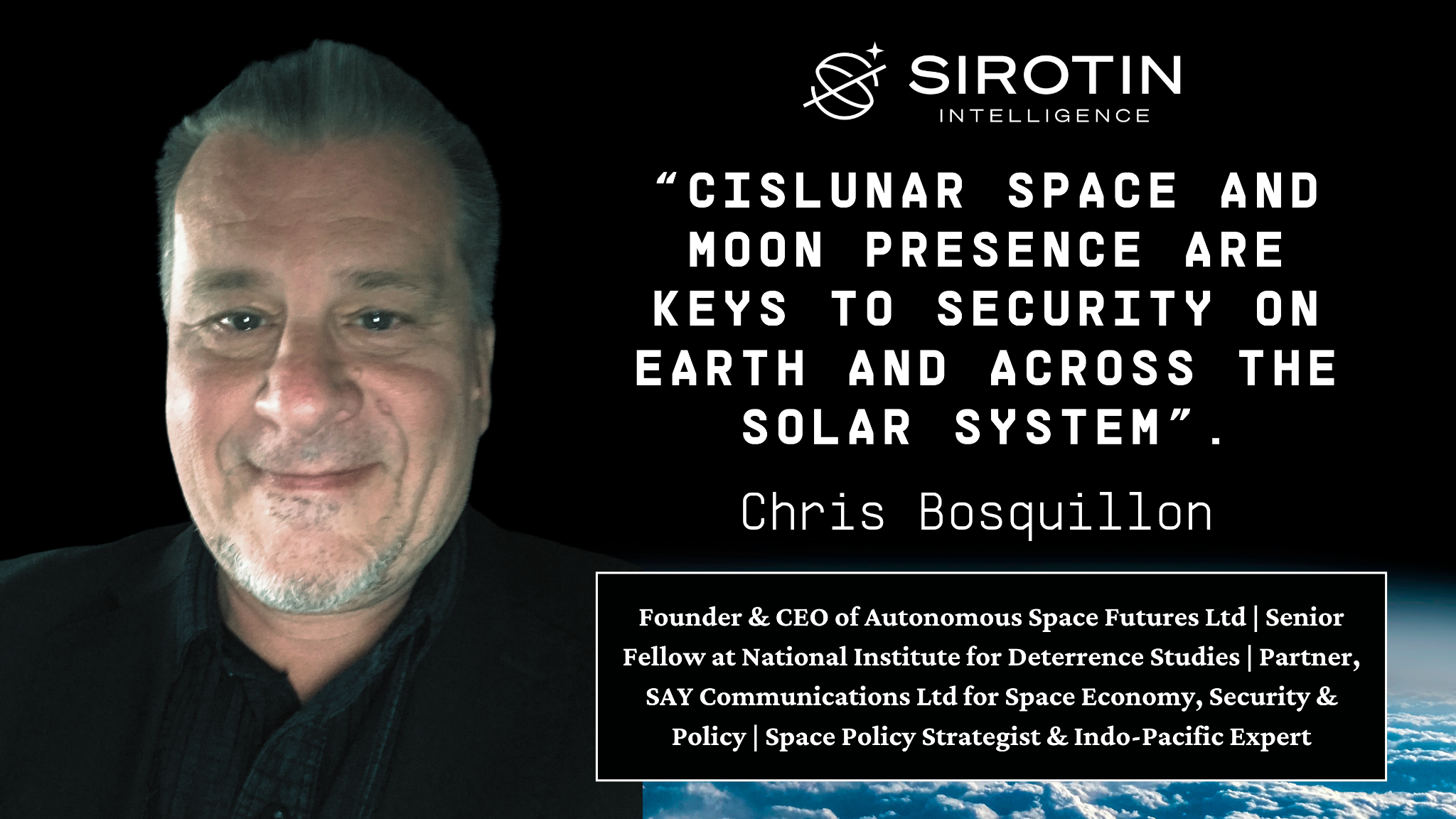
The Democrats won both chambers of Congress by a double-digit margin and promised increased oversight of NASA: push the Trump administration efforts to gut NASA’s science programs, investigate DOGE's impact on the agency, take a closer look at NASA Administrator Jared Isaacman’s new 2026 programs, and tackle Elon Musk for dependency of NASA over SpaceX. With bipartisan support for the Artemis Program, will oversight help NASA win the Moon?
Dependency of Artemis III and IV success over critical Starship infrastructure could be rebalanced by Blue Origin moving forward after their launchpad explosion. Blue Origin announced plans on Nov. 5 to develop a new third stage for New Glenn, GS3, as well as a new rocket booster engine. NASA has adapted with more changes to the Artemis Programme missions III and IV. Meanwhile, with Voyager Technology (Astrobotic), Griffin Mission One (Griffin-1) will launch on a SpaceX Falcon Heavy now scheduled for January 31, 2027.
On November 7, NASA rolled out a stack of new Moon Base awards at MAX POWER. Under a 10-year CLPS2 contract worth up to $10B, NASA selected eight companies competing for cislunar transportation and delivery: Blue Origin, Firefly Aerospace, Intuitive Machines, ispace-U.S., Lockheed Martin, Northrop Grumman, SpaceX, and Voyager Technologies (Astrobotic).
China chose a less complicated roadmap to the Moon with a standalone Lanyue lunar lander mission and one full-scale uncrewed landing rehearsal in 2028, the year when NASA plans ten uncrewed robotic lunar landings and two crewed lunar landings while completing the Artemis IV mission.
POTUS issued a presidential proclamation,‘The American Declaration of Freedom in Space.’ It sets out the administration’s vision for expanding American activities in space, including returning astronauts to the Moon by 2028, establishing a permanent lunar presence, and ultimately sending humans to Mars. The U.S. is developing a cislunar strategy, meant to project American power, including U.S. Space Force and USSPACECOM, with private sector involvement.
More political and budgetary oversight may or may not help NASA and the U.S. “win the race” with China to the Moon. Congress, simply remember the U.S. are running to win as a nation, not a party.
Have a great Space Week ahead!
Sources:
https://spaceflightnow.com/2026/11/15/ula-suffers-first-total-mission-failure-with-loss-of-vulcan-rocket-carrying-40-amazon-leo-satellites/ https://www.satellitetoday.com/launch/2026/11/15/ula-set-to-return-vulcan-to-flight-in-first-amazon-leo-launch/ https://breakingdefense.com/2026/11/vulcan-failure-deepens-concerns-over-us-military-launch-capacity/ https://theaceofspace.substack.com/p/vulcan-failed-on-its-first-flight-back https://breakingdefense.com/2026/11/senate-appropriators-unveil-1-1t-pentagon-spending-bill-folding-in-reconciliation-priorities/ https://www.airandspaceforces.com/after-midterms-congress-reckon-defense-funding-ndaa/ https://www.military.com/democrats-plan-to-use-ndaa-and-december-funding-deadline-to-shrink-trumps-15-trillion-defense-budget https://thedefensewatch.com/cyber-space-defense/spacex-ula-blue-origin-985-million-nssl-contract/ https://www.newsbeep.com/us/919720/ https://space.com/space-exploration/launches-spacecraft/spacex-launches-2nd-mystery-mission-for-us-space-force-in-6-day-span-photos https://keeptrack.space/week-in-review/week-in-review-2026-11-15 https://airandspaceforces.com/space-force-viasat-450m-ops-center-data-network https://edsnews.substack.com/p/defense-tech-intelligence-brief-november-deb https://www.defensedaily.com/rocket-lab-gets-150-million-conditional-loan-commitment-from-pentagon-osc-for-neutron/space/ https://ua.news/en/dovkolo-svitu/pentagon-ogolosiv-pro-umovni-poziki-po-150-mln-dlia-stoke-space-ta-rocket-lab-ars-technica https://news.clearancejobs.com/?p=1167424 https://news.clearancejobs.com/?p=1167570 https://news.clearancejobs.com/2026/11/13/lockheed-martin-wins-88-2-million-navy-submarine-engineering-contract/ https://meduza.io/en/feature/2026/11/11/russia-ukraine-peace-talks-conclude-in-abu-dhabi-with-prisoner-exchange-agreement-but-no-breakthrough-on-territory https://www.rte.ie/news/europe/2026/1114/1599202-us-ukraine-russia/ https://www.criticalthreats.org/analysis/russian-offensive-campaign-assessment-november-14-2026 https://www.aljazeera.com/news/2026/11/16/why-starshield-limits-are-hurting-ukraine-against-jet-powered-drones https://gulfnews.com/world/mena/middle-east-conflict-us-iran-tensions-escalate-as-third-aircraft-carrier-enters-region-1.500748608 https://english.aaj.tv/news/330481055/iran-attacks-us-military-radar-system-in-bahrain-with-drones https://www.space.com/space-exploration/artemis/nasa-unveils-usd10-billion-in-moon-base-contracts-new-lunar-missions-and-the-promise-of-a-nuclear-powered-rover https://spacepolicyonline.com/news/whats-happening-in-space-policy-november-15-21-2026/ https://aviationweek.com/space/operations-safety/starship-flight-15-ends-first-ship-tower-catch https://en.wikipedia.org/wiki/Starship_flight_15 https://keeptrack.space/space-brief/space-brief-2026-11-16 https://keeptrack.space/space-brief/space-brief-2026-11-13 https://keeptrack.space/space-brief/space-brief-2026-11-12 https://keeptrack.space/space-brief/space-brief-2026-11-10 https://payloadspace.com/rep-mike-haridopolos-on-nasas-future-after-the-blue-wave/ https://arstechnica.com/space/2026/10/spacex-no-longer-needs-nasa-and-thats-a-problem-for-americas-space-agency/ https://www.blueorigin.com/news/new-glenn-expands-reach-with-gs3 https://www.blueorigin.com/news/introducing-northstar-new-booster-engine https://www.planetary.org/planetary-radio/us-new-cislunar-strategy https://www.whitehouse.gov/presidential-actions/2026/11/the-american-declaration-of-freedom-in-space/
Get exclusive insights from our network of NASA veterans, DARPA program managers, and space industry pioneers. Weekly. No jargon.