
"The Satellite Can Now Certify Its Own Stability, in Microseconds": Eduardo Hernández Morales, Founder of the Gamma Systems Research Laboratory, on Real-Time Robust Control and Why Lunar Infrastructure Will Need His Mathematics First

A small satellite in orbit carries a problem its designers usually solve on the ground. Before launch, engineers certify that the spacecraft's control system will hold steady under the disturbances it will actually meet: actuator wear, shifts in the local magnetic field, the nonlinear wobble that creeps in when a component degrades. The standard tools for that certification, among them linear matrix inequalities and semidefinite programming, can take seconds or minutes to run, and they assume the comfort of a workstation. A 6U CubeSat's onboard computer offers neither the time nor the power; the entire electrical budget for running its controls can sit under 100 milliwatts, a fraction of what a night-light draws. So the certification happens once, offline, with conservative margins baked in, and the satellite flies on assumptions made months earlier. If something unexpected happens up there, the spacecraft cannot recheck its own stability in the moment. It can follow the plan, or it can tumble into debris.
Eduardo Hernández Morales has spent much of three decades on the mathematics that would let the satellite recheck itself. He is not attached to a national laboratory or a university department. He works from Morelia, in the Mexican state of Michoacán, as founder of the Gamma Systems Research Laboratory, an independent operation, and he reached robust control through a route that began far from any of it.
That route opened with loss. A car accident killed both of his parents and left him, in his telling, with a head and spine injury that became a chronic migraine medicine could not explain to his satisfaction. He started reading neurology on his own to understand his own condition, and the reading pulled him toward signals, then toward the matrices underneath them. By the time a mentor talked him into formal control theory, he had already spent years thinking in the language the field is written in. The frameworks he now publishes, the Hermitian Spectrum Bound and what he calls Gamma Theory, grew out of that long, mostly solitary apprenticeship.
The conversation below covers how he got here, what his real-time stability "guardian" actually does for a mission designer, why he believes the Moon will need his approach before Earth's satellite operators do, how the independent path has treated him against the traditional IEEE and SIAM route, and where he wants the work to go by 2030. Hernández Morales responded to these questions in writing, in Spanish. His answers have been translated and edited for length and clarity. The technical claims, figures, and performance numbers are his own.
Before we get into the technical work, tell us your story. Where did you grow up, and what pulled you into robust control and applied mathematics in the first place?
He answers this one as a sequence of consequences rather than a career plan, and the first consequence is the hardest. Born in Morelia and raised in Reynosa, Tamaulipas, he traces the whole trajectory to the accident that killed his father and mother and that he and his four siblings survived.
"Everything I do today in my career is, above all, an act of honoring their memory and the unconditional support of my siblings," he writes. The injury he carried back to Morelia, a chronic migraine with no satisfying medical explanation, sent him into neurology on his own terms. That self-teaching produced an early and, at the time, unwelcome result. "In 1992, programming rigorously in C++, I managed to process and generate my first digital EEG and ECG signal," he writes, "though at the time I was discouraged by a PhD who assured me that this 'was good for nothing.'"
He did not stop, which becomes the recurring shape of the story. Between 1992 and 1996, with a group of classmates, he built NECDI, a study of data encryption and coding that drew on Hadamard matrices, Hamming codes, and cyclic redundancy checks. His institution rejected it as a graduation thesis for his electronic power engineering degree, calling it too theoretical. The rejection is worth sitting with for a moment, because the same quality that got the work turned away, its abstraction, is what later made it useful to him.
The turn came through a person. He met Dr. Juan Delgado Romero, who founded the electronics program in Morelia, at a 1994 technology event where Delgado was presenting robust control work he had just published at the American Control Conference. Hernández Morales caught an error in one of the examples and corrected it privately. Delgado, he recalls, was annoyed enough to leave, then came back the following year. What followed reads less like mentorship than like a long argument between two people who needed each other's attention. "We spent an entire year discussing matrices and their spectral properties, exclusively," he writes. Delgado kept pushing him toward robust control; he kept resisting.
The resistance ended with a bargain. When the institution rejected NECDI in 1996, Delgado offered a theoretical bachelor's thesis on one condition: that Hernández Morales redirect toward robust control for interval matrices. The matrix groundwork made the move feel natural, and the results traveled. They presented findings at MWSCAS '97 in Sacramento, ECCTD in Stresa, ICIAM '99 in Edinburgh, and, in the detail he returns to most often, the 1997 Conference on Control of Oscillations and Chaos in St. Petersburg, where he says they were the only Mexicans present.
Then the money ran out, and so, for a while, did the collaboration. He had to work to support himself, with no institutional backing, and he and Delgado split intellectually as much as logistically. Delgado wanted to keep refining the upper bound in linear systems. Hernández Morales, having read the St. Petersburg proceedings, wanted to leave linearity behind for chaos and nonlinear dynamics. He finished his degree in 2000 with a thesis applying robust stability to the autopilot attitude of a Boeing 747, and then carried the nonlinear question into years of independent work that produced the Hermitian Spectrum Bound.
Life returned them to the same room in 2010. Delgado had lost his wife to cancer, and Hernández Morales went back to the Instituto Tecnológico de Morelia to teach VHDL and microcontrollers. After Delgado died, and after union obstacles blocked a permanent position, he left the institute and kept developing the algorithm alone. He closes the answer by tying the work back to the two people who set it in motion. "Every theorem and every line of code I write today remains a living tribute to my parents' legacy and to the confidence Dr. Juan Delgado placed in my theoretical vision."
Help the audience understand what the HSB Guardian is really doing. What was the problem that made you build it, and what changes for a mission designer once it's working?
His explanation starts with a constraint that anyone who has tried to put serious computation on a spacecraft will recognize. The classical tools for certifying robust stability, linear matrix inequalities and other standard methods, carry a computational cost he puts as high as O(n⁶). That notation is worth a second, because it is the whole problem in miniature. The "n" stands for the size of the system, and the exponent tells you how steeply the work grows as the system gets bigger. At O(n⁶), a spacecraft with ten variables to track takes something like a million calculations to certify, and adding only a few more variables sends that number climbing fast. On the ground that is an inconvenience. On a satellite's onboard computer, with its hard limits on memory, processing, and roughly 100 milliwatts of power, he calls it "simply impossible." The certification has to be done in advance, on Earth, which is exactly why the margins end up conservative.
<!-- ════════ EMBED HERE → infographic_eduardo_1_bottleneck.html (FIG. 01 · The Bottleneck) ════════ --> <!-- Sits right after the O(n⁶) cost / 100 mW explanation, before "The cost of getting it wrong". -->
The cost of getting it wrong is what gives the problem its edge. "Faced with actuator failures, extreme geomagnetic disturbances, or unforeseen nonlinear dynamics in orbit, a mission designer cannot certify stability dynamically," he writes. A system that slips out of phase can fall into a tumble, lose its communications link, and leave the mission as one more piece of orbital debris. So the question he set himself was narrow and practical: how do you check stability fast enough and cheaply enough to do it in flight?
His answer trades that search for a single inequality you can read almost like a sentence. The Hermitian Spectrum Bound evaluates robust stability with one line:
α(A) ≤ λ_max(Herm(A_e)) + γ‖Δ‖₂
Here is what it says in plain terms. The left side, α(A), is how unstable the system could actually become, the true worst case. The right side is a quick ceiling on that worst case. The first piece, λ_max, is a single number, an eigenvalue, pulled from the symmetric core of the system's matrix (its Hermitian part), and it captures the system's strongest tendency to drift. The second piece, γ‖Δ‖₂, is an allowance for the disturbances you cannot predict. Read the whole line as a guaranteed speed limit. Rather than clocking the car's exact speed at every instant, which is costly, you work out a ceiling it cannot exceed, which is cheap, and as long as that ceiling stays below the danger line, the system is safe. Because the check comes down to finding that one number instead of combing through a dense space of possibilities, the cost falls to a deterministic O(n³), gentle enough to run on the spacecraft itself. In his own validation work on silicon and embedded hardware, he reports that this runs "between 100 and 1000 times" faster than conventional LMI solvers, fast enough to certify stability in microseconds; he cites 120 microseconds for an 8×8 system. Those are his measured figures, and they are the load-bearing claim of the whole framework, so it is fair to flag that they have not yet been independently reproduced in a published flight or benchmark study.
He stresses that the work is not only simulated. The HSB runs on a physical Hardware-in-the-Loop and Processor-in-the-Loop prototype built around an ATmega328P microcontroller (Arduino UNO at 16 MHz), with execution times measured directly on the chip using the native micros() function. The setup incorporates an HC-SR04 ultrasonic sensor, an OLED I2C display, and an ESP8266 module for telemetry, and he reports the same microsecond-range timing under those measurements. That is a developer-built bench validation rather than an independent reproduction, but it puts the timing claim on real silicon rather than on a spreadsheet.
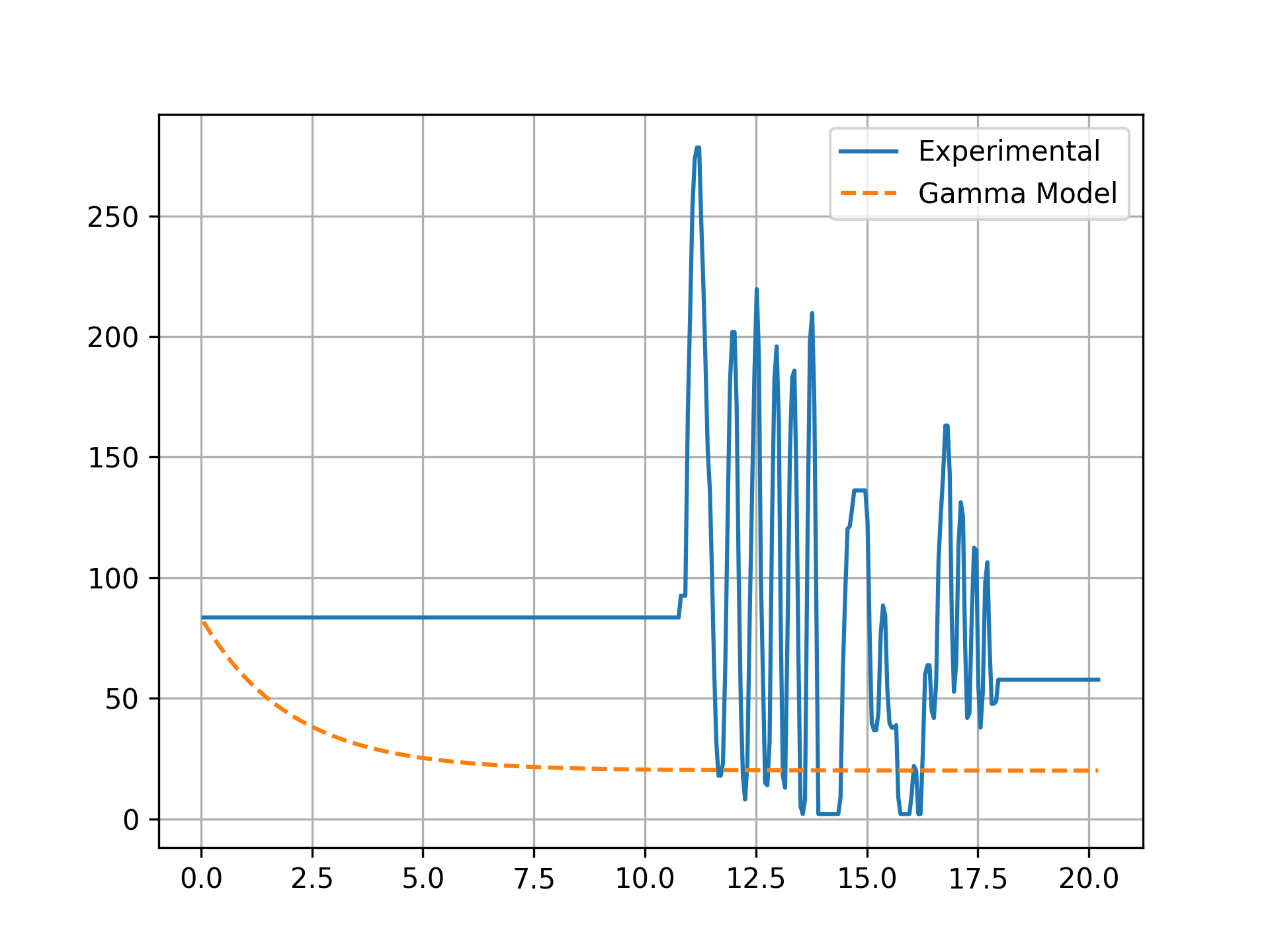
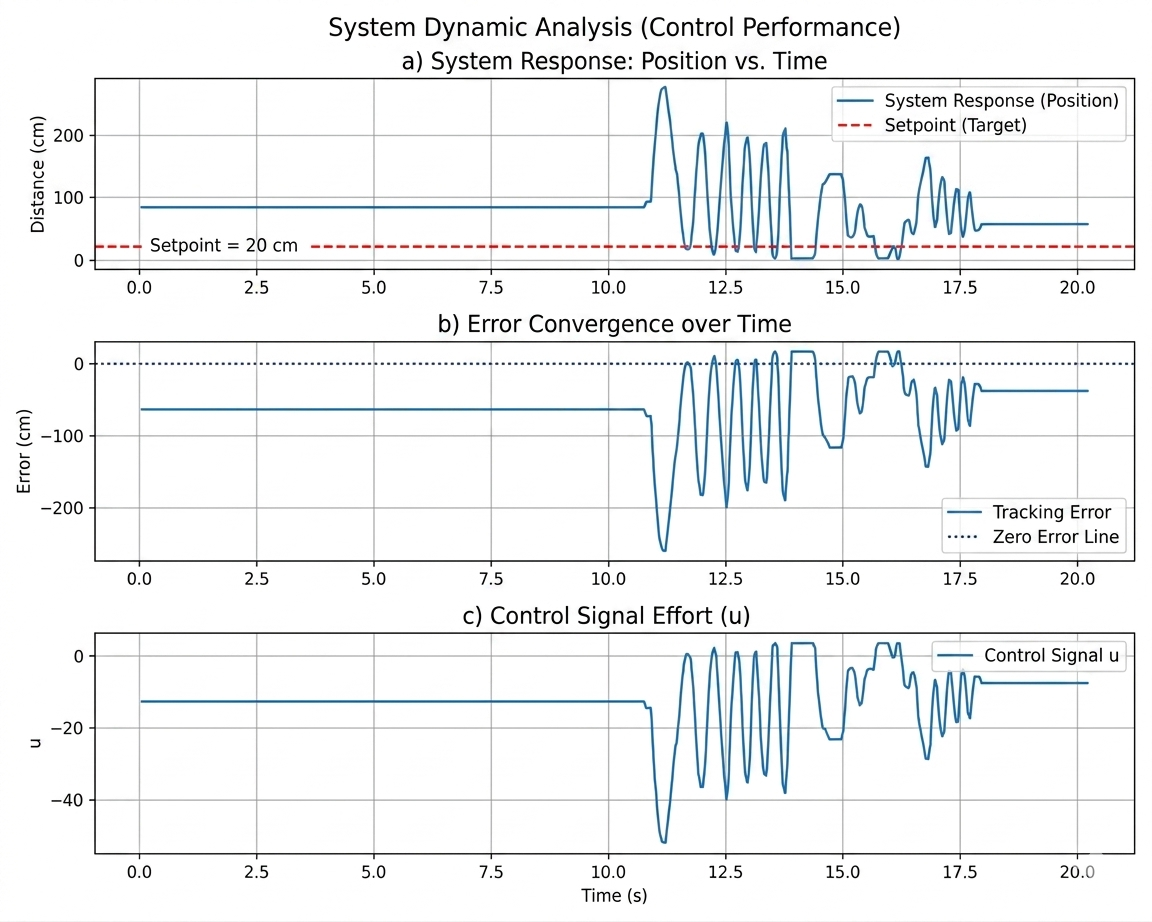
If the numbers hold, the practical shift is the part worth dwelling on. Robustness stops being something computed once on the ground and starts being something the spacecraft can check for itself. Loaded into flight software or burned into an FPGA as VHDL logic, the Guardian runs alongside the main control loop and continuously asks whether the system, under the uncertainties it is actually experiencing, still sits inside the stable region. He describes it as "an active mathematical shield" rather than a passive safety margin.
The design choice he stresses most is asymmetric on purpose. The algorithm is built to guarantee what he calls "Zero False Negatives," meaning it will never miss a genuine instability, accepting in exchange the occasional conservative false alarm. For a mission designer that tradeoff is the right way around: a flag from the Guardian is something you can trust enough to act on, triggering a mitigation maneuver or a control-law reconfiguration before a failure becomes irreversible. Whether designers will trust a guarantee that has not flown is a separate question, and one the analysis below returns to.
Gamma Theory makes LMI-free robust control synthesis possible. In plain terms, what does that mean, and which world feels it first, constellations or lunar?
If the Guardian checks stability, Gamma Theory is his attempt to design for it without the heavy machinery in the first place. He frames the contrast through the classical object that machinery exists to find. Guaranteeing robustness has traditionally meant locating a global Lyapunov function, which he describes as searching blindly for a cup-shaped surface that contains every trajectory the system can take. In complex systems that search means solving thousands of LMIs, and when the space gets large or the system shifts underneath you, the solver collapses.
Gamma Theory looks at the geometry directly instead. Working on Riemannian manifolds, the curved mathematical spaces used to describe systems whose rules bend from one point to the next, it studies how the system stretches or squeezes whatever moves through it, and folds that into a single quantity he calls the Gamma Dominant Invariant:
γ_dom(X) := sup_{p∈M} λ_max(Sym(∇X)(p))
The line looks forbidding and says something you can picture. At every point in the system you measure the strongest local stretching, and then you take the worst stretch found anywhere. Stay with his marble-in-a-bowl image. The older Lyapunov method tries to map the entire bowl that holds the marble, a slow job in a complicated system. Gamma instead checks the slope of the ground at every spot. If the ground tilts inward everywhere, even at its single worst point, the marble has nowhere to go but the bottom. That worst point is what the formula picks out, and when its value comes out negative, the whole system is guaranteed to settle toward stability, with the speed of settling falling straight out of the number. From a related set of these measurements, how much the system spreads out, how sharply it bends, how strongly it damps, he can then calculate exactly how much nonlinear stress it can absorb before it loses stability, in O(n²) or O(n³) operations and with no trial-and-error search. That is what "LMI-free" means in practice: the safety certificate is computed in a single pass rather than hunted for.
Asked which environment feels this first, he gives a two-part answer that resists the obvious framing. "Megaconstellations in low Earth orbit will capitalize on it for cost efficiency," he writes, "but the lunar environment will adopt it as a critical requirement of survival." Commercial constellations of hundreds or thousands of satellites live on economies of scale. Each spacecraft needs a processor cheap enough, and an algorithm light enough, to keep itself pointed and dodge collisions in microseconds, and then that cost gets multiplied across the whole fleet. For an operator buying capability by the thousand, a method that runs the same safety check on a smaller chip shows up first as a line on a budget.
The Moon is where the case turns from economic to existential, and his reasoning is specific. The Moon has no uniform global magnetic field, which removes the magnetorquers that small satellites lean on around Earth. Its gravity is lumpy, distorted by the mass concentrations known as mascons, so a lunar-orbit spacecraft or a descent module meets gravitational dynamics that are strongly nonlinear and, in places, chaotic. There is no dense GPS-style network to correct drift slowly over time. In that setting, computing a robust control law locally and in real time stops being a convenience. As he puts it, infrastructure tied to programs like Artemis would use the framework "because it is among the few approaches particularly suited to guaranteeing certifiable robust stability in extreme deterministic environments." The underlying point, that lunar dynamics punish the conservative-margin approach far more than Earth orbit does, stands on its own.
You've built your credibility through Zenodo preprints alongside the more traditional SIAM and IEEE route. How has that path actually been for you? What's working, and where are you still hitting walls?
Given the rejections earlier in his story, you might brace for some heat here. There is none. He does not frame the independent path as a grievance; he frames it as a different set of rules that happens to suit the work.
What has worked, by his account, is open publication with a timestamp. Depositing preprints with DOIs on Zenodo, which is run by CERN, lets him establish intellectual priority over his HSB and Gamma Theory results immediately, without the months of waiting that traditional peer review imposes. He treats that delay as a real cost. "In the era of technological immediacy, the prolonged wait times of conventional arbitration represent a critical opportunity cost," he writes. The open route, he argues, has not cost him credibility so much as routed it through a different audience: engineers and project directors who can pull his VHDL and C++ source and his algebraic proofs and test the claims themselves, rather than reviewers gatekeeping a journal.
His relationship to the traditional venues is warmer than the word "alternative" usually implies. He is not a current member of IEEE or SIAM, but he describes presenting at their conferences as formative experiences, the St. Petersburg COC meeting, MWSCAS in Sacramento, and ECCTD among them, and he speaks about the editors he has dealt with at IEEE Access with genuine appreciation for their guidance. That makes his one real frustration land more credibly, because it is not aimed at people. "Confronting the evaluation policies of a manuscript at these instances is a bittersweet experience when operating independently," he writes, pointing to "the structural rigidity of traditional frameworks in the face of highly disruptive analytical proposals." The wall, in other words, is structural rather than personal: review pipelines built for incremental results inside established programs do not always know what to do with a framework that arrives without an institution behind it.
His resolution is to treat the two routes as serving different functions. The conferences and indices preserve the historical record and the validity of the fundamentals; the preprints keep new work moving at the speed the applications demand. It is a pragmatic settlement, and worth asking how durable it is. Priority on a preprint server is not the same as validation, and organic adoption by practitioners is not the same as reproduction by independent reviewers. For now, at least, he is betting that the people who most need the work will check it on their own terms.
Looking out toward 2030, you've mentioned applying Gamma Theory to things like quantum batteries and neural bypasses. How do you scale from a satellite attitude controller to the human nervous system?
He wants to fix the premise before he answers it. The assumption tucked inside the question, that a bigger system must be a harder one, is exactly the thing he rejects. "At a fundamental level, from the perspective of mathematical physics, scale is not determined by the physical volume of the object, but by the algebraic structure of its differential state equations," he writes. A precision satellite, a bundle of axons in the central nervous system, and a hybrid AC/DC power microgrid look nothing alike, but in his account they share one mathematical signature: coupled, multivariable, strongly nonlinear systems under heavy uncertainty. The instrument that carries his methods across them he calls the Spectral Control Operator.
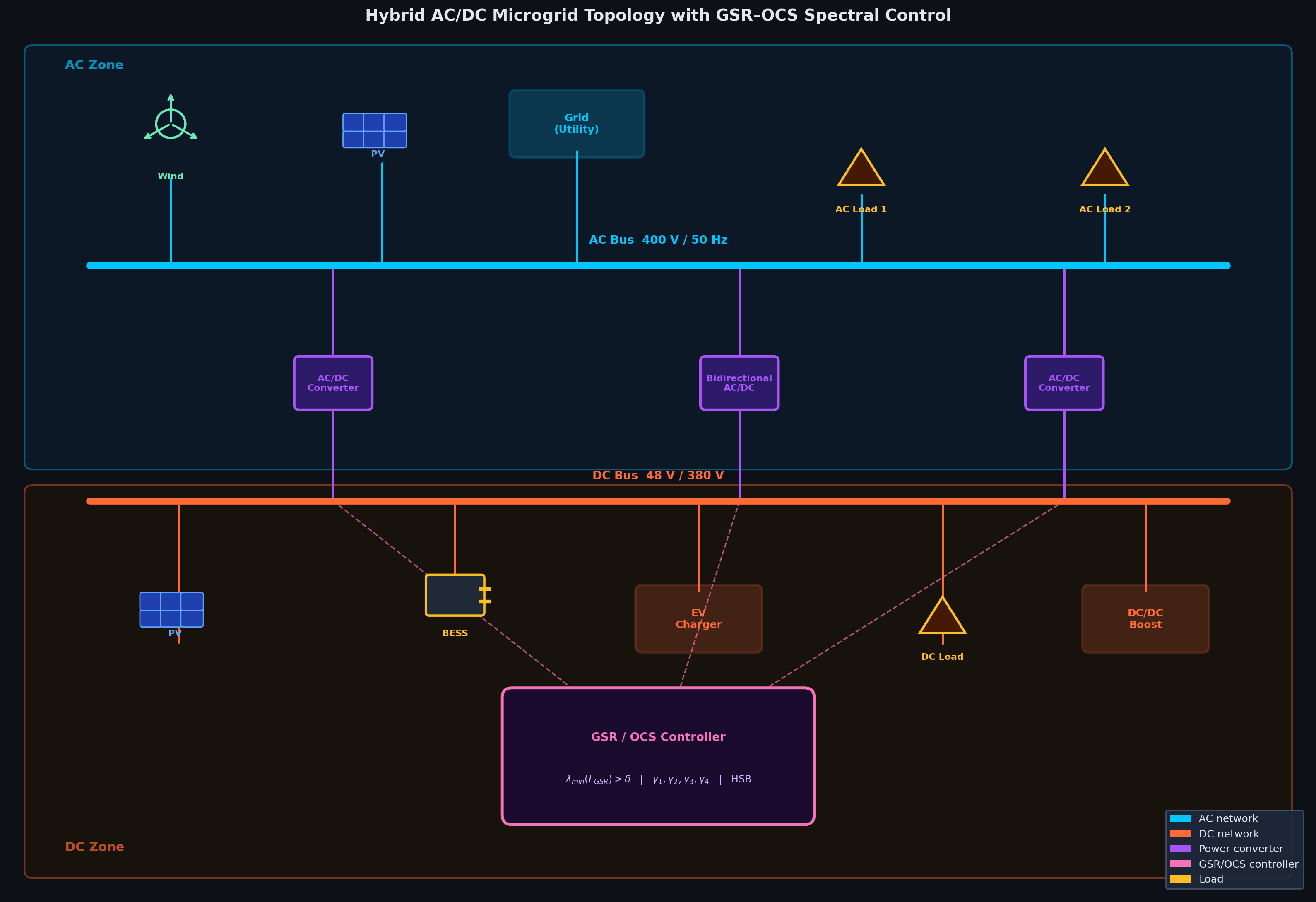
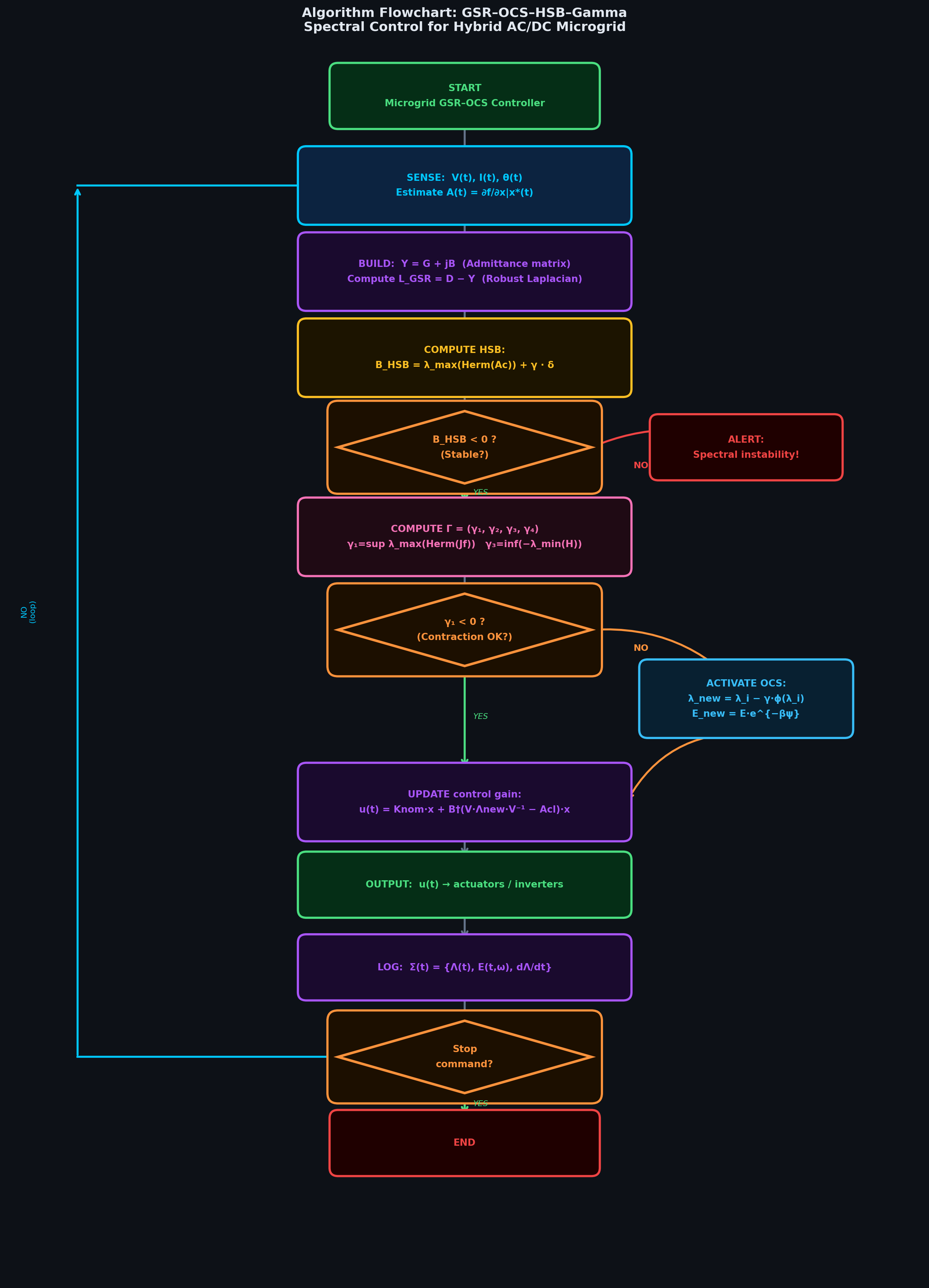
He is furthest along on the energy case, and it is the most concrete thing in the answer. He maps the grid as a web of nodes that push electrical influence on one another (formally, an admittance matrix and a robust Laplacian), then runs the HSB check on a loop that repeats roughly a thousand times a second. When a severe disturbance hits, a sudden loss of solar generation, say, or a surge in demand, and the Gamma measurements show the system has stopped settling, the operator steps in and adjusts the system's unstable modes directly:
λ_new_i = λ_i − γ·φ(λ_i)
Each λ in that line is one of the system's natural modes, a particular way it tends to swing or grow, and the equation simply subtracts a correction from any mode that has drifted toward danger, nudging it back into the safe range. It works the way a sound engineer rides a fader to kill a feedback squeal the moment it starts, catching the one frequency about to run away and leaving the rest untouched. The system steadies without solving a heavy Riccati or Lyapunov equation in flight, the same shortcut that makes the satellite version possible. So far the through-line is reasonable: grids and spacecraft are both engineered systems, and treating them with one spectral method is ambitious but not strange.
The simulation pipeline at GSRL takes that loop through three specific stress events: a thirty-percent step in load, a forty-percent drop in photovoltaic irradiance, and a cleared grid fault. Under each, the spectral abscissa of the open-loop system climbs above zero into the unstable region, while the OCS-controlled version, by his account, holds the eigenvalues to the left of the danger line and keeps the AC and DC bus voltages inside the ±5 percent operating band. The full study includes a hybrid AC/DC topology with PV, wind, battery storage, and grid exchange, the eigenvalue migration before and after the operator activates, the gamma hierarchy under each scenario, and the active-power sharing across the four sources. None of this has run on a physical microgrid yet; it is the simulation case for a real test bench.
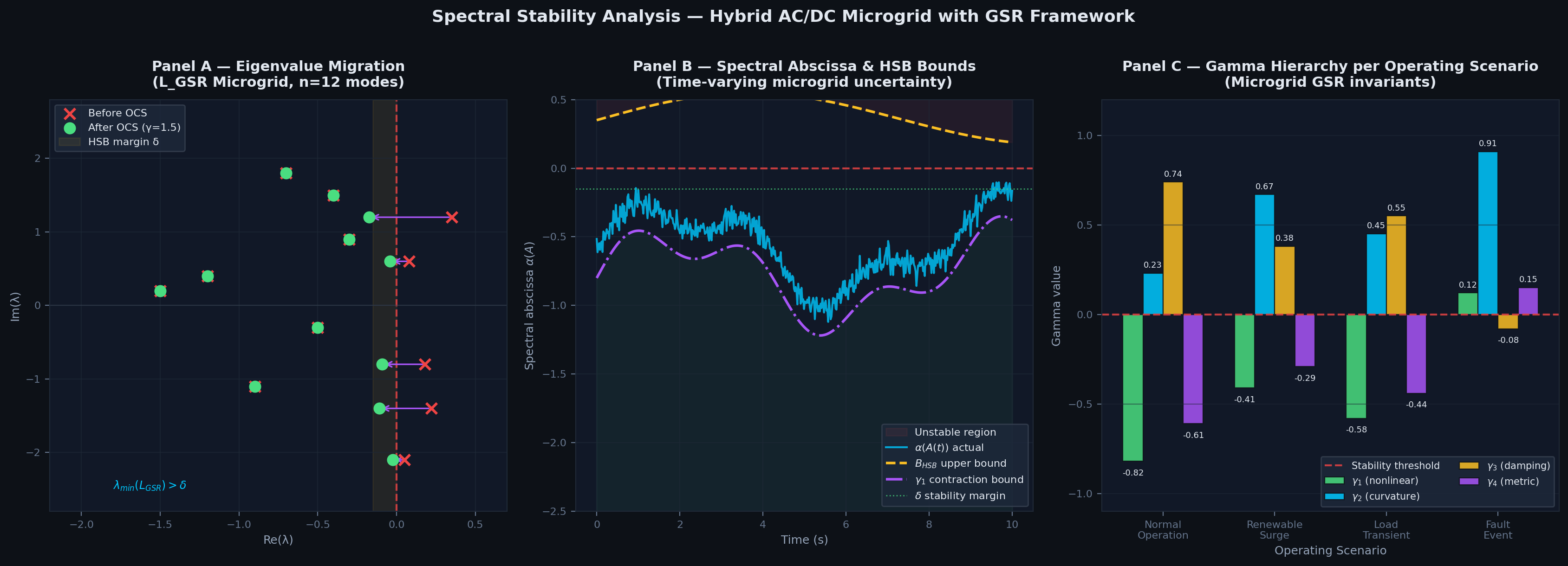
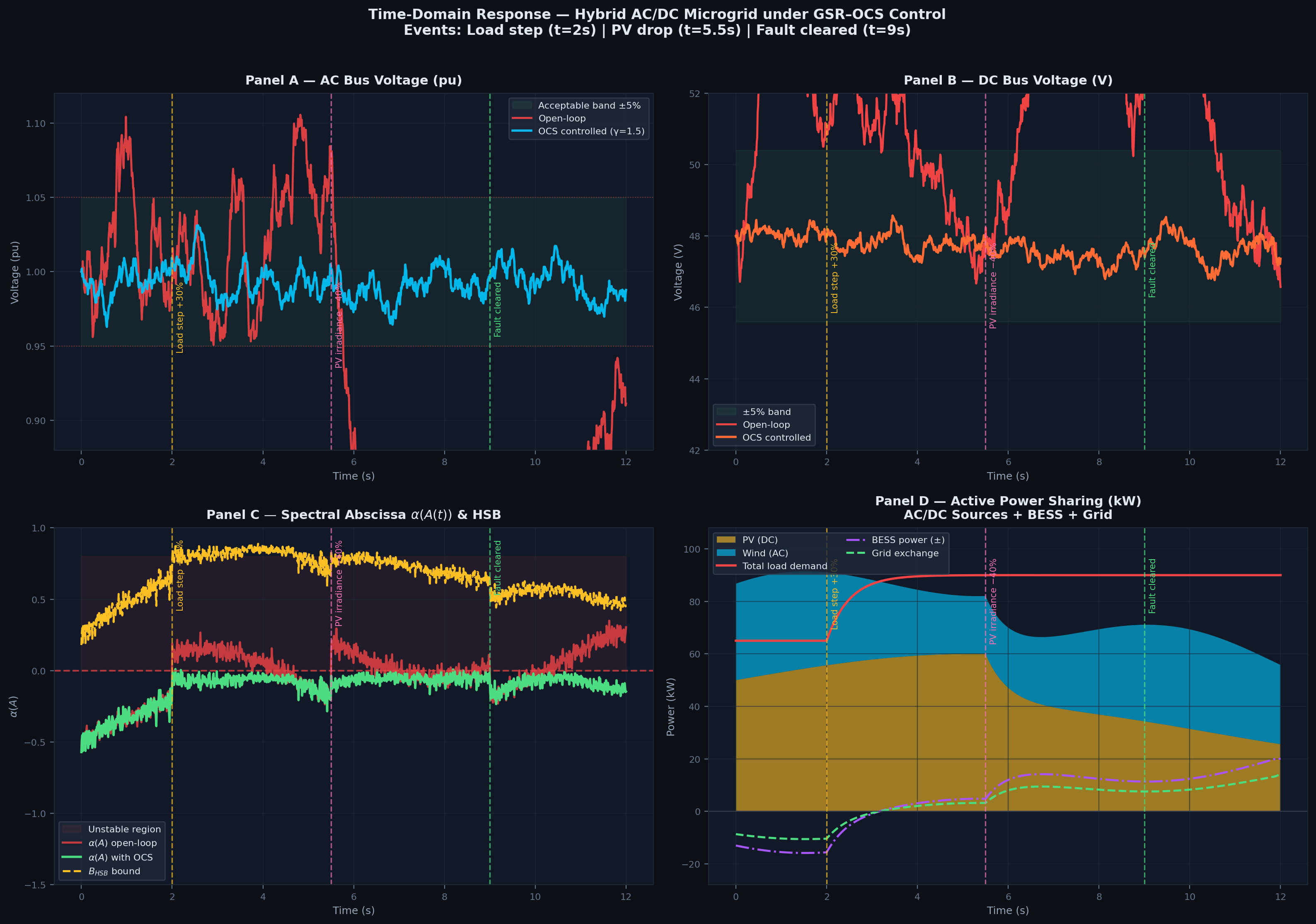
The nervous system is where the claim gets genuinely large, and he knows it, because he routes it back through his own history. The interest, he says, "was born in 1982 from studying neurology autodidactically to decode my own chronic migraines," the same thread that produced the 1992 EEG work. The proposal is to model a damaged neural pathway as a Riemannian manifold whose bioelectric flow has lost its convergence, then design an electrostimulating microdevice whose control law forces that flow back to a negative Gamma invariant, restoring functional connectivity without drugs. As an engineering vision it is internally consistent with everything that came before it. As a clinical claim it is, by any honest reading, unproven, and the distance between a stabilized power bus and a stabilized neural circuit is not only mathematical.
What he is actually proposing for 2030 is a unification: a demonstration that a smart microgrid, a satellite orbiting the Moon, and the ionic currents of a brain all obey the same spectral rules, so that embedded silicon can protect any of them in real time. It is the most expansive idea in the conversation and the one resting on the least public evidence. Whether the same small inequality can really hold across all three domains is the open question his next decade is organized around.
GSRL 2030 Roadmap
The work above is the technical core. Beyond it, Hernández Morales describes a longer industrial plan for the lab, organized as a set of sector projects that would carry the same spectral framework horizontally across critical systems. The portfolio, in his framing, is as follows.
- Delta-912 (Critical Infrastructure): real-time stabilization for smart microgrids, high-speed rail dynamic networks, and bridge structures.
- Zeta-301 and Epsilon-624 (Mobility and Energy): robust automation in automotive systems, battery management loops, and large-scale renewable energy across solar, wind, and hydro.
- Beta-437 and Theta-555 (Next-Generation Computing and Telecom): signal integrity validation, 5G and satellite telecom networks, and edge AI hardware including recurrent and graph neural networks, framed as a way to address the stability question inside otherwise opaque learned systems.
- AlphaX-781 (Advanced Materials): modeling and structural bounds for heavy machinery and aerospace materials.
Each of these sits at the stated-intention stage rather than the deployed-product stage. Together they describe the surface the GSR framework would need to cover for the 2030 unification claim to mean what he says it means.
Author's Analysis
It is early 2031. A lunar lander on final descent crosses one of the mascon anomalies that distort the Moon's gravity, and a thruster underperforms at the worst possible moment. There is no time to consult Earth; the round-trip light delay alone would end the attempt. On the descent computer, an FPGA running a Hermitian Spectrum Bound check re-evaluates the vehicle's stability in microseconds, registers that the system has slipped toward the edge of its safe region, and a spectral operator reshapes the control law on the fly. The lander corrects and continues. No human in the loop, no ground station, no semidefinite program grinding away while the surface rises.
Every capability in that sequence is something Hernández Morales has described in detail and, by his account, validated in silicon. None of it has flown. That gap, between a design that is mathematically guarded and one that has actually proven itself on a real mission, is the real subject here, and it is not a knock on the work. It is the ordinary distance any novel control method has to cross, and it is longer for someone crossing it without an agency or a prime contractor carrying the risk. The independent path cuts both ways. It let him establish priority quickly on Zenodo and iterate without waiting on a committee. It also leaves his central performance claims, the 100-to-1000-times speedups, the zero-false-negative guarantee, the O(n³) certification, waiting on the kind of independent reproduction a mission program would demand before it trusts a guardian with a landing.
There is a quieter tension in the story that is worth naming, because it cuts against a tidy reading. It would be easy to cast this as the lone outsider versus the rigid institutions, and he declines to tell it that way. He credits the mentor who redirected him, speaks well of the IEEE editors who pushed his manuscripts, and treats peer review and open preprints as complementary rather than opposed. The obstacle he points to is structural, a review culture organized around incremental results inside funded programs, rather than a villain. That makes his case more persuasive and also harder to resolve, because structural problems do not yield to a single good paper. They yield, if at all, to a track record built one validated result at a time.
So the question his work leaves open is less about whether the mathematics is elegant, which it appears to be, than about which form of validation the field will end up accepting. If a guardian like his is going to certify a lunar descent or stabilize a hospital's microgrid, someone has to decide that organic adoption by practitioners and timestamped preprints clear the bar, or that they do not and the traditional pipeline must run its course first. Hernández Morales is betting that the people who most need real-time stability will reproduce his results on their own hardware and let the evidence accumulate outside the usual channels. If that bet pays off, it suggests a path into safety-critical engineering that does not run through a university or a national lab. If it does not, the framework may stay what it is now, a serious and largely solitary body of theory waiting for the institution willing to fly it. Which of those outcomes arrives first, and what it would take to move a single mission from interest to integration, is the thing to watch over the next few years.
About Eduardo Hernández Morales
Director and Founder, Gamma Systems Research Laboratory (GSRL)
Eduardo Hernández Morales is a Mexican electronics engineer and independent theoretical researcher based in Morelia, Michoacán, and the founder of the Gamma Systems Research Laboratory. His work centers on Robust Control Spectral Geometry (GSR), a framework he developed to certify the stability of complex nonlinear systems in real time without relying on the iterative optimization, linear matrix inequalities and semidefinite programming, that conventional robust control depends on. His approach pairs spectral theory with implementation on resource-limited hardware, including DSPs, FPGAs, and CubeSat-class onboard computers.
His scientific formation began outside the classroom, in self-taught neurology and cybernetics during the 1980s and early 1990s, work he traces to personal circumstances in his youth. A long intellectual collaboration with Dr. Juan Delgado Romero, founder of the electronics program at the Instituto Tecnológico de Morelia, shaped his turn toward robust control between 1994 and 2000 and produced results presented at international conferences including MWSCAS '97 in Sacramento, ECCTD '97 and '99 in Stresa, ICIAM '99 in Edinburgh, and the 1997 Conference on Control of Oscillations and Chaos in St. Petersburg. He completed his professional degree in 2000 with a thesis applying robust stability to the autopilot of a Boeing 747, taught VHDL, microcontrollers, and embedded hardware architecture from 2010 to 2012, and has pursued the GSR framework independently since.
His contributions within that framework include the Hermitian Spectrum Bound (HSB), which certifies stability in O(n³) with a zero-false-negative guarantee and which he reports running 100 to 1000 times faster than LMI methods on embedded hardware; Gamma Theory, an LMI-free approach to robust control synthesis using spectral invariants on Riemannian manifolds; and the Spectral Control Operator (OCS), an algebraic intervention that reshapes eigenvalues to restore stability without solving dynamic equations online. He applies these to spacecraft attitude control and lunar navigation, robust stability in hybrid AC/DC microgrids, and, more speculatively, to bioelectronic medicine and digital neural bypasses.
He has presented work in IEEE-affiliated conferences and engaged with IEEE publication venues, although he is not currently an active IEEE member. He publishes through open preprints with DOIs on Zenodo, the repository operated by CERN. His code and deposits are available through his GitHub.
Editor's note: This interview was conducted in writing and in Spanish. Hernández Morales's responses have been translated and edited for length and clarity. Performance figures, complexity bounds, and the framework's capabilities are as described by the subject and have not been independently verified by Sirotin Intelligence.
Get exclusive insights from our network of NASA veterans, DARPA program managers, and space industry pioneers. Weekly. No jargon.