
Sirotin Intelligence Briefing: December 20-27: SpaceX Eyes $1.5T IPO, Tory Bruno Joins Blue Origin for National Security, Russia Develops "Zone-Effect" Starlink Killer


This week's Sirotin Intelligence analysis tracks SpaceX's reported exploration of a 2026 IPO targeting up to $1.5 trillion in valuation, with proceeds funding Starship, Starlink, and orbital AI data centers. Blue Origin hired outgoing ULA CEO Tory Bruno to lead a new National Security Group focused on Pentagon and intelligence-community customers. Intelligence shared with Western governments revealed Russia is developing a "zone-effect" ASAT concept that would seed Starlink orbital shells with millimeter-scale metal pellets, a weapon analysts view more as psychological pressure than practical given the indiscriminate debris it would create. A new White House executive order sharpened the Space Force's counterspace mandate, and this week marks the release of "Strategic Communications for Space 101," built on 50+ expert interviews, with early endorsements from the former Chief Scientist of the U.S. Space Force and ESA communications leadership. Our next guest is Akash Sud, Co-Founder of Higher Prana, on how VR meditation may become essential psychological infrastructure for Mars missions.
🛡️ Defense Highlights
- Sidus Space (SIDU) rides SHIELD momentum and a $25M raise: A flurry of December updates has pushed this micro-cap back onto speculative radar screens after the company closed a $25 million public offering at $1.30 per share and confirmed selection onto the Pentagon's SHIELD IDIQ vehicle tied to the Golden Dome missile-defense push, a combination that has driven 30–40 percent single-session price spikes and triple-digit month-to-date gains even as dilution risk remains front and center. For investors, SIDU is increasingly framed as a high-beta space-defense lever on task-order wins and execution rather than a traditional cash-flow story.
- Latest class of guardians graduates in the Space Force's first official dress uniforms: At a Dec. 19 basic military training graduation at Joint Base San Antonio–Lackland, enlisted Space Force guardians became the first trainees to wear the service's new dark-blue dress uniform—featuring a diagonally buttoned jacket, grey trousers or skirt, and matching cap—capping a four-year design and testing effort that will roll out across the force through 2026.
- U.S. Space Command plants its flag at future Redstone Arsenal headquarters: Secretary of War Pete Hegseth and senior military and Alabama leaders unveiled a sign marking the 60-acre site that will host U.S. Space Command's new headquarters at Redstone Arsenal, signaling the start of a multi-year relocation from Peterson Space Force Base and a push to accelerate construction of a purpose-built facility to strengthen warfighting space capabilities.
- Starlink in the crosshairs of a possible Russian "zone-effect" ASAT weapon: Intelligence shared with Western governments suggests Russia is exploring an anti-satellite concept that would seed Starlink's orbital shells with clouds of millimeter-scale metal pellets, potentially disabling clusters of satellites at once while creating indiscriminate debris that could threaten Russia's own spacecraft and stations such as Tiangong and the ISS—leading some analysts to view it more as a "weapon of fear" than a practical battlefield tool.
Major Contract Awards This Week:
- Lockheed Martin – C-130J global fleet expansion: The Air Force approved a ceiling increase of $10 billion on its C-130J delivery and support contract, lifting the total potential value to $25 billion through 2035 for aircraft, development, integration and engineering work supporting the U.S. and seven allied customers.
- Boeing – B-52 engine replacement flight test phase: Boeing Defense secured a $2.04 billion task order to carry the B-52 Commercial Engine Replacement Program through post–critical design review, including integration and testing of new engines on two bombers, with work running to 2033.
- Raytheon – Spain Patriot fire units: Raytheon Missiles & Defense received an $841.7 million fixed-price-incentive award to deliver Patriot fire units and associated hardware, software, spares and documentation for Spain, bringing the contract's total potential value above $1.7 billion.
- Raytheon – Tomahawk Block V procurement surge: A Navy modification worth $384.1 million definitized an order for 350 Block V Tactical Tomahawk missiles and related hardware and services across the Navy, Army, Marine Corps and two FMS customers, with work extending into 2029.
- Raytheon – ESSM/NATO SeaSparrow design-agent support: Raytheon was awarded an initial $104.1 million (with options up to $884.9 million) to provide technical and design-agent engineering for Evolved SeaSparrow Missile and NATO SeaSparrow programs for the U.S. Navy and a broad consortium of allied navies.
- Raytheon – Rolling Airframe Missile Block 2B production: The Navy placed a $146.2 million firm-fixed-price order—potentially $276 million with options—for RAM Block 2B guided missile round packs, with 58% of the buy for the U.S. Navy and 42% for Japan.
- General Atomics – Ford-class EMALS/AAG lifecycle support: General Atomics won a $150 million IDIQ contract to provide programmatic, engineering, logistics, software and repair support for Electromagnetic Aircraft Launch System (EMALS) and Advanced Arresting Gear across in-service Ford-class carriers through 2030.
- Bechtel Plant Machinery – naval nuclear propulsion components: A $128.5 million cost-plus-fixed-fee modification, with options to $197.7 million, will fund long-lead nuclear propulsion components for future Navy ships, with work stretching into 2034.
- Raytheon – APY-10 radar shipsets for P-8A fleets: Raytheon received an $85.8 million definitized modification for APY-10 radar shipsets and spares supporting U.S. P-8A aircraft and FMS customers Canada, Germany and the U.K., with deliveries planned through 2030.
- Raytheon – CIWS production and overhaul: Two Navy actions worth roughly $51.3 million in total were issued for new-build parts and overhaul/repair of Close-In Weapon System (CIWS) components used on nearly all U.S. surface combatants, with work running to 2028.
- General Atomics Aeronautical – Belgium MQ-9B sustainment: General Atomics Aeronautical Systems received a $29.9 million award to provide logistics, depot repair, engineering and software support for Belgium's MQ-9B SkyGuardian remotely piloted aircraft through 2026.
- Raytheon – cooperative engagement and air/missile defense C2: A $22 million Navy modification funds continued design-agent and engineering work on Cooperative Engagement Capability, tying together sensors and shooters across the Navy, Marine Corps and Missile Defense Agency.
- Northrop Grumman – VEYRON R&D and B-2 sustainment: A $60 million Air Force research contract will develop and demonstrate a digital beamforming transceiver ASIC with embedded supply-chain security features under the VEYRON effort. Separately, a Defense Logistics Agency action worth an estimated $64.1 million covers manufacture of B-2 forward duct assemblies under an existing multi-year agreement.
- Raytheon – Patriot and Sentinel sustainment: An $77.7 million modification extends Sentinel A3 radar lifecycle support through 2026. Kilgore Flares' $18.5 million order for MJU-7A/B IR countermeasure flares will help keep U.S. aircraft survivability suites stocked through 2027.
- BAE Systems – M109A7 / M992A3 production ramp: BAE received a $77.1 million modification, lifting the cumulative value of its M109A7 self-propelled howitzer and M992A3 resupply vehicle order to about $500.5 million, with deliveries continuing to 2028.
- Boeing – CH-47F global field support: A new $58.6 million contract funds field service representatives to support CH-47F fleets worldwide through 2031, covering on-site technical assistance and sustainment.
- Elbit America – Heads-Up display production: Elbit America secured a $49.9 million firm-fixed-price contract for Heads Up displays, with orders and funding to be specified over the contract's life to 2030.
- Stantec – Army geotechnical services IDIQ: Stantec Consulting won a $49 million IDIQ for geotechnical engineering services supporting U.S. Army Corps of Engineers projects through 2030.
- General Atomics & Ansys – space and training systems: Ansys Government Initiatives received $24.5 million to prototype an advanced Distributed Synthetic Training Environment capability for Space Systems Command. Textron Systems' $16.6 million modification extends ISR services out of land-based hubs for Navy customers through 2026.
- Industrial base & sustainment – key logistics contracts: Derco (Lockheed Martin) won a $209.2 million requirements contract for C-130 weapon system supplies through 2030. Propper International received $48.4 million for flame-resistant pants; IFB Solutions $35.4 million for fire-resistant outer-layer jackets; and Cottonwood $44.4 million for aircraft cargo tie-down straps under long-term DLA clothing and textile deals. Oshkosh Defense's $29.4 million contract covers steering gears; Intertrade's $9.3 million award funds F-16 generator controls; and Hamilton Sundstrand's $20.1 million order buys V-22 generators through 2031.
🌐 Policy, Geopolitical & Legal Developments
- SpaceX weighs a 2026 IPO with trillion-dollar ambitions: Scientific American and financial outlets report that SpaceX is actively exploring a mid-to-late-2026 initial public offering that could target a valuation of up to $1.5 trillion, with proceeds earmarked not just for Starship and Starlink, but for an aggressive build-out of AI-centric "data centers in orbit" and, longer term, off-Earth manufacturing infrastructure. That framing reinforces a narrative of SpaceX as both a launch incumbent and a prospective space infrastructure platform, with implications for everything from NASA partnerships to commercial competition in satellite broadband and defense payloads.
- Tory Bruno moves from ULA to Blue Origin to lead a new National Security Group: Blue Origin has tapped outgoing United Launch Alliance CEO Tory Bruno as president, National Security, putting him in charge of a business line focused on Pentagon and intelligence-community customers as the company scales New Glenn, competes for NSS launch slots, and seeks a larger share of classified and missile-defense-related space work.
- White House executive order sharpens Space Force's counterspace mandate: A new presidential order directs the U.S. Space Force to treat counterspace operations—detecting, deterring, and defeating hostile actions against U.S. and allied space systems—as a core mission area, emphasizing rapid threat attribution, closer integration with intelligence and cyber agencies, and development of both resilient architectures and active defensive options against jamming, dazzling, and kinetic anti-satellite weapons.
- U.S. Space Forces–Japan marks first year as a bilaterally integrated space unit: On its one-year anniversary, U.S. Space Forces–Japan highlighted progress in building combined operations with Japan's Space Operations Group, from sharing missile-warning and space-domain-awareness data to co-developing tactics for protecting Allied satellites—framed by leaders as a foundation for broader Indo-Pacific space deterrence and crisis response.
🛰️ Technology & Commercial Developments
- Holiday macro backdrop keeps space-defense trade in focus. The holiday week is turning into anything but a lull for space and defense-exposed equities, with traders parsing fresh headlines on small-cap capital raises, a potential SpaceX IPO, and milestone NASA and clean-energy projects that could reshape the broader space economy heading into 2026.
- Artemis II turns 2026 into a crewed-lunar test year. NBC News reports that Artemis II, NASA's first crewed flight of the Space Launch System and Orion capsule, is now targeting an early-2026 launch window, potentially as soon as February, sending four astronauts on a roughly 10-day lunar-orbit mission without a surface landing. Beyond the political symbolism of returning U.S. astronauts to the moon under the current administration, the flight is being cast as a critical systems-integration and life-support shakedown for later missions that aim to establish sustained surface operations and ultimately support Mars-bound architectures.
- Orbit-visible mega-solar project links clean energy to space infrastructure. While not a spaceflight project, a recent report highlights how a massive solar facility in North America—described as hosting around 1.7 million panels and generating roughly hundreds of megawatts of power for hundreds of thousands of homes—can be seen from orbit, feeding the narrative that energy infrastructure is becoming part of the space-imaging and climate-monitoring story as much as a terrestrial clean-power play. For investors focused on the broader "space-adjacent" ecosystem, such projects reinforce the linkage between orbital sensing, grid-scale renewables, and industrial policy incentives across the U.S. and allied markets.
- JWST finds a diamond-raining, lemon-shaped exoplanet around a pulsar. Astronomers using the James Webb Space Telescope have characterized PSR J2322-2650b, a Jupiter-mass world just 1 million miles from its pulsar host whose atmosphere is dominated by helium and carbon, appears packed with soot clouds that may condense into diamonds, and is tidally stretched into a lemon shape as it whips around its star every 7.8 hours—an atmospheric combination and orbital setup that defy existing planet-formation models.
- Intuitive Machines racks up Houston-centered NASA wins and lunar hardware milestones. A Houston InnovationMap year-in-review highlights how Intuitive Machines secured a $9.8 million Phase II government contract to push its orbital transfer vehicle through Critical Design Review ahead of manufacturing, clinched Near Space Network work to extend NASA communications, and moved to acquire deep-space navigation specialist KinetX—positioning the company as a vertically integrated lunar-transport and mission-services provider heading into the late 2020s.
- Tech billionaires treat orbital data centers as the next AI infrastructure frontier. A Forbes analysis describes how leaders like Jeff Bezos and Elon Musk, alongside hyperscalers such as Alphabet, Microsoft, and IBM, are backing concepts for space-based data centers that could tap essentially uninterrupted solar power, off-load energy-hungry AI workloads from terrestrial grids, and, in Bezos' telling, eventually make "all new data centers" off-world within a decade if launch and in-orbit computing costs can be driven down.
- Russia patents a rotating space station to generate artificial gravity. Reporting on a newly disclosed patent from state rocket firm Energia outlines a conceptual post-ISS outpost built around a large rotating assembly that would spin habitable modules around a central axis to create roughly 0.5 g of artificial gravity, using hermetically sealed flexible connectors between fixed and moving sections to mitigate long-duration microgravity health risks on deep-space or extended orbital missions.
- Russia eyes a 2036 nuclear power plant to anchor a joint lunar base with China. Roscosmos has signed a contract with spacecraft builder Lavochkin to design and build a lunar power facility by 2036, bringing in state nuclear giant Rosatom and the Kurchatov Institute in what officials describe as a shift from one-off Luna missions toward a permanently staffed International Lunar Research Station capable of powering rovers, observatories, and shared surface infrastructure.
- NASA's new chief calls China's Tiangong "space oven" an 'upgrade' and urges cultural reset. At a December 19 agency-wide town hall, Administrator Jared Isaacman cited China's decision to install an air-fryer-style "space oven" aboard Tiangong as an example of crew-centric innovation, jokingly labeling it an "upgrade" while arguing that NASA must re-examine legacy rules and risk postures that made sense in an earlier era but now slow down life-quality improvements for astronauts.
🔔 NOW LIVE: Strategic Communications For Space 101
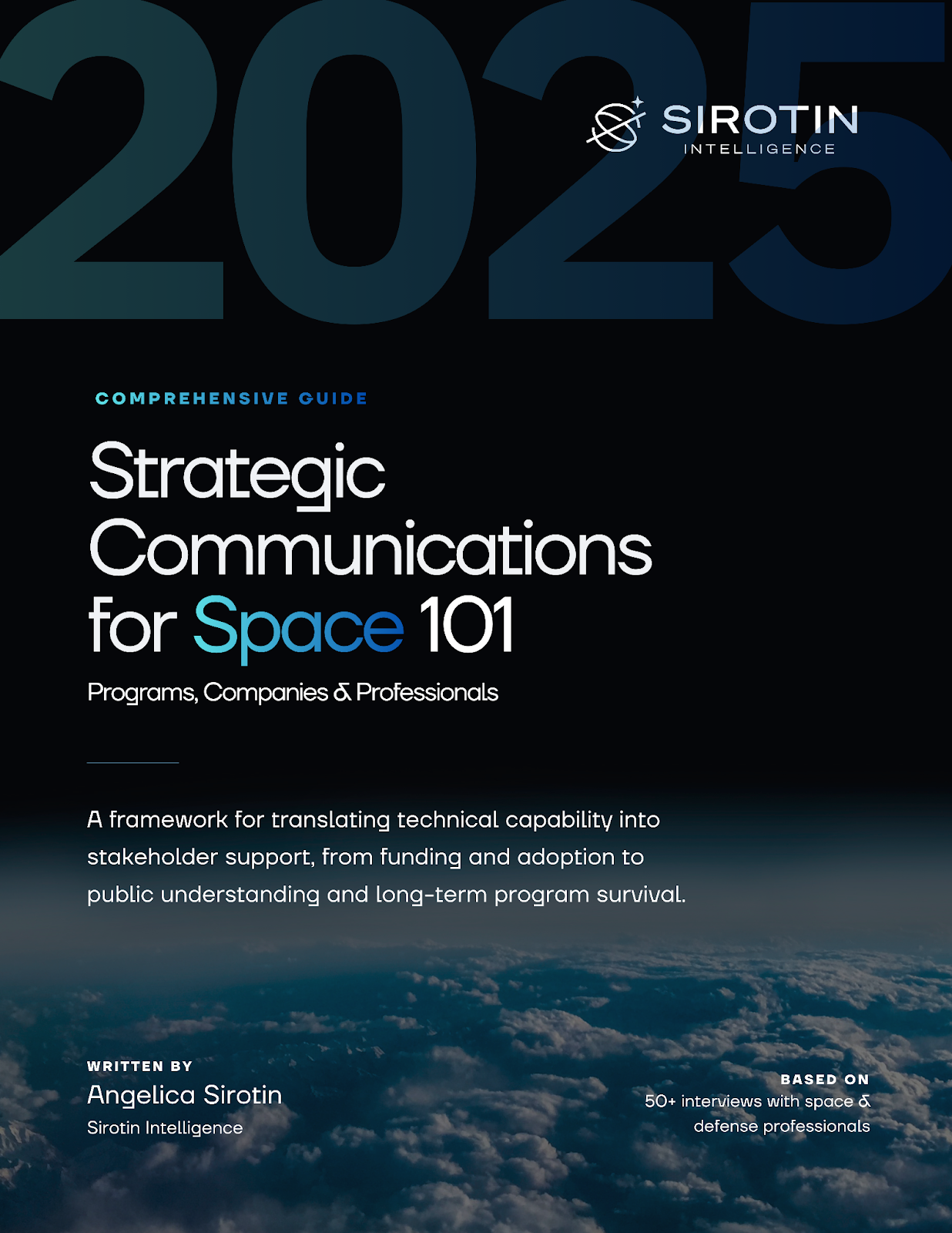
Sirotin Intelligence has released the first comprehensive guide to strategic communications for space and defense professionals. Built on 50+ expert interviews and a year of planning, this paper addresses a pattern that repeats across the industry: technically sound programs losing funding, adoption, and public support because the people building them cannot explain why they matter to the people who decide their fate.
The guide provides frameworks, templates, and worked examples for translating technical capability into stakeholder action, from pitch decks and one-pagers to LinkedIn positioning and public communication.
What the paper covers:
- Why programs with functional technology get cancelled when decision-makers cannot explain their value, and how to prevent it
- The five-step Translation Framework for converting any technical capability into audience-appropriate communication
- Complete before-and-after transformations of a 16-slide pitch deck, with downloadable templates
- How to build public constituencies that protect programs during budget battles
- What to say when classification or competitive sensitivity limits what you can disclose
📄 Read the full high-resolution PDF
🎧 Listen to a preview thanks to Speechify
Or download below:
What industry leaders are saying:
"Angelica Sirotin provides clear, concise, and important guidance on communicating for the results you want. Strategic communication is about more than just words. I HIGHLY recommend this paper." — Mike Simmons, Founder of Astronomy for Equity, 50 years leading and founding astronomy programs (foreword contributor)
"Whether you're new to communicating your ideas, looking to improve your skills, or are an experienced strategic communicator, this guide is worth reading. Angelica Sirotin has a talent for helping entrepreneurs, scientists, engineers, and government professionals tell the stories they need to influence others and accomplish their goals." — Dr. Joel Mozer, Scientist, futurist, and long-term thinking advisor; former Chief Scientist of the U.S. Space Force (foreword contributor)
"A clear, data-based, fact-driven call to bring communication up to the level of strategic management mandate at any space organisation. It's not a question of reaching public, media, policymakers, politicians, scientists, institutes or partners – you've got to reach them all if your satellite, mission, programme or project is to have a hope of winning the financial support, media endorsement and industry mindshare needed to succeed. #RequiredReading" and "This is simply the best guide to strategic communications within the space sector that I've ever seen."— Daniel Scuka, Former Communication Officer at European Space Agency (ESA)
"Angelica Sirotin pinpoints a critical challenge: without effective translation between technical capability and decision-makers, even well-designed programs risk being misunderstood or unsupported." — Giuseppe Finocchiaro, Corporate Strategy & Communications
"A major piece of work, one-year in the making... enjoy! 🚀" — Christophe Bosquillon, Senior Fellow NIDS National Institute for Defense Studies, Space economy-security-policy
💭 A Word From Christophe Bosquillon
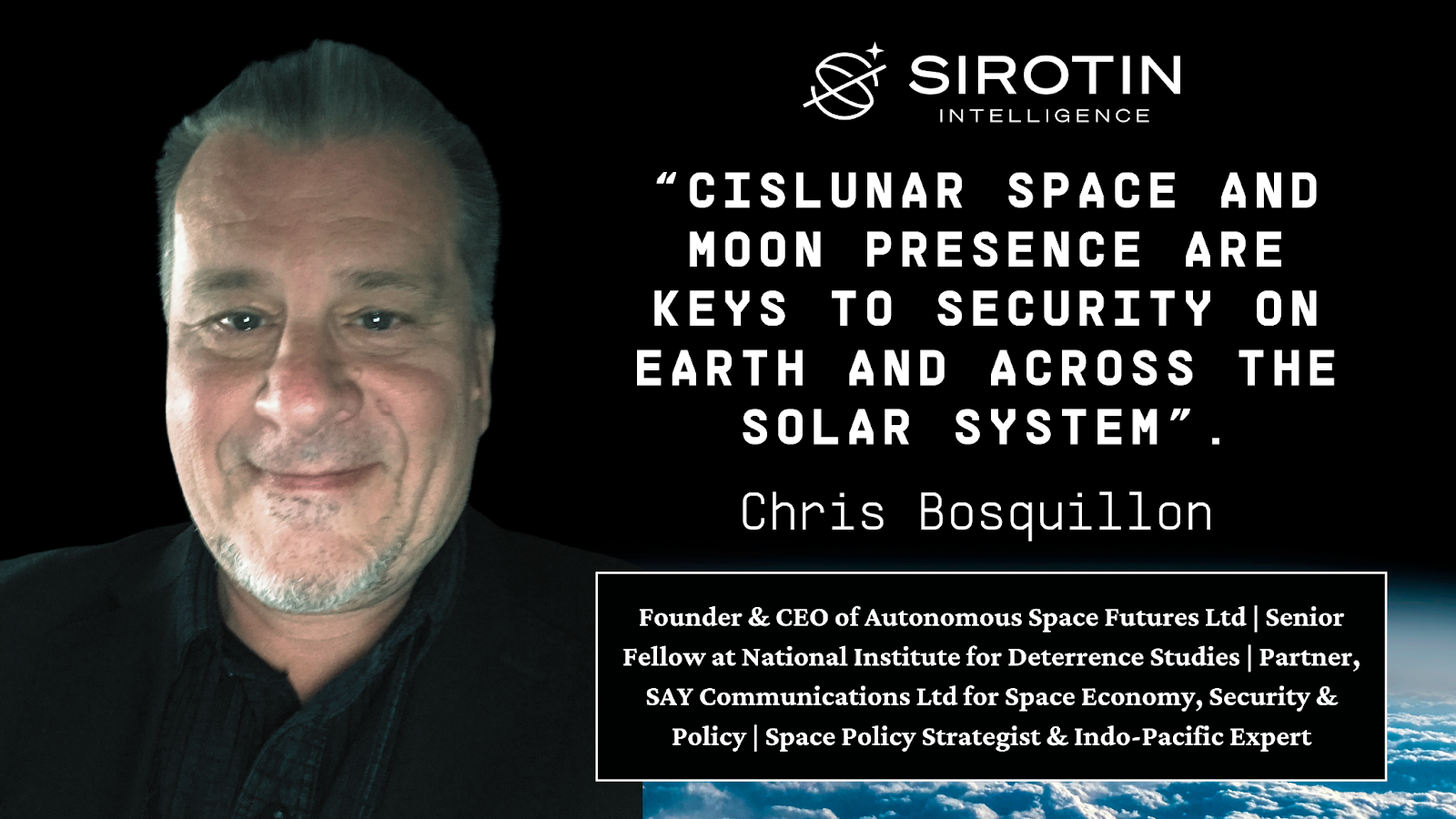
"Space" appeared only once in the early December 2025 National Security Strategy (NSS). Yet the day after Senate confirmed with a 67-30 vote Jared "Rook" Isaacman as NASA Administrator, the White House published a swiping Executive Order (EO) "Ensuring American Space Superiority." This Trump administration first substantive counter-space policy is meant to secure U.S. assets and interests from Earth orbit through the cislunar space theatre to the Moon and beyond, while inscribing space nuclear power on a schedule. To integrate commercial capabilities into the defense complex, reform acquisition, and modernize the nation’s military space architecture become paramount.
This EO is an extension of the NSS treating economic power, industrial superiority, and technological edge as inseparable pillars of national security.This policy references industries primarily through a national-security lens, rather than civilian market categorization, including defense, manufacturing, energy, strategic supply chains, infrastructure, both physical and digital to be built at industrial-scale, and strategic technologies. Technology is framed less as a civilian growth driver and more as a strategic asset, a competitive weapon, and a deterrence multiplier. Civilian industry is subordinated to national resilience, mobilization capacity, and deterrence. When space traffic management and space situational awareness services become a commercial opportunity, the broader framework of economic security, industrial policy, and military strategy, forms a paradigm of “civilian-military fusion” and “unrestricted warfare” among major actors.
Space is simultaneously a warfighting domain, a critical economic infrastructure, a scientific collaborative field, a geopolitical symbol of power, prestige, and dominance. After 35 years of strategic vacation with the West divorcing itself from Reality, we now face a technology-savvy tripolar world. This swiping EO on Ensuring American Space Superiority is a clear example that strategic communication is vital for the space domain: as an essential tool for deterrence, diplomacy, risk mitigation, and building public and allied support in an increasingly contested and complex environment. These steps merely reflect a long overdue readjustment to 21st century geopolitics, fundamentally space, nuclear, and disruptive industries-focused. Those who control the narrative are better positioned to control the governance of the domain, and the domain itself, in ways that achieve techno-strategic power.
Season’s Greetings and have a great 2026 Space Year ahead!
🎤 Our Next Guest: Akash Sud
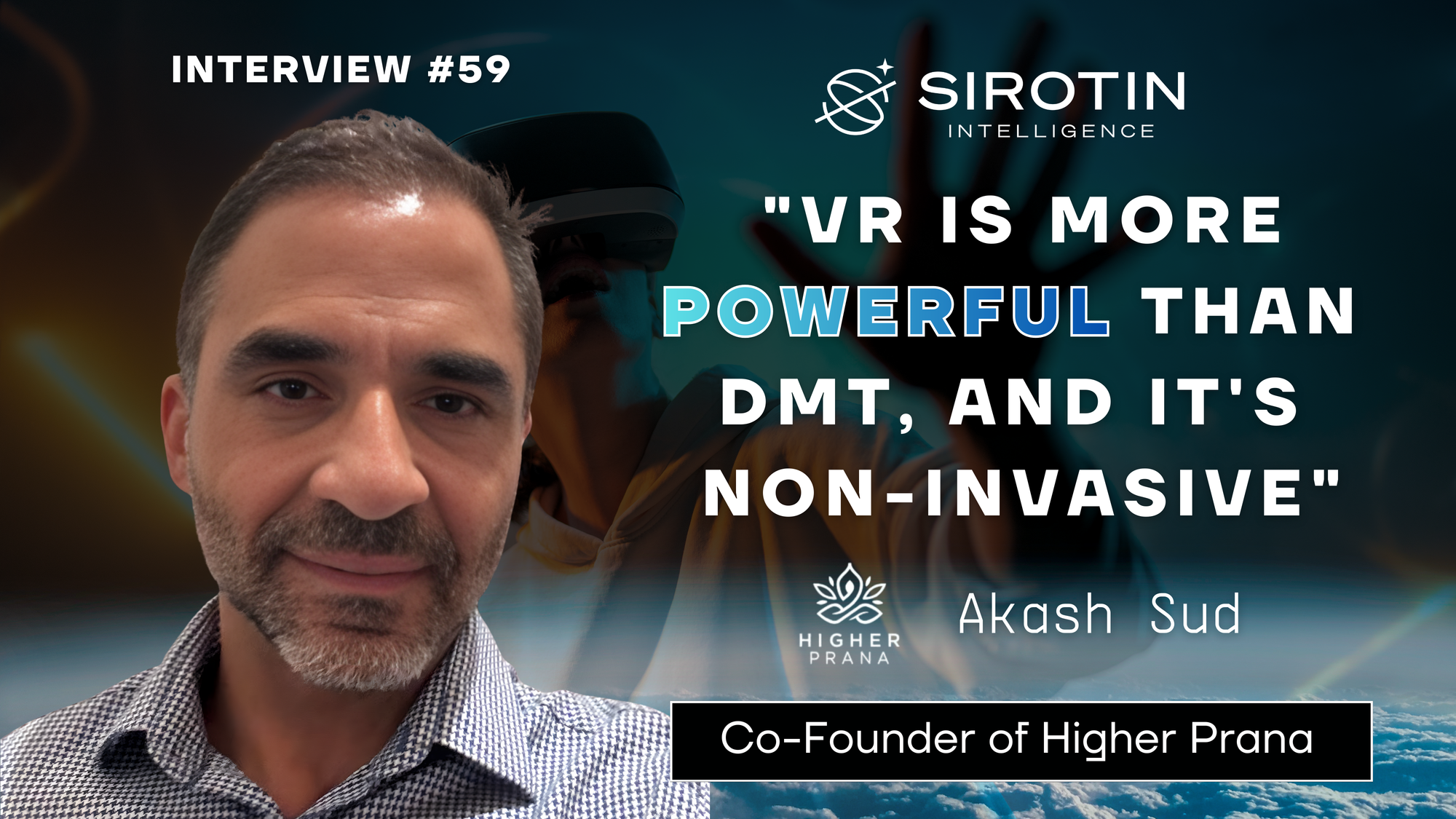
Akash Sud is the Co-Founder of Higher Prana, a VR meditation platform transforming how individuals and organizations approach emotional regulation. With over two decades as a CFO across approximately 40 M&A deals in the technology sector, Sud watched ego-driven dysfunction cascade through boardrooms and recognized that spreadsheets couldn't solve consciousness problems. His nature therapy YouTube channel grew to 60,000 followers before he realized: people in Manhattan high-rises can't access forests. Virtual reality could bring the forest to the 70th floor.
Higher Prana's technology has been validated by the Veterans Association (86% anxiety reduction), Children's Hospital of Los Angeles, and Children's Hospital of Colorado. Co-founder Gabe Arrington previously led immersive technology for the U.S. Air Force, where VR training cut costs from $4.5 million per legacy simulator to $1,000 per unit. Sud describes VR meditation as "more powerful than DMT"—achieving parasympathetic states in minutes that traditional meditation takes decades to build.
Key topics:
- Why VR "attacks all your senses" to force open the prefrontal cortex, bypassing years of traditional meditation practice
- How schools are using the technology for gun violence prevention—children who once required physical restraint now achieve emotional regulation within minutes
- The corporate boardroom dysfunction he witnessed across 40 M&A deals, and why "shit flows from the top" when leaders operate from ego instead of groundedness
- Why long-duration space missions to Mars will require VR meditation as mission-critical psychological infrastructure
Watch Akash's YouTube preview Tuesday, December 30th on the Sirotin Intelligence YouTube channel. Full interview drops January 1st.
📚 Essential Intel from Our Archives
Missed a beat? These groundbreaking conversations are must-reads:
"America Must Build 2,500 Hoover Dams Worth of Space Solar Power or Lose Energy Independence"
Mike Snead reveals why only space solar power can replace fossil fuels at scale, how China's playing the long game while America conducts studies, and why fracking's 20-year window is America's last chance to build orbital energy infrastructure.
"When Mars Rovers Hit Anomalies, They Stop Dead"
Dr. Mark Woods explains why $2.5 billion Mars rovers freeze when confused, how neuro-symbolic AI from the early 2000s still beats LLMs for space missions, and why Silicon Valley is rediscovering 20-year-old solutions to autonomy problems.
"Space Solar Requires 1,000 Times Less Critical Minerals Than Wind and Solar"
Martin Soltau reveals how orbital power stations could deliver £30/MWh energy while breaking China's critical mineral stranglehold, and why controlling space-based power means controlling civilization's future.
"Chemical Lasers Are Out, Solid-State Lasers Failed Too"
Dr. Andrew Motes exposes three decades of directed energy failures, why you can't defend satellites against determined adversaries, and how a golf-ball-sized meteor could trigger the Kessler cascade that ends space access.
"We're Building the World's Biggest Gun to Shoot Refrigerators at Mach 20"
Mike Grace explains why a 10km cannon using Nazi V-3 technology can launch satellites at $10/kg versus SpaceX's $3,000, and how disposable daily satellites make space denial economically suicidal.
"Every Rocket Component, Every Drop of Fuel—It All Moves By Ship"
Bo Jardine reveals why SpaceX barges are billion-dollar sitting ducks, how controlling 21-mile-wide shipping straits determines space dominance, and why a $600 drone beats a $67 million rocket every time.
"We Don't Understand How Interconnected Everything Is Until It All Falls Apart"
Ulpia Elena Botezatu warns that cyber attacks on satellites would suspend modern life—no banking, no transport, no power—while the gap between IT security and space technologists creates the blind spot where catastrophe lives.
"We're Sitting on $100 Trillion and Want to Pay $400 Billion to Throw It Away"
Steven Curtis reveals why nuclear "waste" contains 97% of its original energy worth $100 trillion, how the NRC charges $300/hour to say no to reactors that can't melt down because they're already melted, and why one governor with two minutes of courage could solve our energy crisis.
"We're Playing by 1987 Rules in a 2025 Game"
Former White House space chief Sean Wilson exposes how export controls from 1987 are killing U.S. competitiveness, why China bundles "practically free" satellites with predatory loans, and how satellites "don't have mothers" fundamentally changes space escalation dynamics.
"Modern War Isn't About Territory—It's About Narrative Control"
Major General Vladyslav Klochkov, former Chief of Moral-Psychological Support for Ukraine's Armed Forces, reveals how information warfare determines victory before armies meet, and why the battle for minds matters more than the battle for land.
"We're Traveling with Biological Machinery That Can Melt in Space"
Dr. Ekaterina Kostioukhina, extreme environments physician, explains why human hibernation may be essential for Mars missions, how ground squirrels avoid muscle atrophy during torpor, and why patents on hibernating fish could revolutionize interplanetary travel.
"The Universe Isn't a Machine—It's an Information Processing System"
Theoretical physicist Davide Cadelano presents his Codex Alpha framework where spacetime emerges from quantum information networks, unifying relativity and quantum mechanics through a radical new understanding that treats the universe as a vast computational system rather than mechanical clockwork.
"How Nation-States Could Blind U.S. Intelligence Without Firing a Shot"
Robi Sen reveals how "kindergarten children could take over" most satellite networks, why adversarial ML can make satellites gradually shift their perception of reality, and how the convergence of biological, RF, and space warfare creates nightmares current defense frameworks can't even conceptualize.
"We Can Hit Our Target in Space and Return for Rapid Reuse"
Dr. Robert Statica on building hypersonic aircraft, space-based defense systems, and the race to sub-100 kg space access—revealing how reusable hypersonic platforms could revolutionize both space access and global strike capabilities.
"They Don't Call for Their Parents. They Say 'Long Live the Great Leader'"
Lt. Gen. (Ret.) In-Bum Chun exposes North Korea's transformation into a cyber superpower, why cognitive warfare is the real threat, and the chilling reality of a society where dying children praise their dictator instead of calling for their mothers.
"Space Wars Are Over in 24 Hours—Most People Don't Even Know They're Happening"
Space warfare doctrine pioneer Paul Szymanski reveals mathematical proof that the U.S. lost its first space war to Russia in 2014, exposing how temporal pattern analysis unmasks satellite attacks hidden behind "solar flare" cover stories and why hypervelocity weapons from orbit could render the U.S. Navy obsolete overnight.
"The Grid Is Already a Living System—We Just Don't Recognize It"
Power systems veteran Mike Swearingen explains why treating the power grid as a living, autonomous system isn't science fiction—it's an engineering reality we refuse to acknowledge, and how space-domain tactics can secure the grid of tomorrow.
"The Hidden Power Struggle Reshaping China: Xi Jinping's Dramatic Fall From Grace"
An investigation into China's internal power dynamics reveals how Xi Jinping's grip on power is weakening amid economic turmoil, military purges, and rising opposition within the Communist Party.
"I Patented a Space Airlock That Uses 6,000 Times Less Air"
NASA veteran Marc Cohen reveals his revolutionary Suitport design and four decades of challenging engineering orthodoxy, advocating for space habitats that prioritize human experience over forcing astronauts to adapt to machines.
"I Created a Language That Lets AI Think in 128 Dimensions"
Former corporate sales executive Chris McGinty reveals how his McGinty Equation unifies quantum mechanics with relativity through fractal geometry, creating Hyperfluid AI and revolutionary space-folding technologies now being adopted by NATO defense strategists.
"I'm on a Crusade to Expand the Domain of Life"
Space pioneer Rick Tumlinson reveals how he created the NewSpace movement, his work with Dr. Gerard K. O'Neill, and his 40-year mission to expand humanity beyond Earth through commercial space ventures.
"Space Law Is The First Domain Where Nations Agreed On Rules Before Having Practice"
Military JAG-turned-attorney Trevor Hehn explains how Cold War-era space treaties meet modern commercial ventures, highlighting the challenges of re utilization, dual-use technologies, and regulatory navigation for companies expanding beyond Earth's atmosphere.
"The Unprotected Power Grid Will Be Our Civilization's Death Warrant If We Don't Act"
Doug Ellsworth, Co-Director of the Secure the Grid Coalition, warns about America's vulnerability to electromagnetic pulse attacks and advocates for urgent power grid protection to prevent catastrophic infrastructure collapse.
"When AI Designs Components, They Sometimes Defy Textbook Engineering"
Space Force Lt. Colonel Thomas Nix reveals how 3D printing and AI are creating revolutionary spacecraft designs, with parts that are stronger and lighter than what human engineers could develop using traditional methods.
"The Gaps in Our Lunar Knowledge Are Enormous"
Extraterrestrial Mining Company Chief Scientist Dr. Ruby Patterson describes the urgent need for more lunar geological data before making commercial decisions, while offering a balanced view on helium-3 mining and advocating for inclusive international cooperation in cislunar space.
"We're Building the Railroads of the Space Gold Rush"
Space Phoenix Systems CEO Andrew Parlock positions his company as "FedEx for space," creating an infrastructure that helps businesses launch and return payloads from orbit with minimal friction.
"Our Nuclear Shield Was Killed For Political, Not Technological Reasons"
Reagan's SDI Director Ambassador Henry Cooper argues that effective missile defense technology developed during the Reagan-Bush years was abandoned for political reasons when the Clinton administration "took the stars out of Star Wars."
"Every Country Has a Border with Space"
UK Space Agency CEO Dr. Paul Bate is developing Britain's space industry through initiatives like spaceports in Scotland's Shetland Islands to establish the UK as Europe's premier satellite launch destination.
"We're Treating Satellites Like They're Still In The 1990s"
Niha Agarwalla, Director of Commercial Space, explains why traditional satellites are obsolete and how resilient constellations will transform space economics.
"When People See Space Guardians in Uniform, They Ask If They're Real"
Colonel Bill Woolf, 25-year space defense veteran, reveals his mission to build public support for the newest military branch defending America's orbital assets.
"One Kilogram of Helium-3 Is Worth $50 Million"
Jeffrey Max, Magna Petra CEO, explains how lunar re extraction could revolutionize Earth's energy production and fuel humanity's expansion across the solar system.
"I'm Building a Rocket Engine That Could Reach Alpha Centauri"
Michael Paluszek, Princeton Satellite Systems President, reveals how fusion propulsion could reduce travel times throughout our solar system and enable humanity's first interstellar missions.
Chris Newlands, CEO of Space Aye, discusses how his company's satellite technology is revolutionizing wildlife conservation and helping to combat illegal fishing and poaching.
"I Learned From the Last Generation of Manhattan Project Veterans”
Patrick McClure, former Kilopower Project Lead at Los Alamos National Laboratory, explains how small nuclear reactors could power future missions to the Moon, Mars, and beyond.
"We're Being Attacked Every Day"
Christopher Stone, Former Pentagon Space Advisor, warns about America's vulnerabilities in orbit and explains why China's "attack to deter" doctrine makes space conflict more likely than many realize.
"I Helped SpaceX Secure Their First Commercial Contracts"
Serial entrepreneur Robert Feierbach discusses building billion-dollar space ventures across four continents and developing North America's newest spaceport.
"We Can Fly 8,000 Miles In 2 Hours"
Jess Sponable, Ex-DARPA PM & President of NFA, explains how rocket-powered aircraft will revolutionize global travel through simplified hypersonic technology.
"This Could Be Our Biggest Economy"
Kevin O'Connell, Former Space Commerce Director, reveals how space is transforming from a government domain to a $1.8 trillion market.
"How Do You Win a War in Space?"
Ram Riojas, Ex-Nuclear Commander and Space Defense Expert, explains why the next war will start in space and how nations are preparing their defenses.
"First Day on the Job, Hubble Was Broken"
Mike Kaplan, James Webb Space Telescope Pioneer, reveals how early setbacks with Hubble shaped NASA's approach to complex space missions and discusses the commercial revolution transforming space exploration.
The Future of Human Space Habitation
Jules Ross reveals how her journey from artist to space visionary is reshaping human adaptation to space through Earth's first artificial gravity station.
Attorney Michael J. Listner unpacks the complex legal challenges facing modern space activities. From re rights to orbital debris management
Making Oceans Transparent From Space
Navy Legend Guy Thomas, inventor of S-AIS, shares how his invention transformed global maritime surveillance and security.
Sources:
https://www.eldiario24.com/en/america-unveil-first-space-solar-plant/24396/
https://www.army.mil/article/289756/space_command_unveils_sign_at_future_redstone_home
https://houston.innovationmap.com/popular-stories-intuitive-machines-nasa-2674712536.html
https://interestingengineering.com/space/russia-patents-space-station-with-artificial-gravity
https://www.the-independent.com/space/russia-china-space-race-moon-nuclear-power-b2890010.html
https://www.globaltimes.cn/page/202512/1351566.shtml
https://spacepolicyonline.com/news/tory-bruno-joins-blue-origin/
https://www.airandspaceforces.com/white-house-order-space-force-counterspace-mission/
https://www.war.gov/News/Contracts/Contract/Article/4367503/
https://www.war.gov/News/Contracts/Contract/Article/4366669/
Get exclusive insights from our network of NASA veterans, DARPA program managers, and space industry pioneers. Weekly. No jargon.